Hopefully these additional questions can be addressed as part of the answer:
Is there a set historical definition of "large landowner" in this context, and do these standards match the perceptions of the Jewish and Arab populations and the British colonial administration at the time?
1 Answers 2020-10-01
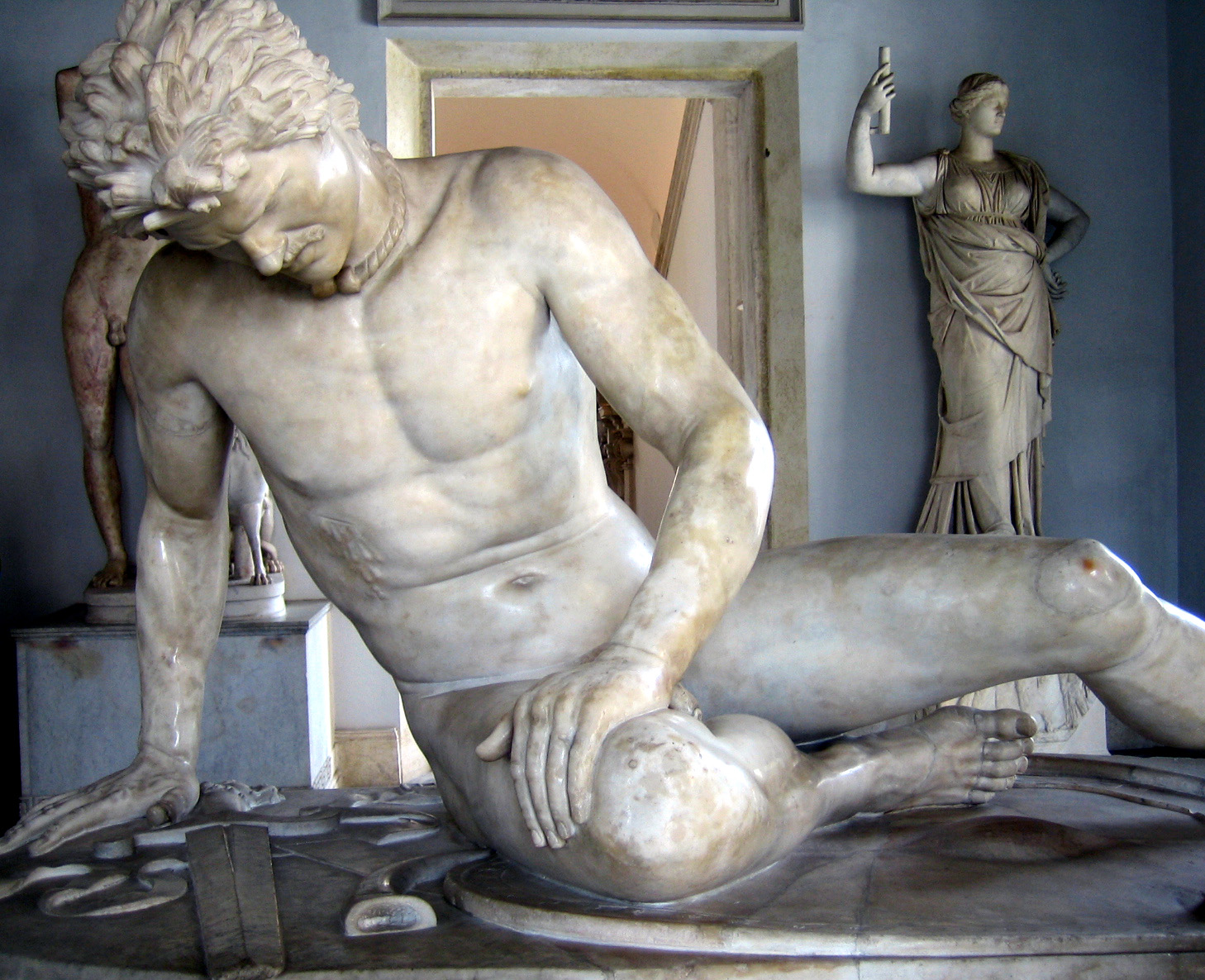
Looking at [this statue, The Dying Gaul (slightly nsfw)] (https://upload.wikimedia.org/wikipedia/commons/d/d4/Dying_gaul.jpg) seems to indicate that this was how Gauls were commonly portrayed and stereotyped as looking before the shift from BC to AD. This statue is said to be a copy of an original from the Hellenistic Era, and this got me also wondering whether or not perceptions of Gauls had changed at all during those centuries. What does the ancient literature say? Does it differ from century to century and era to era, or is it constant in describing what Gallic people looked like?
1 Answers 2020-10-01
Does a portion of my pay go directly to my wife while Im away or does she have to wait until Im home to see any support?
1 Answers 2020-10-01
Hi. I'm writing a novella set in Japan during the 1945 occupation of Japan. I'm after any information or sources for this. Questions I currently have:
How did the executives get to Japan, plane or boat? What kind of plane or boat?
How destroyed were the cities? Especially Tokyo. I know most of the cities were bombed, but how badly?
What was the general feeling at the time? Was it hostility? Was there alot of aggression? Or was it just a gratitude of it being over?
How did the Americans treat the locals and vice-versa?
What kind of quarters did the Americans stay in? What did they eat? What was the typical day for an executive with General Macarthy?
What was the communication like? Was English spoken at the time? Or were there translators?
Any information is helpful.
Even recommendations for documentaries or even films set in Thai era would be useful.
Cheers!
1 Answers 2020-10-01
It seems very clear that a lot of Roman senatorial families survived the barbarian migrations of the 5th and 6th centuries and were incorporated into the governing elites of the post-Roman kingdoms, especially in Merovingian Gaul, Ostrogothic Italy and Visigothic Spain. But I've heard it said that those which did survive didn't survive the upheavals of the 8th century (the Islamic invasions and the rise of the Carolingians) though there are plenty of views to the contrary, such as the attempts to trace continuity between the elites of Merovingian Gaul and Carolingian Francia. How many of these Roman senatorial families might have then survived up to the 11th century and later to form the noble families of the Central Middle Ages (I'm aware of the whole transformation of the family debate and how difficult it is tracing aristocratic lineages before the year 1000)? This is something I'm personally curious about, but its also linked to the novel I'm writing in which the protagonist is from a minor noble family in late 10th century Burgundy that claims to trace its ancestry all the way back to Republican Roman families (I know this might be slightly implausible since I've heard a lot of Classicists say that most Republican senatorial families didn't survive the reigns of Nero and Domitian).
1 Answers 2020-10-01
Or was addressing the king a stylistic choice? That is, everyone knew policy was coming out of parliament but addressing a bunch of complaints to a nameless parliamentary mass isn't as compelling to the drafters' internal American audience as targeting the king?
2 Answers 2020-10-01
1 Answers 2020-10-01
Hey reddit, I'm currently a physics student at university, however, I enjoy learning about history a lot. My knowledge regarding world history is pretty bad and my knowledge regarding United States history is a bit better. I was hoping for some advice on how to learn history and what resources I should use to give myself a pretty good knowledge regarding all history.
tl;dr I like history and want some methods and resources to increase my knowledge
1 Answers 2020-10-01
1 Answers 2020-10-01
Being that Alexander the Great was a pupil of Aristotle, isn’t it ironic that Macedon defeated the Greek states only within 5 years of Aristotle tutoring him? Wasn’t Alexander fond of Aristotle? I wonder what Aristotle has to say about his former student.
1 Answers 2020-10-01
Any recommendations on where To start? Read thucydides first?
Or start with the four volume work by kagan or Instead his one volume book
1 Answers 2020-10-01
Im not disapproving the existence of Jesus or saying anything about religion. I remember though my teacher explaining we know Jesus existed from non-Biblical sources. Being historians probably know the best reliable primary sources on any matter. I was wondering if some could be provided for my studies?
1 Answers 2020-10-01
1 Answers 2020-10-01
Back in college, a teacher told me that Lady Justice was not blindfolded until an artist wanted to make a political statement. It was something along the lines of justice was being blind to agony she was causing or she couldn't bear to look at the harm she was causing.
Over time, Justice being blind, took on a different meaning, but does anyone have more information about the original artist who depicted her with a blindfold?
1 Answers 2020-10-01
Sorry if this is extremely generic. I've been looking for anything involving some sort of secret police or internal investigation force in 18th-19th century Great Britain. I assume due to poor wordage on my part I haven't been able to find anything of the sort before the 20th century.
I'm writing a story of a parallel world where I plan to have my character's properties investigated by the governing state (if it were possible). This state is a reflection of Great Britain basically at the height of her empire; however, the world as a whole functions coherently based on the 18th and 19th centuries.
The character is an advisor in one of the nation's many parties that are elected to their parliament, he is not a seated member. He's the lord of a large and mostly isolated estate in the country side where he handles his duties as an international agent for a secret, ancient organization; perhaps maybe not almost kinda sort of like the 'illuminati' but 100% real and wilder. Character accidentally gets caught up with his "unorthodox" duties in public at the nation's capital.
So if an antagonist wanted to indict my character, what could he do? How powerful would an antagonist have to be where he can credibly accuse him of treasonous or highly illegal acts?
If he did, is there a possibility that someone would or could order an investigation on my character's properties off the words of a sufficiently influential person?
Let's say by the king's decree, my character's properties will be investigated; estate, office, any building he's been known to work or frequently visit. If so, who would carry out the physical investigation; a police force, volunteer force, or even military forces?
If you have any links relating to the subject or that can help me better understand what I'm looking for, I would appreciate it!
I do not plan to have my story be a paradigm of historical fiction, but I do enjoy drawing from history when possible if I feel like it adds a fresh scent of realism.
1 Answers 2020-09-30
Hi all. My grandfather had served in the British Indian Army during the WWII. He was from the Kingdom of Travancore, which is part of modern day Kerala. I was never able to ask him which unit he had served with, and my father isn't sure of it either. My grandmother doesn't recall the unit's name either and there are no discharge papers or identifying patches left. My grandfather was deployed for a time in Egypt and in parts of the Middle East. My father recalls him talking about spending some time in Lebanon. Could you tell me where I could find out more or where I could look for his records? In Canada now.
2 Answers 2020-09-30
If so why did the cardinals let Alexander stay in his position having a family as a catholic priest was an excomunicable offence. Where people also aware that he was having sex with his daughter or did historians find all of this out later?
1 Answers 2020-09-30
I am ashamed to admit I was today years old when I found out about York, Clark's slave, who was integral for the 1803 Lewis and Clark expedition. Since discovering this today, I am fascinated to learn more about him. I will admit, I am a little disappointed grade school had not properly informed me about his involvement in the expedition. I want to learn for myself.
So, I come here asking you wonderful people: Who is York? What do we know about him? What happened to him after the expedition?
1 Answers 2020-09-30
I’m fairly familiar with the battle of the Atlantic and how German U-boats sank tons of merchant vessels en route to Britain. But it occurred to me that I have never asked and don’t know the answer to my question. So when the United States and Canada shipped hundreds of thousands of soldiers to the United Kingdom so that they could execute the invasion of Normandy. We’re any of these troop carriers sunk or even attacked at all? Or were their escorts far too many or too well armed for any U-boat to even attempt to attack the transports?
1 Answers 2020-09-30
I've been reading The Cambridge Companion to the Aegean Bronze Age ed. Shelmerdine and I've been thoroughly enjoying it so far, however, I was wondering if there was a specific book that covers how these cultures (Myceneans, Minoans, and Cycladians) influenced the Ancient Greeks, since they can be viewed almost as their predecessors. Something similar to Etruscan Italy ed. Hall, which addressed Etruscan influence on the later Rome (amongst other time periods). Thanks!
1 Answers 2020-09-30
1 Answers 2020-09-30
So I asked this over at No Stupid Questions not too long ago and the answers I received were a mixture of different perspectives and telling the history or story from more than one perspective. The context was a talk online by my university (which I missed) so I'm wondering if anyone can shed some more light on what this means. For added context I am studying a history degree too, so how that relates to it would interesting too.
1 Answers 2020-09-30
Good afternoon AskHistorians, After listening to the new Tyler Childers’ album, Long Violent History, I have started to read about the various labor wars centered on the coal fields of Appalachia—West Virginia in particular.
Can anyone here recommend a book or two that takes a deep dive into this topic? I am fascinated and would love to learn more!
2 Answers 2020-09-30