1 Answers 2020-08-05
In his book, Utopia For Realists, he states "If you were to put an Italian peasant from 1300 in a time machine and drop him in 1870s Tuscany he wouldn't notice much of a difference." Is there any truth in that? I find it remarkable, given how much must have changed between 1870 and, say, 1920. Technology like cars, radios, etc became common. Society all changed radically during that time period. A man born in 1860, living to the age of 85 would have seen an astounding amount of change, if Rutger is right.
Edit: I made a type, his name is Rutger Bregman.
1 Answers 2020-08-05
As the title suggests, I am looking into the historical precedent of cultures and civilizations using letters or symbols to track what they thought of as historical periods. I began to be interested in the question as I learned that "B.C" once meant "Before Christ", but we now refer to it as "B.C.E.", meaning "Before Common Era". I have read a lot of fantasy and historical fiction books, and many in the fantasy genre just have the people invent their own "B.C.E /A.C.E", but I am skeptical of this being a historical commonality. I realize this may seem like a simple question, but as someone not well versed in this subject yet, I seem to have inadequate knowledge to ask google the right question, as it normally just pulls up videos referring to what other cultures thought of each other, which is not really what I'm looking for.
For example, if you went back in time during the the Ming Dynasty of china AD 1368 – 1644, and asked what year it was, how would someone explain the current year, and how it is connected to other periods of time.
Thank you very much for your time
1 Answers 2020-08-05
I am currently listening to and greatly enjoying the incredibly well put together, insightful, and monumentally informed audiobook version of 'The Boundless Sea: A Human History of Oceans' by David Abulafia, and in Chapter 28 Part III, David notes the following:
The bodies of strange people had been cast up on the shores of Ireland, and their features were rather like those of Tartars. In other words, the 'Orientals' with whom Westerners were reasonably familiar through political contact and through the trade in slaves from the Black Sea into the Mediterranean. Almost certainly, these were the bodies of native North Americans which had been washed out to sea. If, as is possible, the young Columbus travelled to Iceland, he might well have heard tales of lands to the West visited by Norse sailors in the past. In Bristol, he could also have picked up rumors of lands to the West, because several Icelanders had taken up residence there, and because English expeditions had penetrated deep into the Atlantic in the 1480s. Besides, he seems to have read some mysterious papers in the possession of the Perestrelo family of Porto Santo near Madeira (into which he married) which provided further evidence of land to the West.18
As I am simply listening to the audiobook version and do not have access to specific sources, I am wondering if this is common knowledge, and/or known to historians as a matter of fact or likely probability?
Thank you to anyone able to illuminate this further. And, for anyone curious, I highly recommend this audiobook and have been addictively surprised by David Abulafia's ability to provide a nuanced perspective on thousands of pivotal historical events through the medium of oceanic exploration.
1 Answers 2020-08-05
Almost all plays use preexisting characters, but some even follow older storylines event-by-event. Take the trilogy of Agamemnon for example, or Hercules. From whom and from what time do these storylines originate? Does there exist some sort of corpus?
1 Answers 2020-08-05
Just a short one, but would the early Egyptians have encountered neanderthals/ neolithic people, or am I mixing these up?
Also is there any accounts of homo sapians encountering the neanderthal or are they too far apart?
1 Answers 2020-08-05
1 Answers 2020-08-05
2 Answers 2020-08-05
I was a bit surprised to find out recently that the famous Nubian pyramids at places like Meroe were much younger than I had assumed, first being constructed in the 8th century BC, and continuing well into the first millennium AD. The iconic Pyramids at Giza predate them by well over a thousand years, it seems akin to somebody today building a Roman Tomb for themselves.
So I'm curious, were the Nubian pyramids necessarily a direct imitation of the old Egyptian pyramids, or were they a tradition that had developed more locally to Nubia but just happened to resemble the Egyptian pyramids? If they were deliberately drawing a parallel, why were people in Nubia resurrecting an already ancient tradition that had long since remained moribund in Egypt itself?
1 Answers 2020-08-05
Are there communities in these areas sourcing their heritage from the crusader states? Interesting internal borders? Or are they no more than footnotes for the modern states?
1 Answers 2020-08-05
Please Be Aware: We expect everyone to read the rules and guidelines of this thread. Mods will remove questions which we deem to be too involved for the theme in place here. We will remove answers which don't include a source. These removals will be without notice. Please follow the rules.
Some questions people have just don't require depth. This thread is a recurring feature intended to provide a space for those simple, straight forward questions that are otherwise unsuited for the format of the subreddit.
Here are the ground rules:
Top Level Posts should be questions in their own right.
Questions should be clear and specific in the information that they are asking for.
Questions which ask about broader concepts may be removed at the discretion of the Mod Team and redirected to post as a standalone question.
We realize that in some cases, users may pose questions that they don't realize are more complicated than they think. In these cases, we will suggest reposting as a stand-alone question.
Answers MUST be properly sourced to respectable literature. Unlike regular questions in the sub where sources are only required upon request, the lack of a source will result in removal of the answer.
Academic secondary sources are prefered. Tertiary sources are acceptable if they are of academic rigor (such as a book from the 'Oxford Companion' series, or a reference work from an academic press).
The only rule being relaxed here is with regard to depth, insofar as the anticipated questions are ones which do not require it. All other rules of the subreddit are in force.
36 Answers 2020-08-05
It is a common joke, that though the Soviet Union prided itself on providing everything its citizens could ever want, it still failed repeatably to feed its own populace.
This does have some basis in the truth, as the cases of the Holodomor, the loss of large amounts arable land during WWII, as well as need to import millions of tons of American grain during the seventies, all testify to the fact that the Soviet Union was at times unable to properly feed its own populace independently.
However prior to the soviet-era, the Russian Empire was a net exporter of agricultural products to western Europe and in fact, received massive amounts of investments from the west, which would increase Russian export.
How come is it then that the Soviet state failed to continue this success, even after the agriculture-focused era of Khrushchev?
Note: Much of my information comes from the book "Merchants of Grain" (1979) by Dan Morgan.
1 Answers 2020-08-05
3 Answers 2020-08-05
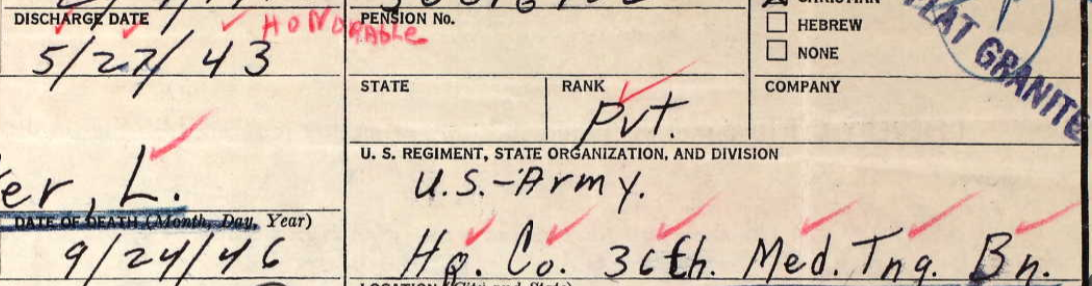
My great grandfather served in World War 2, and I did some research on him and found his military grave certificate and I am familiar with how the US Marines organize their units but the Army in this period baffles me with their division numbers. It says 36th Med Tnq BN does that mean he was part of the 36th ID and was just a part of the headquarters battalion? Or was attached to the medical regiment? Any clarification would be awesome, Thanks.
2 Answers 2020-08-05
He actually wrote this before Trump was elected :https://www.billjamesonline.com/trump_as_in_rump/
The part about Truman is here:
We haven’t had a President since Harry Truman who mocked people, a President who was openly rude and vulgar,
3 Answers 2020-08-05
The way that I was taught almost implied that once Hitler was vanquished the "curse was lifted" and Europe went back to normal, but it seems like the way that those ideas were spread and proliferated wouldn't allow them to just fade into obscurity.
How did Germany handle this divide in its population once Hitler had died and WW2 was over?
2 Answers 2020-08-05
1 Answers 2020-08-05
https://i.imgur.com/WArsJaW.jpg
It is in the format of ”Me cracking open a cold one with the boys”, where ”me” is the French politician Georges Clemenceau, ”the cold one” is Petrograd/St Petersburg/Leningrad, and ”the boys” are the men behind the Kronstadt rebellion. How does this meme make any sense, or is it nonsensical?
1 Answers 2020-08-05
Anyone know more about this painting (who painted this) and what it represents? https://imgur.com/a/05xb0nV
According to the post I saw the painting is in Chapultepec castle in Mexico city. But the poster did not know what it represented.
1 Answers 2020-08-05
I was doing some research into the Sino Japanese wars of the late 19th/early 20th centuries, and was wondering if there had been previous wars between the two nations, and what their overall relationship was over like throughout history.
1 Answers 2020-08-05
1 Answers 2020-08-05
1 Answers 2020-08-05
I’ve been wondering this for a while now. I’ve always wondered why Washington D.C. is the capital of the United States over New York, New York. New York holds a massive amount of history from the 13 colonies to present day. I feel like a lot of US’s history comes from New York. Political history, economical history, sufferings, military history, cultural history and so on. New York has been there since the beginning, and if you ask anyone that lives outside of the US to name one US state, they will most likely name New York first out of any other state. So how come a state which has been a part of the US before it even became independent and holds so much sacred history and holds one of the most known territory in the US with such high popularity not the capital of the United States? Isn’t that what a national capital is supposed to represent? A historical piece of land as a portrayal for government representation and illustration? I feel like New York holds all of that if not more than what our current capital holds. Not saying that our capitals should be changed, but it’s a bit weird to think that New York has been such a sacred piece of history and popularity for the United States, you’d think that our founding fathers would chose land in New York to be our national capital.
1 Answers 2020-08-05