I recently came across this map and it picked my attention. Being from a country which was colonized by Portugal (and thus uses their naming convention), I never realized that the naming convention I'm used to is actually an exception throughout the world.
Is there any historical reason for this? My first hunch was Arab/Andalusian influence, but their naming convention is different to the Iberian ones.
1 Answers 2019-06-16
I suppose im mostly curious for a western/European/Christendom frame of mind but would still be interested to hear about other cultures.
1 Answers 2019-06-16
For instance, the USSR relied on espionage to expedite development, so they would be out. Did all nuclear nations receive help from a previously nuclear arms capable country, be it with consent or not, or has some nation developed the bomb independently.
3 Answers 2019-06-16
My ancestor from Philadelphia enlisted in a Connecticut regiment under a completely different name - why would someone do this? I know some Confederate defectors took aliases to avoid being hung for treason, but he was in the Union.
1 Answers 2019-06-16
Was it because they didn’t have as much coal and iron deposits as the aforementioned countries? I know Alsace-Lorraine had these deposits, but that was seized by Prussia in 1871.
1 Answers 2019-06-16
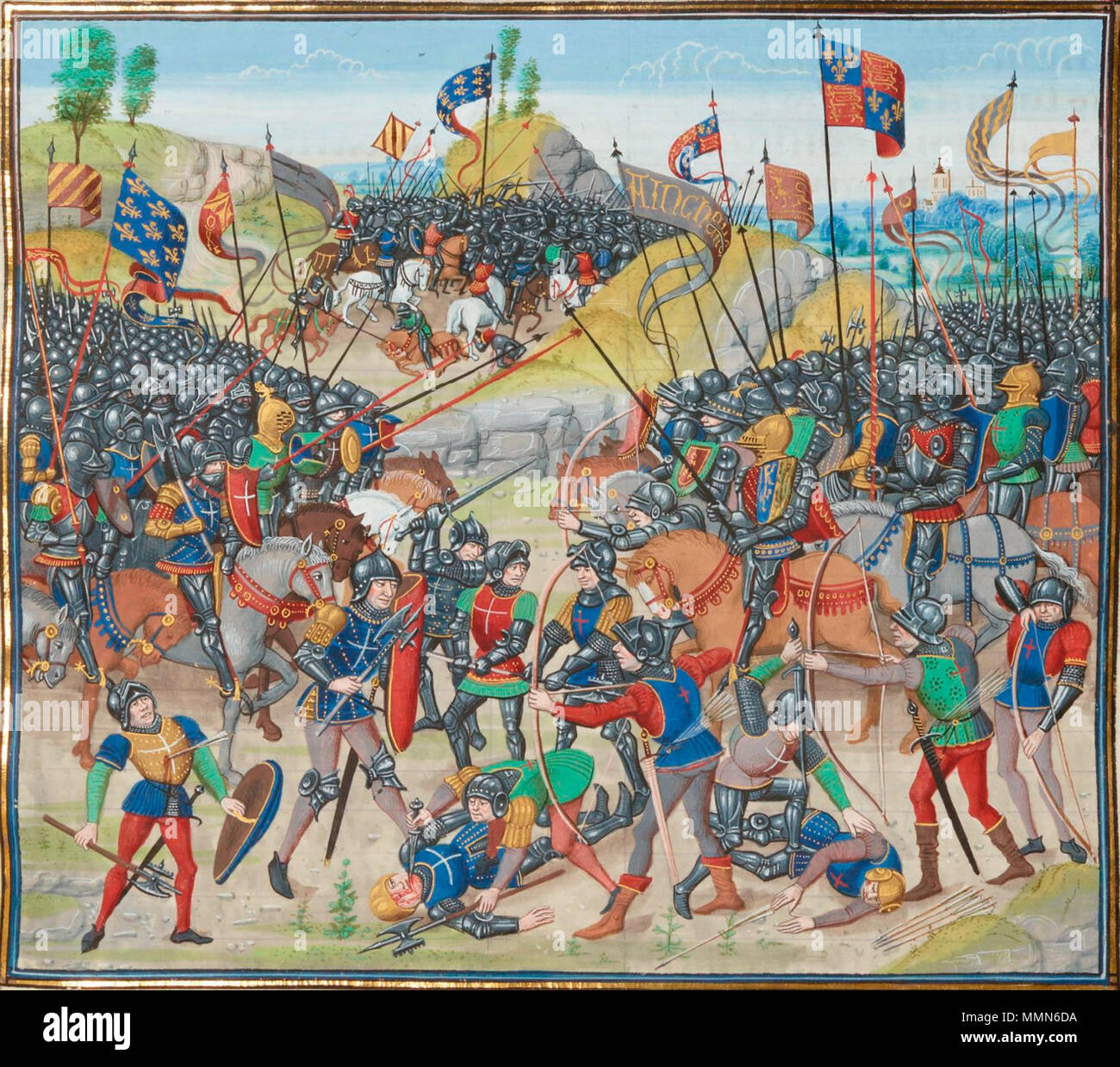
Meaning not all or most, but a sizeable amount in my experience
Here's two examples from the bayeux tapestry
1 https://www.ancient.eu/img/r/p/500x600/9471.jpg?v=1542275538
Battle of Auray https://c8.alamy.com/comp/MMN6DA/chroniques-battle-of-auray-in-jean-froissart-chronicles-15th-century-battle-of-auray-2-MMN6DA.jpg
It's just one of those things i've always wondered. Helmets and chestpieces are crucial, but the armor feels unfinished without the gloves. Wouldn't you want to protect your (incredibly important) hands? Granted, metal gloves could be hard to come by for a normal soldier I imagine, but leather gloves or perhaps even some chainmail mittens? Furthermore, i've seen historic depictions of common soldiers wearing intricate hourglass gauntlets, where as others would wear no gloves at all. Example: https://1.bp.blogspot.com/-H6pu_BCnwm0/Teqsjlg_MSI/AAAAAAAAATY/jV1_P4be-Rg/s1600/looting_house.jpg
1 Answers 2019-06-16
1 Answers 2019-06-16
[deleted]
2 Answers 2019-06-16
I know of events like the Great Game between Russia and Britain, The War in Afghanistan by the US, etc. However, I've never understood why people have been fighting over Afghanistan all throughout history.
2 Answers 2019-06-16
The 99 year lease affected the “new territories”. What was the UK’s strategy and vision when it decided to agree to giving up the island and the peninsula.
1 Answers 2019-06-16
[deleted]
1 Answers 2019-06-16
Unable to find an estimate online.
Thanks!
1 Answers 2019-06-16
In naval warfare, "Crossing the T" is a manoeuvre in which one side is able to fire full broadsides while the other can only respond with minimal force or sometimes not at all. Successfully executing the manoeuvre often yields a decisive advantage to the side able to bring more guns to bear. However, at the Battle of Trafalgar, Nelson approached the enemy in such a way that he Crossed his own T. Why was this approach successful given that Nelson put himself in a disadvantageous position at the onset of the battle?
1 Answers 2019-06-16
In most films set during the second world war, Flak rounds just seem to explode into a cloud of black smoke, shaking the aircraft a bit, but nothing actually happens. Were they really that innefective?
1 Answers 2019-06-16
I recently listened to Malcolm Gladwell’s Revisionist History podcast on Churchill and his friend Lindemann, which focuses on the Indian famine. That, plus an admittedly funny line in an epic rap battle of history (“And let’s admit it: you’re not all that great!/You tossed away lives at Gallipoli like they were scraps off your plate!”) made me realize that there is a growing field that paint Churchill in a negative light.
I only really know him as Mr. “We Shall Fight on the Beaches”. What are some aspects of his life/career that are not so heroic?
3 Answers 2019-06-16
I came across the Arthurian legend, and now I wonder if it's a legend, a myth, or is it truth.Are there any sources, if it really happened? And if you consider it as myth or legend could you explain me why you think so?
1 Answers 2019-06-16
Today:
Welcome to this week's instalment of /r/AskHistorians' Sunday Digest (formerly the Day of Reflection). Nobody can read all the questions and answers that are posted here, so in this thread we invite you to share anything you'd like to highlight from the last week - an interesting discussion, an informative answer, an insightful question that was overlooked, or anything else.
1 Answers 2019-06-16
I've heard from various places that king Richard I was gay. I've also heard that he can't be gay because he fathered bastards in heterosexual affairs. He could be bisexual, which would give credibility both to whatever claims of gayness were made against him and the claims of straightness made against him.
So, what was this famous king's sexual orientation?
1 Answers 2019-06-16
My dad contracted Polio in the Rural South in 1949, and while I've had first hand experience with the impacts of Post Polio Syndrome for almost 4 decades my knowledge of the overall impact of the disease is limited to what I learned in middle and high school.
Looking around most resources seem either overwhelming in their scope or just a blurb, and internet searches often lead to anti-vax or anti-anti-vax. So Reddit Historians can you point me in the direction of some good books or other resources about Polio in North America in the first half of the 20th century?
1 Answers 2019-06-16
Because it took a long time before the secret to silk was discovered. Wouldn’t something like gunpowder also be kept super quiet?
1 Answers 2019-06-16
1 Answers 2019-06-16
[deleted]
1 Answers 2019-06-16
I know there was some trade between North Africa and West Africa and East Africa, but did West Africa engage with trade with East Africa or Central Africa, espicially since the Sahel was fairly habitable
1 Answers 2019-06-16
Here's the image. I assume it's from the 16th century (because of the costume), but the situation seems very fantastical and I can't make heads or tails out of the text. What's the context behind this picture?
1 Answers 2019-06-16