Are there any credible theories that the mythology of Atlantis stemmed from sightings of the Americas? If so, what is the full premise of the theory.
1 Answers 2019-05-22
We know that gold is not the hardest of metals and the coins could wear out easily.
So, why didn't they make them in a shape that has the least outer surface area?
I was unsure about to which 'ask' subreddit I would post this question, so I hope you guys know more?
1 Answers 2019-05-22
There's a curious footnote in Rafe de Crespigny's Generals of the South (p. 9, fn. 17):
See the biography of Luan Ba in HHS [Book of the Later Han] 57/47 at 1841-42. A man of Wei commandery, Luan Ba was a curious man with a remarkable career. He was at one time a eunuch in the imperial harem, but left that office because his virility returned. Expert in Taoist arts, he used his powers to control the gods of Yuzhang and destroy their cult. He was put to death about 170 for his opposition to the eunuch dominance of the court of Emperor Ling.
I'm just curious whether there's been any work on the status of eunuchs, for instance, it might be argued that the fact that this eunuch's "virility returned" could indicate that eunuch is less of an anatomical designation and more a social one.
Edit: There's a second part to the footnote:
In the Tang commentary to Luan Ba's biography, extracts from the Shenxian zhuan by Ge Hong of the fourth century suggest that he came not from Wei commandery but from Shu, in the west, and a number of anecdotes enlarge upon his magical achievements. His record as a temporary eunuch, as a Taoist adept, and as a local administrator who founded (presumably Confucian) schools, is somewhat confusing, and it appears that Luan Ba, whatever his origins and reality, served as a focus for a number of popular stories.
So perhaps this indicates that Luan Ba may have been a composite figure, which may explain his temporary eunuchness.
1 Answers 2019-05-22
Were most soldiers peasant levies, or professionals? What percentage of the army would likely be Samurai? How many cavalry, archers, spearmen, etc, would you expect?
And what kind of formations would they generally fight in?
1 Answers 2019-05-22
Names like Smith, Baker, Carpenter are common, but a slightly less common surname is Coward. Considering the obvious connotations of the word, is there a historical explanation as to why we have a surname like this? Why wouldn't people just change their surname?!
1 Answers 2019-05-22
Please Be Aware: We expect everyone to read the rules and guidelines of this thread. Mods will remove questions which we deem to be too involved for the theme in place here. We will remove answers which don't include a source. These removals will be without notice. Please follow the rules.
Some questions people have just don't require depth. This thread is a recurring feature intended to provide a space for those simple, straight forward questions that are otherwise unsuited for the format of the subreddit.
Here are the ground rules:
Top Level Posts should be questions in their own right.
Questions should be clear and specific in the information that they are asking for.
Questions which ask about broader concepts may be removed at the discretion of the Mod Team and redirected to post as a standalone question.
We realize that in some cases, users may pose questions that they don't realize are more complicated than they think. In these cases, we will suggest reposting as a stand-alone question.
Answers MUST be properly sourced to respectable literature. Unlike regular questions in the sub where sources are only required upon request, the lack of a source will result in removal of the answer.
Academic secondary sources are prefered. Tertiary sources are acceptable if they are of academic rigor (such as a book from the 'Oxford Companion' series, or a reference work from an academic press).
The only rule being relaxed here is with regard to depth, insofar as the anticipated questions are ones which do not require it. All other rules of the subreddit are in force.
32 Answers 2019-05-22
https://www.themappamundi.co.uk/mappa-mundi/
I just read about the mappa mundi and i am intrigued about the Blemmyes, what is their origins? Earliest mention of them?
1 Answers 2019-05-22
Including statesman, soldiers, clergymen and regular people (laymen/peasants/city-folk).
1 Answers 2019-05-22
I'm mostly referring to the evolution of technology that went into the construction of walls, rather than the evolution of specific designs that emerged to counter military threats of a certain time period. However I realize they go hand in hand.
1 Answers 2019-05-22
1 Answers 2019-05-22
I know that game of thrones was based on the war of the roses and in last episode >!one character suggest democracy and is laughed of!<
I figured that it would have been the same in britain at the time, so now i wonder what events made a switch to the now democratic system possible.
1 Answers 2019-05-22
Also: When did “princess” become a popular term of affection for young girls?
1 Answers 2019-05-22
According to an exhibition in Vienna, it was estasblished early on that the Privilegium Majus was a fake, yet, nobody seem to have bat an eye and the Habsburg were even able to use it to secure their privilege later on. I haven't seen or read anything about a negative impact of this forgery for the Habsburg. Thus, did anyone care that the Privilegium Majus was a forgery ordered by the Habsburg?
1 Answers 2019-05-22
While I do know it was taken from them after WWII I am interested as to why Prussia was ceded to Poland.
1 Answers 2019-05-22
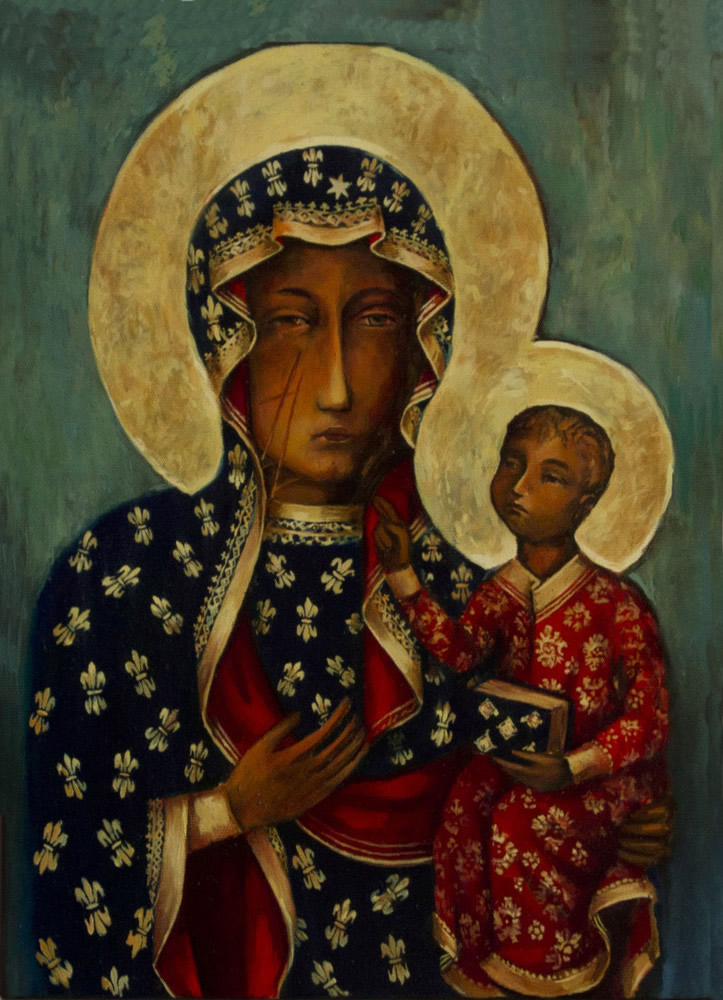
https://upload.wikimedia.org/wikipedia/commons/5/56/Nuestra_Se%C3%B1ora_de_Czestochowa.jpg
https://images-na.ssl-images-amazon.com/images/I/A1MNRhIGAAL.SY500.jpg
And this version (a little ostentatious): https://www.tripsavvy.com/thmb/SVT62PMCc4CtFLaGOtRV-saLppE=/960x0/filters:no_upscale():max_bytes(150000):strip_icc()/black-madonna-of-czestochowa--poland-167653823-596593335f9b583f18177311.jpg
1 Answers 2019-05-22
Edit - commissar*, sorry.
1 Answers 2019-05-22
I am referring to ones that are pistol-sized that you pretty much see pretty much only in fantasy settings / table-top RPG's or Diablo. They look quite craftable with medieval technology, and while not nearly as powerful as normal sized crossbows they would still would be lethal (wouldn't they?). I looked online but can't find any thing that explicitly answer this question, although I suppose a lack of evidence to affirm their existence would imply they didn't exist.
On a side note, I am pretty much looking this up for fantasy board game related reasons. So I guess I would also appreciate if anyone can comment on how technologically viable for them to have existed, or what other supposedly "only-in-fantasy inventions" that could have be crafted if given the incentive. For example I know there were debates if flails where actually used on combat because how impractical they are, but it's obvious that people could have made them.
2 Answers 2019-05-22
My teacher told me it came from the belief that the black man worked 3/5ths of what a whiteman did but I'm not sure if this is accurate, would be great if someone could verify it
1 Answers 2019-05-22
[deleted]
1 Answers 2019-05-22
I'm aware of the ideologies of The Republican Party during reconstruction, which involved federal involvement in rebuilding states. I think the swapping of ideas between the parties happened sometime around the great depression when FDR supported rebuilding our economy through government intervention and creating mass amounts of jobs. But why did this change happen and was it over a long period of time or a short one?
1 Answers 2019-05-22
In history class recently, my teacher mentioned that many crusaders believed in a far away mythical Christian Kingdom that would come to their aid in the fight against their enemies. Where did this myth originate from, was the belief widely held?
1 Answers 2019-05-22
Where do you see substantial research gaps or ”new frontiers” in your area of study (particularly in regards to women’s history)? Alternatively, what seems to be "in vogue" your field right now?
1 Answers 2019-05-22
[deleted]
1 Answers 2019-05-22
So I just finished reading Fried Green Tomatoes at the Whistle Stop Cafe, by Fannie Flagg (here's a summary if you haven't read it). It's basically about an middle-aged lady making friends with an older woman, who tells her about this small town in Alabama in the 1920s/30s, and especially about two women, Idgie Threadgoode and Ruth Jamison.
Early on Idgie is portrayed as a tomboy, and at about ten years old decides to never wear dresses again. And she doesn't. For a funeral her mom has a suit made for her, despite the strange looks from the dressmaker. From what the book says, Idgie never wears a dress or a skirt again. She seems to be born in about 1907/08, so she comes of age during the 20s.
My question is, could a woman who refused to wear dresses/skirts live normally in the 20s/30s? And how would a woman like this have been treated? Were there any women like this? As a writer myself I would like to write a character like this, but I'm not sure she would be entirely realistic.
Whistle Stop is a tiny town, and I know the story is fiction. But I like to analyze historical accuracy of stories, and this bothers me. Wouldn't Idgie have been kicked out of school for refusing to wear a skirt or dress? She visits a bigger town (Valdosta, GA) at several times and sits in a store chatting with the owner. Wouldn't she have been afraid of not being allowed in places because she was wearing pants? Wouldn't this cause her a whole lot of problems?
Thanks!
1 Answers 2019-05-22
:max_bytes(150000):strip_icc()/black-madonna-of-czestochowa--poland-167653823-596593335f9b583f18177311.jpg)