As an example, it first struck me in Vanitas by Harmen Steenwijck, but I have seen it in Medieval paintings as well. I could not find anything on Google or Reddit so I hope someone on this sub can help me!
1 Answers 2019-01-03
My great uncle had a collection of antiques from his father that were collected in World War II. The Medal that was stolen by a family member and pawned off so many years ago is always something that comes up. The family member was a black sheep of the family and I think has long since forgotten the potential whereabouts of the medal at this point.
I know getting that medal back is a damn near impossible feat, but I think what I can do is look into having a replica created (as a gesture) as my great uncle does not really need or want much out of life anymore really-well nothing I could easily provide :p but this is something, I would like to say I tried.
Is there is a registry of war medals given out by the Italian government in the 1940's? If not, what Italian War Medals are equivalent to the purple cross?
I was told this medal was personally awarded by Mussolini himself to my great grandfather. I don't know if that helps narrow it down history buffs.
I have done a bit off research but ultimately the solution to my problem relies on me reaching out to my Uncle to directly point it out to me (but then probably ruining the surprise).
If you are able to help, you have my gratitude and I would like to thank you personally.
All the best,
Bono
1 Answers 2019-01-03
Weber's distinction is well-known from his lecture "Politics as a Vocation". He identifies:
Charismatic authority: authority attached to a specific individual and the perception of their exceptional characteristics, transcending normal social boundaries (e.g. Hitler, Napoleon, Nader Shah, Chinggis Khaan, Muhammad, Caesar...). This authority dies with the individual, but can serve as the basis of...
Traditional authority: authority asserted on the basis of tradition, custom, and habit. Weber notes: "This is 'traditional' domination exercised by the patriarch and the patrimonial prince of yore." And he distinguishes this from...
Legal authority: authority asserted on the basis of established rules; again Weber: " by virtue of the belief in the validity of legal statute and functional 'competence' based on rationally created rules. In this case, obedience is expected in discharging statutory obligations. This is domination as exercised by the modern 'servant of the state' and by all those bearers of power who in this respect resemble him."
The last one is the one I have the most issue with, partly due to the prima facie issue of presentism and the desire to distinguish his contemporary society from those of the past. Weber basically identifies the issue I have himself without actually adressing it, in the section where he introduces the professional administrator personally dependent on the monarch:
These are propertyless strata having no social honor of their own; materially, they are completely chained to him and are not backed up by any competing power of their own. All forms of patriarchal and patrimonial domination, Sultanist despotism, and bureaucratic states belong to this latter type. The bureaucratic state order is especially important; in its most rational development, it is precisely characteristic of the modern state.
Here he introduces the factor of "rationality" to distinguish the modern state from what he calls "Sultanist despotism" (presumably meaning administration by eunuchs and the like). He comes back to this idea later:
A fifth stratum [of "politically exploitable strata"], the university-trained jurist, is peculiar to the Occident, especially to the European continent, and has been of decisive significance for the Continent's whole political structure. The tremendous after-effect of Roman law, as transformed by the late Roman bureaucratic state, stands out in nothing more clearly than the fact that everywhere the revolution of political management in the direction of the evolving rational state has been borne by trained jurists. This also occurred in England, although there the great national guilds of jurists hindered the reception of Roman law. There is no analogy to this process to be found in any area of the world.
His assertion that this class is unique to the Occident is clearly not true, but he glosses over the obvious counterexamples:
All beginnings of rational juristic thinking in the Indian Mimamsa School and all further cultivation of the ancient juristic thinking in Islam have been unable to prevent the idea of rational law from being overgrown by theological forms of thought. Above all, legal trial procedure has not been fully rationalized in the cases of India and of Islamism. Such rationalization has been brought about on the Continent only through the borrowing of ancient Roman jurisprudence by the Italian jurists. Roman jurisprudence is the product of a political structure arising from the city state to world domination--a product of quite unique nature. The usus modernus of the late medieval pandect jurists and canonists was blended with theories of natural law, which were born from juristic and Christian thought and which were later secularized...
His third category seems entirely dependent on a priori accepting his peculiar notion of "rationality" which he nowhere tries to define, but which I suppose is probably elaborated on in his other works. Regarding the validity of "rationality" as singular, unique and exceptional in the particular instantiation of his time and place seems to be the only thing separating his "legal authority" from "traditional authority". This seems like a departure from the far more universal category of "charisma" and "tradition" and would essentially be replaced by whatever mode of thought was preferred by the particular civilization using his categories (e.g. "Shari'a authority", "Confucian authority", "Dharmic authority"...)
Or am I completely off base with this? Precisely because his distinction between charismatic and traditional authority seems so useful and is so often referred to his third category irks me. Have there been any attempts to revise this system while retaining its relative simplicity? A more useful distinction seems to be whether authority is exercised by professional civil servants or only by e.g. landed nobility who themselves possess traditional authority.
1 Answers 2019-01-03
(By Central-Eastern I mean Romania, Hungary, Serbia, etc, as opposed to Poland or Greece)
Or is it entirely because of Dracula?
I know that belief in vampires (in some sense) and werewolves could actually be found all over medieval and early modern Europe. For example, Prussia had a vampire panic in the early 18th century, and the Empress of Austria had to do an official investigation to see if Vampires were real. And the famous trial and execution of Peter Stumpp for being a ravenous werewolf who'd eaten 14 people was in Bedburg, near Germany's western border.
So I wondered if it was just Dracula that made people associate these gothic monsters with Transylvania and nearby countries.
On the other hand, Vampire hunters broke into Slobodan Milosevic's tomb and rammed a stake through his heart to stop him rising as a vampire, and I can't see that happening in France or Spain. So perhaps vampire myths are much more baked into that area's culture over a long period of time.
1 Answers 2019-01-03
In a lot of historical fiction in TV and Literature, you'll often see a protagonist or hero kill scores of enemies on the battlefield. How accurate was it that in battle these people were so superior to their enemies that they could easily kill a multitude of them?
Or was it more the case that each warrior fighting would likely kill one or two before being killed themselves and winning was more reliant on numbers in that sense?
Would a trained warrior fighting a bunch of farmers for example, out on an open battlefield, really be able to kill off that many of them? What about against soldiers?
The reason I ask is I've been catching up on Vikings and some of the battle stuff annoyed me. Now, I know it's not at all historically accurate but I did realise its a bit of a trope to have warrior heroes who seem to massively be more effective at murdering their opponents than their fellow soldiers or enemies, and it got me thinking whether this was in anyway grounded in reality or just a storytelling device
1 Answers 2019-01-03
Thursday Reading and Recommendations is intended as bookish free-for-all, for the discussion and recommendation of all books historical, or tangentially so. Suggested topics include, but are by no means limited to:
Asking for book recommendations on specific topics or periods of history
Newly published books and articles you're dying to read
Recent book releases, old book reviews, reading recommendations, or just talking about what you're reading now
Historiographical discussions, debates, and disputes
...And so on!
Regular participants in the Thursday threads should just keep doing what they've been doing; newcomers should take notice that this thread is meant for open discussion of history and books, not just anything you like -- we'll have a thread on Friday for that, as usual.
5 Answers 2019-01-03
[deleted]
1 Answers 2019-01-03
Interesting responses. Thank you, everyone!
3 Answers 2019-01-03
There was an artistic shift in the late third century where the features of the sculptures became more stylized with larger eyes and more "medieval" features. By Justinian's reign, I only see mosaics.
1 Answers 2019-01-03
I was watching HBO's John Adams and 2012 Lincoln and they were yelling in 1865.
But congress today is very tedious and sleep inducing.
3 Answers 2019-01-03
1 Answers 2019-01-03
Where I saw the info:
https://en.wikipedia.org/wiki/Chiang_Kai-shek#Education_in_Japan
5 Answers 2019-01-03
Indeed, I even remember proto-clickbait articles on the MSN homepage with titles like, "Is Marilyn Manson to blame?"
1 Answers 2019-01-03
1 Answers 2019-01-03
On the morning of July 16th, 1945 the United States successfully detonated the first atomic bomb. On July 17th, Truman, Churchill, and Stalin met at the Potsdam Conference to discuss Japan and post-war Europe and Asia. A diplomatic summit of such gravity would warrant as much preparation as possible, but with Truman being sworn in as President on April 12th and Byrnes being appointed Secretary of State on July 3rd, the United States had limited time to prepare. And the massive shift in military power caused by possession of the atomic bomb would likely alter the negotiation strategy of the Americans significantly. What was the original American plan for the conference, and did the success of the atomic bomb change that plan? On July 24th, near the close of the conference, Truman famously told Stalin that the United States possessed the atomic bomb. Was this an improvised action or was it planned? And I’ve read that this news apparently didn’t surprise Stalin. I know the Soviets had become aware of the American, British, and German nuclear weapons programs in 1942, but they were 4 years away from their own atomic bomb at the time. How much did the Soviets actually know about the Manhattan Project immediately before the Potsdam Conference? And did they learn about the successful detonation before being told about it by Truman, or did it simply fall within their predicted timeline?
1 Answers 2019-01-03
Furthermore, what do we know about changes in music tates of different classes in the pre and post-civil war South?
I realize this is a fairly vauge question, Mods please let me know if it should be restated.
For context, on pg. 12 of the 1st addition (Touchstone 1990) he writes "The Davises were always ahead of the game, my farther and grandfather told me... They told me that people in our familhy were special people... who played for the plantation owners back in the old days before slavery was over. These Davises played classical music, According to my grandfather. That's the resaon my father couldn't play or listen to musci after slavery was over, becasue my grandfather said, 'they only let black people play in gin houses and honky-tonks.' What he meant was that they---the white people---didn't want to listen to no black folks playing classical music anymore; they only wanted to hear them sing spirituals or the blues. Now, I don't know how true this is, but that's what my father told me."
1 Answers 2019-01-03
I also wasn’t told this directly from my grandfather, so it might not have even happened.
1 Answers 2019-01-03
1 Answers 2019-01-02
I'm looking for days here. I can't seem to find a solid source. Closest I can get is about two days a few years later. But when the rail line was new, how long are we talking? A week? Or a matter of a few days?
1 Answers 2019-01-02
President Trump stated today (1/2/19) "Russia used to be the Soviet Union. Afghanistan made it Russia because they went bankrupt fighting in Afghanistan."
Is this true? Did the Soviet Union dissolve because it ran out of money? What was the Soviet Union's relationship like with Afghanistan at the time and was it costly?
2 Answers 2019-01-02
*Temples, not tables
1 Answers 2019-01-02
Hello, for about a couple months ive been doing lots of research trying to find what the Russian Imperial guard during WW1 wore in combat. Did these guard regiments wear the same uniforms as the regular army? If so what insignias did they have and were they different? Ive seen pictures of the guards during WW1 but none of them are in combat and they are all in their dress uniforms. So basicly my question all summed up is, what did the Imperial Russian guards wear in combat. Thank you!
1 Answers 2019-01-02
Recently I got to know the age of Vikings from a Swedish blog as I'm planning to move to Sweden soon. I was just wondering whatever happened to those Swedish Vikings and where are the descendents now? TIA
1 Answers 2019-01-02
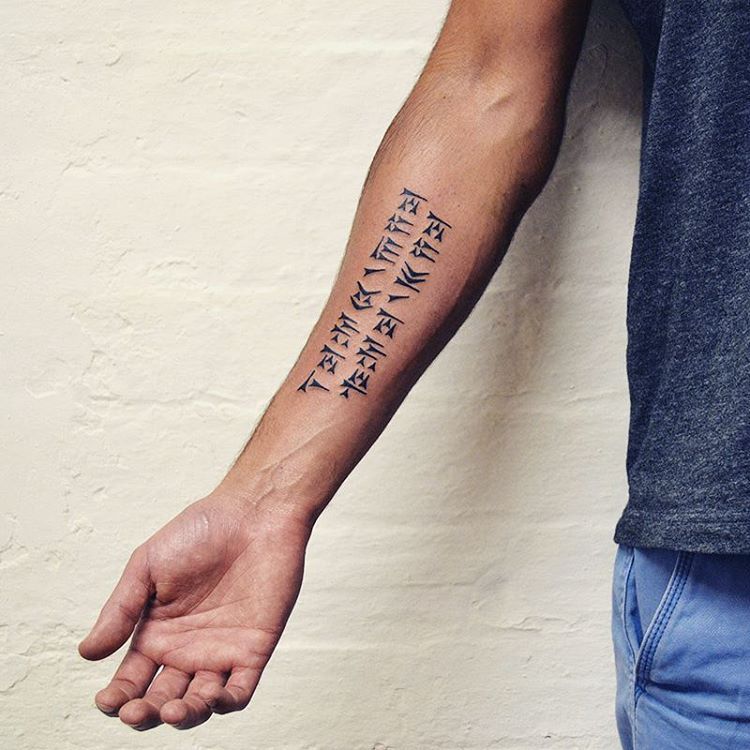
I stumbled upon this picture of a tattoo written in ancient Persian and I would love to know what it is saying. I have searched the internet for hours and was not able to find an answer to this question. Can someone please help!
http://65.media.tumblr.com/dc3eee7d5d823390aaeaab77fd4a51a1/tumblr_o3sxkoUDcx1udchbho1_1280.jpg
Thanks in advance guys!!
1 Answers 2019-01-02