There was a crusader state established in greece in the wake of the 4th crusade (aka frankokratia in greek). It was called the latin empire and it had a pretty cool flag. I was wondering if anyone understands what it was meant to symbolize? It looks like they kept the byzantine flag structure but just put a ton of crosses on there? Why does it have so many crosses? I know crosses were a crusader motif (see kingdom of jerusalem) but why this specific number of crosses (18 small ones, 1 large one splitting up the field)? If there's no reason other than 'they liked crosses' that's fine but I've been curious as to some time if there was a deeper meaning and thought maybe someone here might know.
1 Answers 2018-11-16
In 23 june 1789 Louis XVI warned to the Estates-General: "None of your projects, none of your resolutions, can HAVE THE FORCE OF LAW/S without my special approval"
Did he meant to say "None of your projects, none of your resolutions, can BECOME LAW without my special approval"?
In short: If a decision does not have "the force of law" because lacks approval, does it mean it is NOT a law?
1 Answers 2018-11-16
1 Answers 2018-11-16
1 Answers 2018-11-16
Are there any books/documents that talk in depth about the advances in nuclear tech and production during the nuclear arms race?
1 Answers 2018-11-16
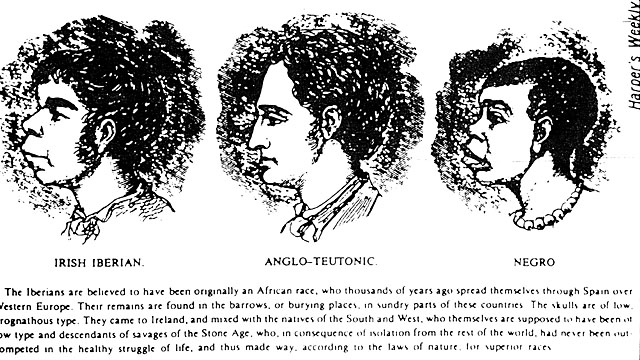
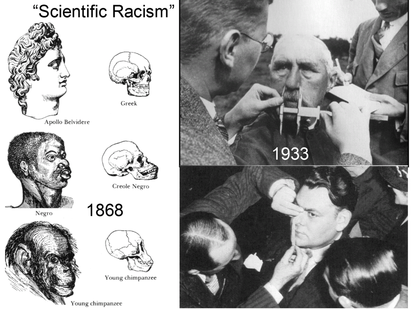
So there's always these photos that show what 'scientific racism' looked like, and there are even more photos of what looks to be scientists measuring skulls and nose bridges, it almost feels as though the idea of scientific racism was prevalent and normal at the time, and that it was the intellectual position to hold.
I'm pretty sure that at the time there were people who argued against the methods used and the conclusions, and wrote papers about it and such. But who are these people and what happened when they did publish anti scientific racism papers or whatnot
Did it even happen? I found it hard searching on Google, just finding that the UNESCO after WW2 wrote this book called "The Race Question" But apparently even then the first edition didn't entirely reject the idea of race biology, which further adds to my question, when exactly was race biology/scientific racism debunked by the scientific community anyways?
2 Answers 2018-11-16
3 Answers 2018-11-16
Little background: I'm an editor and currently editing a manuscript for a client of mine. The manuscript deals heavily with religion, namely Christianity, and the author is exploring the nature of the Christian god by bringing up contradictions, uncomfortable truths, etc.
I have a list of suggested reading for him so that he may develop his ideas more and have more credible sources so as to support his arguments better. I have a specific piece in mind that I want to suggest, but unfortunately I cannot, for the life of me, remember what it's called or even who the original author is.
Here is what I do remember:
Obviously Medieval. I'm sorry I cannot be more specific as the Medieval period spans ~1000 years :(
It addresses all the contradictions in the Christian Bible and asks them to be answered
The author's point wasn't to argue that Christianity is wrong, but that in order to take the Bible literally, then these contradictions must be answered
There are (I think) over 400 contradictions that the author brings up
I greatly apologize for being so utterly vague. With such little memory of details that I have about the piece, it's nearly impossible to find exactly what I'm looking for on the interwebs, so I'm hoping that someone here can help me out. Thank you in advance.
1 Answers 2018-11-16
One take I have read on the causes of the Troubles in Northern Ireland was that there were a number of anti-Catholic practices, laws, and policies. What was the origin of this? Is it the old anti-Catholic laws and mistrusts from Protestant Britain (such as anti-Catholic voting laws), or something specific to Northern Irish politicians, or is there evidence to support this? Below are some examples.
(SOURCE) See also: Timeline of the Northern Ireland Troubles and peace process There is little agreement on the exact date of the start of the Troubles. Different writers have suggested different dates. These include the formation of the modern Ulster Volunteer Force in 1966,[60] the civil rights march in Derry on 5 October 1968, the beginning of the 'Battle of the Bogside' on 12 August 1969 or the deployment of British troops on 14 August 1969.[52]
Civil rights campaign and unionist backlash Main article: Northern Ireland civil rights movement(https://en.wikipedia.org/wiki/The_Troubles#Civil_rights_campaign_and_unionist_backlash)
In the mid-1960s, a non-violent civil rights campaign began in Northern Ireland. It comprised groups such as the Northern Ireland Civil Rights Association (NICRA), the Campaign for Social Justice (CSJ), the Derry Citizens' Action Committee (DCAC) and People's Democracy,[61] whose stated goals were:
*an end to job discrimination – it showed evidence that Catholics/nationalists were less likely to be given certain jobs, especially government jobs
*an end to discrimination in housing allocation – it showed evidence that unionist-controlled local councils allocated housing to Protestants ahead of Catholics/nationalists
*one man, one vote – in Northern Ireland, only householders could vote in local elections, while in the rest of the United Kingdom all adults could vote
*an end to gerrymandering of electoral boundaries – this meant that nationalists had less voting power than unionists, even where nationalists were a majority
*reform of the police force (Royal Ulster Constabulary) – it was over 90% Protestant and criticized for sectarianism and police brutality
*repeal of the Special Powers Act – this allowed police to search without a warrant, arrest and imprison people without charge or trial, ban any assemblies or parades, and ban any publications; the Act was used almost exclusively against nationalists
1 Answers 2018-11-16
I grew up in a religious setting. I was taught many stories from the Bible. Among these stories was one about the enslavement of the Hebrews and their eventual exodus from tyranny. However, many readings I’ve done on the ancient Egyptians seem to not mention this at all. So did this really happen? Or is this just a biblical tale?
1 Answers 2018-11-16
I was at a lecture today and the speaker mentioned that classes hadn't changed much for hundreds of years. He used two terms which I thought were pretty slick: Sage on Stage, and Chalk and Talk. According to him the biggest change has been chalk board to white boards and the diversity of the student body.
This is a broad question but what has changed? Would the overall college structure with semester long classes be different? Did they have similar sorts of schedules, one hour two or three times a week. Would homework from 1800 be recognizable today?
I hope comparisons to today don't violate the 20 year rule, if so how would early colleges compare to 1998?
1 Answers 2018-11-16
Having learned a fair bit about WWI through history classes and such, I know the war is sort of famous for the prolonged trench warfare, but were there any large-scale naval battles during the time? Or did the war all happen in continental Europe and there was never any call for naval combat?
1 Answers 2018-11-16
Obstensibly, the USSR was supposed to spread the revolution internationally; so why then did it set-up independent socialist governments in Eastern Europe instead of creating additional Soviet Socialist Republics to enter into the Union? I know in reality the USSR was predominantly just a successor to the Russian Empire, but I'm curious if there is any more to it since these puppet states were part of the former empire as well.
To me, it makes sense to both spread the revolution and reconquer old territories.
3 Answers 2018-11-16
1 Answers 2018-11-16
Title says it all. I'm curios to learn what and how he learned.
1 Answers 2018-11-16
1 Answers 2018-11-16
Okay, so I'm friends with a military history nerd who says that Japan's tanks were pretty awful during ww2, and that their doctrine for them was really dumb, treating them basically as infantry that required fuel. He claims that had Japan put more effort into tanks, they might have been able to win in China, and possibly win the war.
However, I really don't see how that could work. While China has a lot of nice flat tank country, the main enemy the Japanese faced there (as far as I know, at least) was their own supply lines, as China's awful infrastructure prevented them from expanding any further than they did in real life. I can't imagine adding large amounts of fuel on the list of things the Japanese needed to lug out to the middle of nowhere would help their supply chain any.
Meanwhile, in Burma, not only was the supply situation awful because like, dirt roads in a jungle aren't really good for that kind of thing, but like, they were in a jungle, which is basically the exact opposite of good tank country. Even if they had been able to supply large amount of tanks out there, I can't see what good they'd've done.
Meanwhile in the pacific islands, the supply situation was a lot less awful because you really couldn't get that far away from a port, I still can't see what good tanks would be. Like, from what I understand the optimal use of tanks, at least back then, was to break through enemy lines so you could encircle and destroy massive enemy armies with a numerically inferior force. But like, the pacific islands they fought on are, as far as I know, pretty small. Is there even enough room there for that kind of a maneuver there?
1 Answers 2018-11-16
My question is narrow in scope [topic] and broad in scope [language] but it is confined to one group, the Anglo-Saxons.
I was reading a history book online [PDF format] and it had this:
|| :| |Lloyd House, Lloyd Farm, in Penn, 4 m. S. of Wolverhampton. |The root is perhaps A. S. lead, leode, M. E. lude, which has a variety of meanings, e. g. men or people of the country, a prince or nobleman, sometimes ' a country, or district/ apart from its inhabitants. The difficulty here is in the application of any one of these meanings to a pi. n.
At first, I thought it was Welsh llwyd "gray", which often becomes Lloyd in some contexts, and Mercia being close to Wales.
At that time there would have been Anglo-Saxons like Wulfrun in existence, and Wigstan, who was a Mercian prince [I know there is a town called Wobaston, meaning "Wigstan's town", from the Old English personal name + tun "farm"].
The Old English dialect at the time was Mercian, which probably explains why Wall is from Mercian waella instead of Old English wella.
How does some of the Old English get corrupted and twisted so it gets confused with Celtic [at the time of the Anglo-Saxons there were probably a few Celts living there, am I correct?].
I'm trying to understand the Anglo-Saxons [Mercia region] for several reasons - historical research and creative works [worldbuilding/alternate history/videogame with historical settings, although those fall outside the purview of this subreddit].
The book is obviously a secondary source, but it uses place-names from historical rolls/Onomasticum [I believe that was a Latin book at the time] from 1100s/1200s, which are primary sources.
I've used Google Street View to try and understand the landscapes for topography, not sure if that helps or not for place-name meanings.
I'm doing some basic research into history/placenames, but other than these books, where are good places to start? I don't really want to get into paywalled educational resources, but I do know my local libraries don't have as many place-name books as in the early 2000's, so it's a bit harder to research there now.
Finding good websites to research is the harder bit, as I'm trying to treat them as a source that's being assessed too [wrong mindset?]
Obviously, I can't really gain access to the primary sources due to fragility of them, so the books as secondary sources are the next best thing.
I would appreciate any input from historians on interpreting and understanding these sort of secondary sources, and place-names in general.
1 Answers 2018-11-16
Today:
You know the drill: this is the thread for all your history-related outpourings that are not necessarily questions. Minor questions that you feel don't need or merit their own threads are welcome too. Discovered a great new book, documentary, article or blog? Has your Ph.D. application been successful? Have you made an archaeological discovery in your back yard? Did you find an anecdote about the Doge of Venice telling a joke to Michel Foucault? Tell us all about it.
As usual, moderation in this thread will be relatively non-existent -- jokes, anecdotes and light-hearted banter are welcome.
10 Answers 2018-11-16
Was this always the case? Were other orientations used in antiquity? What caused this to become the default map orientation?
1 Answers 2018-11-16
Japan has a highly developed industry, including a very successful car industry. Japan has a long history of building aircraft, they produce their own military jets, they build their own orbital rockets and satellites. Clearly they country is capable.
And yet it appears that post-WW2 Japan has only build two indigenous airliners, NAMC YS-11 in the sixties, and then MRJ now (and MRJ is still being developed).
1 Answers 2018-11-16
I have read Athena being called Pallas Athena a few times, but I can't seem to find what the 'Pallas' part is for. Is there an explanation behind this addition to the name?
As for Athena Promachios, I read that it is a 'nickname' for that specific depiction for Athena. Is that a 'universal' depiction of Athena (i.e. is this depiction found in different parts of Ancient Greece) or is it tied to only one location?
Finally, I have only found instances of Athena having examples of this. Do the other Greek gods have these as well?
1 Answers 2018-11-16