I understand that Benjamin Franklin was a slave owner who became an abolitionist later in life. I was once on a tour and the guide said that Franklin did oppose slavery, but did believe that in white superiority. Is this true? I cannot find evidence of it anywhere.
1 Answers 2018-09-22
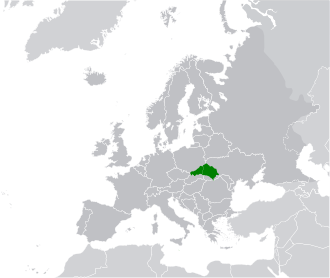
There is a region of north-western Spain called Galicia. There is also a region in western Ukraine and Southern Poland with the same name, this used to be a kingdom in the Austro-Hungarian Empire.
When I asked this question before someone posted excerpts from the Wikipedia articles (the mods deleted this answer because it was plagiarized) which said that Spanish Galicia got its name in Roman times and that Ukrainian Galicia got its name from the kingdom of Galicia–Volhynia, but that is one mighty coincident. Why would peoples from two unrelated language groups come up with exactly the same name?
I think it is very likely that the Slavic name for their Galicia sounded somewhat similar to Galicia and that someone who could write and had a classical education latinized it to the name of the Roman province in Spain, because that would sound fancier and was easier to write, but that's just a guess.
1 Answers 2018-09-22
Or was the collectivization primary implemented to place agriculture under the control of the state?
1 Answers 2018-09-22
Unlike WW2, where the Nazis were clearly the "big bad guys" (imperialism,fascism, and all that came with that) , I believe that Germany's representation in WW1 of being "bad guys" was probably due to entente winning and propaganda that comes with that and also the 2nd world war that definitely tainted Germany's reputation heavily later on in history.
I could be wrong, but the only reason Britain joined the war was their alliance with Belgium and the Schlieffen plan, giving Britain the opportunity to stomp the mainland European world power, and crown the UK as the only European power. This could say that they were the "bad guys" as they joined to advance their imperialism and remain the world super-power.
Sorry if this is a FAQ. I always wonder why people shit on Germany in WW1 and how this is probably due to us British and colonies/USA/France (I'm from New Zealand) being the victors, and the whole "the victors write history" thing.
2 Answers 2018-09-22
I've heard it said that the Ming Dynasty had the potential to be the kick-off point for the industrial revolution, centuries before it developed in England. What is the accuracy of this?
1 Answers 2018-09-22
2 Answers 2018-09-22
2 Answers 2018-09-22
One would think that they could gather a lot of resources at their disposal.
1 Answers 2018-09-22
I'm just curious about this, I read it on wikipedia. What do they mean by "first true empire". Was it called that, because it expanded quickly for its time? Did it have anything to do with its organized military that turned it into a strong long lasting empire?
Thank you
1 Answers 2018-09-22
Watching a western and they’re hanging someone in this particular scene. For some reason I wondered if the hangmen were given a traditional pay or if it had to do with how many people they hung.
3 Answers 2018-09-22
So I keep reading everywhere that the US and a few other countries took on Nazi scientists after the end of WW2. I'd imagine this is more like forced service rather than actually being hired though, so I'm curious, what was their experiences?
Were they monitored the entire time? Given accommodations/told to find one or forcibly kept somewhere (prison-like)? Were they given work assignments or were they allowed to choose what they wanted to work on? What were their interactions with their American colleagues like? Was this whole experience an opportunity they CHOSE, or was this imposed on them? Did they ever do interviews about the Nazi regime (I'd imagine lots of folks would be curious)? Were they ever allowed to leave the country and visit Germany (or anywhere really, like maybe a vacation or something)? Were they clandestinely monitored, or was it 100% obvious, like with cameras and a guard at all times? If they were ESSENTIALLY a prisoner doing labor, how was their personal lives, as in, were they allowed to have a significant other and 'intimate' times (cause if the only SO they were allowed were wives they married before or during the war, I highly doubt they'd ever get the chance to be romantically involved with anyone)?
1 Answers 2018-09-22
Having read a number of questions and answers about the topic on this subreddit, it occurs to me that I know very little about how the Spanish came to control Mesoamerica (for instance, I get that the Spanish allied with various disgruntled city states, but how did they come to control those city states later on?). What books would you all recommend that give a good, accurate overview of this series of events for someone who is not well-versed in Latin American history?
1 Answers 2018-09-21
I've been doing a lot of genealogical digging recently, and I've been looking through records of very very very distantly related noble ancestors from the middle ages. In many cases, historical rulers often have incredibly approximate dates of birth (usually just "circa [year]" or a range of several years), but have the precise date of their death listed, sometimes with even the day of the week. Was this due to funerals being more likely to be recorded than births, dates of birth being absent from baptismal records, or something else entirely?
1 Answers 2018-09-21
He died in the 80s, so what happened after WW2 and how did people treat him after WW2?
1 Answers 2018-09-21
1 Answers 2018-09-21
Hello all,
I received this poster as a gift from my AP World History teacher in high school, but I'm not sure what the translation or context of the poster is. I know it depicts Lenin and he looks fairly heroic, but the text at the top is a mystery to me, and I'm not even positive it is in Russian. I've tried to translate it on the internet but have had no success. Is it satirical? Propaganda? My teacher did tell me she got it in the 1980's in Russia.
Thanks in advance for the help,
Plat
1 Answers 2018-09-21
1 Answers 2018-09-21
[deleted]
1 Answers 2018-09-21
I'm thinking, to get out of serfdom or was it morse important for other parts of the society?
1 Answers 2018-09-21
I've always heard about women becoming a big part of the American war effort and industrial process during WWII, learning specialized skills and helping to build tanks, ships and so on. But then there's the picture of America in the 50s, with housewives who mostly devoted their time to their children while their husbands worked. Is this a wildly inaccurate picture of post-war America? Did any of the female skilled labor continue on to a career?
1 Answers 2018-09-21
Not trying to start a debate, but I was curious after hearing the news about Hungary banning gender studies as a university subject
1 Answers 2018-09-21