I know Wikipedia is not a very reliable source, but I was looking at this page: https://en.wikipedia.org/wiki/Historical_rankings_of_presidents_of_the_United_States
and playing with the numbers a little bit.
The part that prompts my question is this:
9 William Henry Harrison
10 John Tyler
11 James K. Polk
12 Zachary Taylor
13 Millard Fillmore
14 Franklin Pierce
15 James Buchanan
16 Abraham Lincoln
17 Andrew Johnson
18 Ulysses S. Grant
With the exception of Abraham Lincoln and James Polk, every single one of these presidents is in the bottom quartile. In fact, of all the presidents in the bottom quartile, only two of them are not from this stretch of time (Warren G Harding and George W Bush)
So for a period of about 30 years, before and after the Civil War, we had a string of terrible Presidents, one after another.
What caused this? Why are most of the lowest-rated presidents all from this one period in our history (instead of, as one might assume, more evenly distributed?)
3 Answers 2018-01-07
4 Answers 2018-01-07
Broad questions
There were merchant republics, how come these city states could hold off being taken over by large empires?
I do realize their power could be large in some examples like Venice, but then the question is why these did not expand by land if they did wield so much military power.
How did the power play look specifically if it was the case of the kingdoms rather having these city states independent? Sounds like good political intrigues lasting hundreds of years.
2 Answers 2018-01-07
The European Barbarian trope, shirtless, long-haired with blood and paint on his body while shouting in anger is very common.
They also live in little huts of wood, in the face of the great structures of the Romans.
In fact, it's almost the only way people see the Gauls (unless they read Asterix) or early almost all Barbarians, maybe with the exception of Germanic tribes of the late empire.
Does history show another face ? Or is this trope mainly true ?
I know the Gallic Wars and maybe Brennus will come forward as examples, but I'm interested in the trope vs the historical data that expert may have.
2 Answers 2018-01-07
Were they generally in favor of him at the time?(until his subsequent military failures) or did they disapprove of an emperor altogether?
1 Answers 2018-01-07
1 Answers 2018-01-07
So I vaguely remember a scene from a Tom Hanks film where they discuss a meeting in Constantinople (I think) where a bunch of folks got together and essentially kicked out books for being canon. Did this really happen? Any reason for the books (overarching themes, ideologies or otherwise) that were removed and are any of them available to be studied today?
1 Answers 2018-01-07
When two medieval armies clashed, what happened to the fallen? Would the victors send the bodies back home? Would they just mass grave everyone? Or was it dependent on where and who was fighting?
1 Answers 2018-01-07
1 Answers 2018-01-07
Hi. Where should I look to find specific details regarding a Vought Kingfisher that was shot down over Okinawa on June 16th? Particularly interested in the fate of the crew.
1 Answers 2018-01-07
Hello, I'm doing a Government project on the history of campaign finance and I was wondering if there was a term for this concept I've noticed, for example;
Presidents become president through the loopholes in campaign finance laws, so therefore they will not change those laws once in power because that's how they a) initially got into office and b) can be reelected into office.
I noticed this concept initially with Theodore Roosevelt.
Is there a title of this concept? Thank you, hopefully this post is relevant to this subreddit.
2 Answers 2018-01-07
in bartolome de las casas' history of the indies it says
"Wednesday 4 days of July he ordered to raise and to give the candles of that island of Santiago in which it says that after it arrived it never saw the sun nor the stars but the skies covered with so thick fog that it seemed that they could cut it with knife and intense heat that anguished them and commanded to govern by the way of the Sudueste that is the road that leads from those islands to the Austro and Mediodia in the name of the Holy and individual Trinidad because then the West of the Sierra Leone and Cape of the West would be Sancta Ana in Guinea, which is below the equinoctial line where it says that beneath that parallel of the world there is more gold and valuables and that they would sail by pleasing Our Lord to the West and from there would pass to this Espanola in which road would see the opinion of the king D Juan susodicha And that he thought to experience what they said the Indians of this Spanish that had come to her from the part of the Austro and the South black people and that brings the Irons from the acagayas of a metal called guanin, from which he had sent the kings the test where it was found that of the thirty-two parts, the eighteen were of gold and the six of silver and the eight of copper. " https://books.google.com/books?pg=PA226&dq=Acagayas&ei=PpjJUdT0KKax0AHz1oHwBw&id=EHAAAAAAYAAJ#v=onepage&q&f=false
and it also says
" They came to see certain principals of that island of Santiago and they told him that to the Southwest of the island of Fire, which is one of the same ones of Cape Verde that is 12 leagues away, one could see a island and that King D Juan had great inclination to send to discover the Southwest and that canoes had been found that left the coast of Guinea that sailed to the West with mercadurias "
https://books.google.com/books?id=EHAAAAAAYAAJ&pg=PR5-IA1#v=onepage&q=costa%20de%20guinea&f=false pg 225
so did africans travel to the americas or not?
2 Answers 2018-01-07
2 Answers 2018-01-07
Today:
Welcome to this week's instalment of /r/AskHistorians' Sunday Digest (formerly the Day of Reflection). Nobody can read all the questions and answers that are posted here, so in this thread we invite you to share anything you'd like to highlight from the last week - an interesting discussion, an informative answer, an insightful question that was overlooked, or anything else.
9 Answers 2018-01-07
1 Answers 2018-01-07
I'm curious how many American soldiers were defending the island of Midway when the battle for Midway started in World War 2, also how many Japanese were attacking? If you could also say something about the equipment of each side and defense/offense capabilities, training, battle experience and likely outcome of a amphibious operation against the island that would be great as well.
1 Answers 2018-01-07
I've listened to the History of Rome, and the History of Byzantium, and I still need some help to wrap my head around the concept.
My question is threefold:
When did the city of Rome stop being important to the Roman Empire, and, therefore, its ability to call itself the "Roman Empire"? I.e. When did the people decide that they were "Roman" whether or not their centre was actually the city of Rome, and therefore their identity became more to do with who they were rather than where they or their government lived?
Why did the Eastern Roman Empire still consider itself to be the "Roman" Empire after the West fell and, especially, after Rome itself was no longer part of its territory? By that, I mean why didn't it call itself the "Byzantine Empire" or the "Constantinopolitan Empire" ?
Robin kind of touched on this in his History podcast, but regardless of whether or not the Eastern Empire considered itself to be Roman right up until 1453, was it truly Roman? If so, how could it be Roman in the same sense that they Western Empire was? If not, at what point between the formation of the Eastern Empire and the collapse of the Western Empire did the Eastern Empire stop being truly "Roman"?
2 Answers 2018-01-07
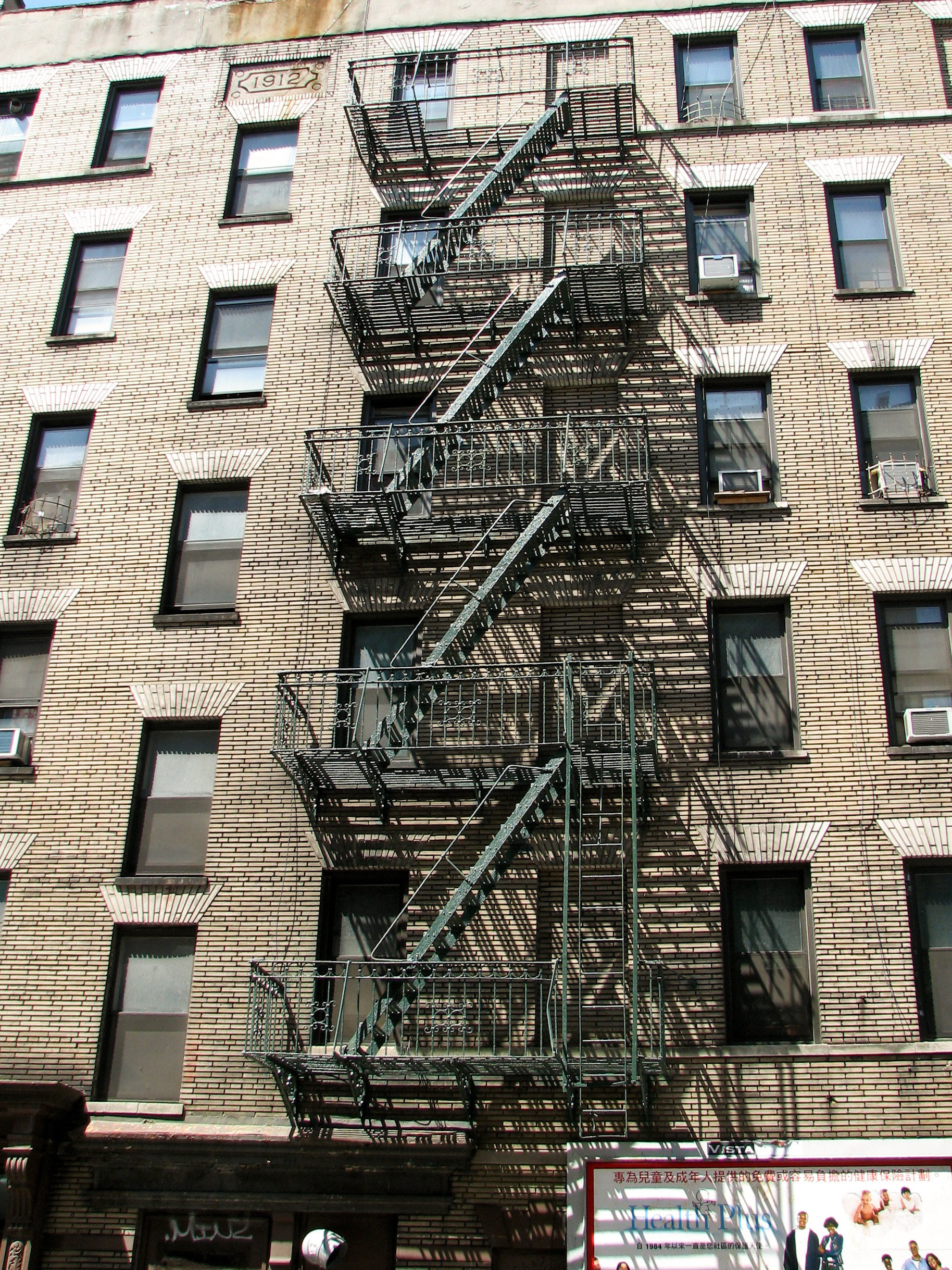
So my question is about fire-escapes like this and this I'm from Europe and I have seen these fire-escpaes in many american movies, but I didn't really think about before visiting NYC just recently. And they were everywhere, on almost every residential building. Sure, some buildings in Europe have similar fire-escapes, but nothing quite like this.
Where does this come from and why aren't they built indoors? I'm asking, because in my personal opinion, these things look horrible, especially on historic buildings. I can also imagine these fire-escapes being used as entryways for burglars, thereby reducing security in cities.
1 Answers 2018-01-07
Commonly known history states that after the fall of the Roman Empire fell Western Europe went into a backwards period of the dark ages not fully recovering until the renaissance. If so how was this Roman knowledge lost from the West for so long? Or is this understanding of history wrong?
3 Answers 2018-01-07
My question is twofold:
Was war always something that was, at least rhetorically, described as being intrinsically undesirable, and as such, was treated with reluctance, spoken of as a last resort and self defense, and such? Or was war and conflict once something that was widely considered "good" or "glorious" and a goal in itself?
If there was a shift from war as "desirable" to "undesirable", when did this shift occur, how, and why?
I am here mostly concerned with the outwards rhetoric surrounding war spoken by those in favor of it, rather than the inwards opinion to it from those same persons.
1 Answers 2018-01-07
One concrete example I recall from a constitutional law class I took in college was that Lincoln used his executive authority to shut down seditious Southern papers in the Civil War. Were the limitations on government ability to suppress free speech ever extended to the executive branch through the Supreme Court?
3 Answers 2018-01-07
The murder of 1.5-3 million people under the Khmer Rouge is mind-boggling to me. Given that every single person involved with the basic levels of the regime would themselves very likely have family members at risk or already dead, how did the bureaucracy, military, and economy even function? Was it simply forced, or who did they recruit?
2 Answers 2018-01-07
I'm wondering if Native Americans had any sense of a collective, common identity to one another and if so, if they had a name for themselves as a people or for the land they inhabited that would be more appropriate than the European name imposed on them.
1 Answers 2018-01-07
2 Answers 2018-01-07
From 1945-49 the US had a four year window during which I would think the entire world understood they were the de facto military authority in the world. Nuclear weapons represented a quantum leap in force and in theory the US could exert their will wherever they wished. Did their foreign policy reflect this attitude? Did they act to try to prevent other countries from getting the bomb? What leverage did the Soviets have that caused things like the division of Germany? Did the US want to return to isolationism and not become the enforcer of liberal democracies?
1 Answers 2018-01-07