Thanks beforehand for all and any information you can provide
2 Answers 2017-11-21
*then why was globus cruciger depicted as an orb with a cross
1 Answers 2017-11-21
In the antebellum American South, was slave “husbandry” (for lack of a better, humanizing term) common and did it create a significant change in the slave population over time?
1 Answers 2017-11-21
1 Answers 2017-11-21
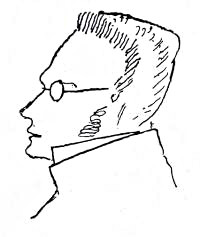
The sketch in question
1 Answers 2017-11-21
I understand the desire for land and resources, which I think were the underpinnings of operation Barbarossa, but why did they choose to strike before Britain had fallen? It seems to be a huge oversight to engage in a war on a second front while invested elsewhere. Surely the memory of the first world war and the disaster of a two-front war was still fresh. Why did Hitler (who I assume made the call) choose that moment to invade?
1 Answers 2017-11-21
Greetings askhistorians:
My uncle recently passed, leading to my family and I digging through old family photos. We found the below image of my grandfather and were hoping for some context. We have a rough timeline of his service during the war and some of his time in the national guard after the war. So, if we can get a rough idea of the date, we can likely place where the picture was taken.
Here's the picture, thanks so much for your time:
1 Answers 2017-11-21
[deleted]
1 Answers 2017-11-21
It seems to be that if a man like him was so hellbent on Pan-Germanism he'd think of all of the Germans, not just most. Even thought Switzerland was neutral, the Nazis could've just swarmed into the country, wouldn't you think?
1 Answers 2017-11-21
What is the earliest point at which naval technology was sufficient to make a crossing of the atlantic from mainland europe to the americas, barring the northern route the Vikings took? I know it happened in the 1400s but could it have happened in say the 1200s or even earlier if someone was crazy enough to risk it?
1 Answers 2017-11-21
The dude said that the whole reason the Natives helped the pilgrims grow crops and stuff is so they would stop digging up the graves and eating their dead. Also, I am less interested in pilgrims being cannibals on Thanksgiving (whenever that really is), and more interested in whether or not they cannibalized dead Natives at all. If you can answer both though, that would be awesome.
3 Answers 2017-11-21
Is it possible to look up the wikipedia page of a town, read about its history, and know what type of music you can expect to hear in its nightclubs? I think musical tastes say a lot about the area's culture and the population's personalities. I went to college in a city where electronic music was extremely popular (and essentially considered the "cool people music"), and my brother went to college in a city where the "cool people" listened to hip hop. If it was the other way around, we both would have been less happy. Surprisingly, his school has a larger percentage of white students than the one I went to. I find this contradictory, since hip hop is a historically black genre and I find most of the electronic music djs are white. I'm not ready to rule out demographics, of course, since you can find more k-pop in korea and j-pop in japan than anywhere else... but I just haven't figured it out yet.
Somewhat irrelevant information about me/why I'm curious about this: I'm in my early 20s and eventually will move to my own place, and I want to go somewhere where I can find people I connect with. One easy method of meeting people is participating in the nightlife, but I never fit in at places that play hip hop (which is extremely popular in the States, for those who don't live here or for those who do live here and are living under a rock). There are places in the country that are well-known electronic music havens like Las Vegas or Miami, or in Europe like Amsterdam, but I would like more options than that (I actually will become a dual citizen in a few years, so English-speaking places in Europe will be an option). I grew up in a place that has no nightlife and the songs played in restaurants only appeal to middle-aged people. My family has recently moved, but it's the same here, too... maybe worse (understandably. I'm living with my parents and they're not about to start partying in Vegas. I'm fine for now since I get to live for free xP but eventually things will have to change).
1 Answers 2017-11-21
I recently finished reading Holger Ekertz's two books, purporting to be a collection of interviews done by his grandfather in the 1950's of German soldiers who participated in the battles in Normandy during June and July 1944. Overall, there were a number of accounts that I found to be somewhat shocking, but the Taifun B interview strains credulity. I can find no other reference to this weapon, or the Germans developing such a weapon, anywhere else. Also, the interviewee claims that an earlier version of this thermobaric weapon was used against fortifications during the siege of Sevastopol on the Eastern Front. I have read a lot about that particular battle, and have never heard of a single explosion approximating the effect described by the interview subject.
Hence, my question: Was this a real weapon? I admit that I am, at best, an interested amateur, so there is a chance that there are references to it in more obscure sources. Also, I don't speak German.
Some follow-up questions, if you have time: Is it possible that all records, except this interview, where somehow lost? And, what is the academic sense of the authenticity of Eckertz's work overall?
I have seen critiques online about the the books being fake. In googling around, I can't find anything on Holger Ekertz, his grandfather, or any academic review of the source documents for his books. Makes me skeptical.
Thanks for your help and insights!
1 Answers 2017-11-21
1 Answers 2017-11-21
I'm trying to find the answer this to help honor the passing of a friend.
I've only been able to find a few sources on placing the "wolf hour" or "hour of the wolf" at around 3-5am, or right before sunrise.
Some sources talk about how it is an ancient roman phrase, but other sources say it is an ancient Scandinavian concept that wolves chased the sun and moon across the sky. Both of these sources seem to reference a 1968 movie.
Is the hour of the wolf a real historical thing, or is it just a made up phrase for the movie?
Thanks
1 Answers 2017-11-21
I also have some other questions regarding ancient Siam/Ayutthaya:
What were the chances of Ayutthaya becoming an Asian superpower at the time?
How strong and powerful was Ayutthaya and the Ayutthayan military?
How were elephant trained to handle combat on the battlefield?
There are 3 people on a war elephant. There’s the nobleman/Prince/king/general riding on the elephant’s neck, the mahout at the back, and a guy in the howdah(?)/sear with weapons. What was the guy in the seat’s role while in battle?
Can regular soldiers ride war elephants?
How were war elephants treated by the Ayutthayan/Burmese military and Ayutthayan/Burmese society?
How common were elephant duels on the scale of King Naresuan and the Crowned Prince of Burma’s duel?
What happened to elephants who died on the battlefield?
Were there social stigmas against killing a war elephant?
Did the Ayutthayan and Burmese militaries establish a formal rank system a la modern day militaries? (I.e. private, Private First Class, sergeant, sergeant major, etc./lieutenant, captain, major, colonel, general, etc.)
Was Ayutthaya an “Asian power” during King Naresuan’s rule/at Ayutthaya’s peak?
In a hypothetical war, would Ayutthaya under King Naresuan/at Ayutthaya’s peak be able to fight the Chinese and Japanese?
1 Answers 2017-11-21
I know the banjo was an African instrument, and bluegrass comes from Appalachian "old-time" music. Where is this Celtic/Irish folk/river dance sound coming from?
1 Answers 2017-11-21
[deleted]
1 Answers 2017-11-21
With American thanksgiving coming up, I have been seeing a lot of the history surrounding the holiday. Something I’m consistently seeing is that Squanto, the Native American that made contact with the pilgrims, knew the English language already. So how did Squanto know English before he met English speakers?
1 Answers 2017-11-21
Specifically looking at around 1000-1016 and the reign of Cnut, would outsiders and the people of the Danelaw itself have continued to draw cultural distinctions between Saxon and Danish settlers? The sources I have looked at cannot agree on the amount of Danish settlement, but all agree there was at least some.
Further to this, was there significant Norse/Norwegian settlement as well as Danish? And was there any serious distinction between these two peoples at the time?
1 Answers 2017-11-21
[deleted]
1 Answers 2017-11-21
The situation doesn't exactly seem like a stretch of the imagination for World War I, but I'm curious about Caporetto in particular.
1 Answers 2017-11-21
1 Answers 2017-11-21
(happy to have this post deleted if/when someone can direct me to a more appropriate subreddit) I'm just curious where the justification (i.e. what is the source for this theoretical limit) for this rule comes from.
2 Answers 2017-11-21