To clarify, I am trying to compare these two moments in terms of social oppression. Perhaps race, class, or imperialism might play into how they were similarly or dissimilarly oppressive?
Alternatively, if you know of any sources that detail the political and social life of Vienna or Germany during this period, I'd greatly appreciate recommended reading!
1 Answers 2017-10-16
I'm sure this question has been asked in the past in some form, but I can't seem to find the answer. I was wondering what percentage of the world's Jewish population was killed during the holocaust. Also, I have two other questions that I was hoping someone might know the answer to:
There are many famous Jewish people today that lived in concentration camps and survived, but are there any know famous people (specifically ones famous in the scientific world like famous chemists, physicists, etc) that were known to be killed during the holocaust? I know Germany let some high profile Jewish scientists live and used them to develop new instruments of war, but I don't know of any specifically that died and wondered if someone did.
What is the breakdown of number of people killed during that time by a particular method. For example, x number of people died in the gas chamber, y number of people died via firing squat, etc. I assume that the gas chamber and starvation accounted for the most deaths, but figured other methods were probably also used.
1 Answers 2017-10-16
As a fellow historian, I should really know the answer to this question but I have rarely touched on how the war itself was portrayed by the media at the time. Anyways, how was the Polish campaign exactly covered? Where there foreign correspondents and journalists with the Wehrmacht as well as the Polish Army? What was the proportion of the journalists/corespondents attached to both sides? How independent were foreign journalists, did they cover the war themselves or rely on what was provided to them by either the German or Polish governments? What was the general tone of English speaking journalists when covering the campaign? Feel free to recommend journal articles or books that might relate.
1 Answers 2017-10-16
In a world war 2 documentary, it mentioned a group of mixed race Germans called the "Rhineland bastards", and that they were sterilized by the Germans. How did this demographic come about, when Germany and the countries around it had a very large majority white population?
1 Answers 2017-10-16
3 Answers 2017-10-16
1 Answers 2017-10-16
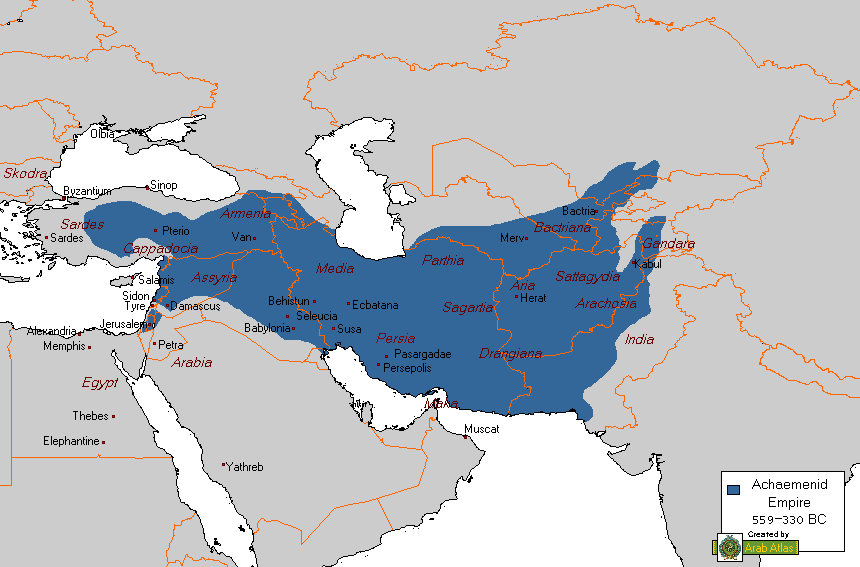
Some examples:
https://en.wikipedia.org/wiki/Hittites#/media/File:AlterOrient2.png
http://www.historyofmacedonia.org/AncientMacedonia/images/macedonianempirelarge.jpg
http://www.standstillawhile.net/wp-content/uploads/2011/05/Seleucid_Empire.gif
https://en.wikipedia.org/wiki/Sultanate_of_Rum#/media/File:Anatolian_Seljuk_Sultanate.JPG
2 Answers 2017-10-16
I read this interesting book review from Bill Clinton and it got me thinking about this. To what extent have modern, (Post WWII - Clinton) presidents displayed a good knowledge of 18th and 19th century US history?
1 Answers 2017-10-16
Thinking about this with the Oct. 31 anniversary coming up.
1 Answers 2017-10-16
1 Answers 2017-10-16
In 1997 the islands of Anjoaun and Moheli tried to secede from the union of Comoros and rejoin France, their former colonial power. France declined to re-assimilate the islands and instead worked with the international community to resolve the inter-island strife.
So why did Anjoaun want to secede and what was happening in late 90's French politics that made them say no?
1 Answers 2017-10-16
2 Answers 2017-10-16
The Soviets are always typecasted in movies as relying upon massive, unskilled infantry charges directly at the enemy hoping to crush them with sheer numbers alone. Was this at all the norm? Did Soviet soldiers receive any kind of training for functioning as smaller, coordinated squads, platoons, etc.? Anything beyond "Charge when the Commissar tells you to?"
1 Answers 2017-10-16
Like did the 70's in New Zealand very much resemble the 70's in the US?
Edit: no longer discussing the Islamic State
1 Answers 2017-10-16
Hello Historians,
i was wondering if you can help me identify the title of a book by its cover. The book title on the image is actually photoshopped on, and the original image overlaid with this one of a soldier in uniform, aiming a rifle. The name of the original book is known, the photoshopped one if fake - what i am interested in is if the soldier image can be found anywhere and what it depicts. Therefore i would like help with characterizing the image - what army is the soldier from, which time/war (ww1 or ww2) etc deduced from rifle, uniform, helmet, backback etc.
The helmet and rifle seem especially reconizable, maybe a dishpan/brodie helmet which would signify US or UK army? The rifle's magazine, trigger guard and lenght look very discernible, though i have no experience in identifying those. Any help would be appreciated. A reverse image look up did not yield anything, and i am working through the milrecords aides from the ressources right now. Thank you in advance.
1 Answers 2017-10-16
In the west it seemed like people used to wear hats all the time. It seemed like regardless of the weather, if you're going outside people would wear a hat, flat cap, fedora or whatever else.
Why don't people hats anymore when they were so prevalent for so long? Is it simply just fashion or is there another component to it?
1 Answers 2017-10-16
Im getting a few small tattoos which all have to do with my heritage. One of them contain Roman numerals for my Italian side. A part of the tattoo Is the year Rome was founded in Roman numerals. The year 509 BC would be DIXBC but I'm curious how the romans themselves would write it. As I understand it the counted from the founding in 753 BC , if I were to do that then the year would be 244 which in Roman numerals would be CCXLIV. Would that be accurate?
1 Answers 2017-10-16
I'm currently half way through reading the Count of Monte Cristo, and Dumas regularly refers to some sort of french god "Providence". But not always in the same way, so i'm not quite sure what it is
Google seems to have turned up hardly anything except quotes from the book, no explanation of what / who it is.
Unless its some mystery that will get revealed as I finish the book!
1 Answers 2017-10-16
I am particularly interested in China, Korea and Japan here but am also interested in other countries as well.
thanks!
2 Answers 2017-10-16
Speaking about Rome let's say during the first two centuries AD.
The romans fought in very disciplined rows of men, so what could one soldier do to be recognized as a particularly skilled fighter or for valor/bravery? Did they just stab more enemies than the people to their left/right? Did they break formation and win a bunch of one vs one duels (doubtful, however this is what I picture when I hear someone was a particularly great fighter)? Just curious how a soldier fighting in a tight formation could distinguish himself from the others on the battlefield.
Sorry if the question is confusing. It's just confusing to me how this would work as I picture romans standing side by side and taking turns stabbing the enemies in front of one another. It seems like it would be hard to get recognized for individual feats as it's much more about working well With the group.
Thanks
4 Answers 2017-10-16
Since Napoleon was given lifetime sovereignty of the Island of Elba, but then was never allowed to return after his defeat at Waterloo, who was in control of the island?
1 Answers 2017-10-16
Or did their war plans really propose that they take on all of the United States' resources and industrial strength even if Hitler hadn't split the latter by declaring war on the US?
1 Answers 2017-10-16
What battle was the most costly to the Germans and resulted in defeat due to a tactical error?
Taking into account total axis casualties and before the Wehrmacht was practically defeated.
1 Answers 2017-10-16