Hi,
Renaissance is also regarded as a revival of antique. I'd like to ask if anyone knows why Plato denied visual arts and individualism in art. Why has this approach become popular again in renaissance?
Thank you!
2 Answers 2017-06-04
1 Answers 2017-06-04
I'm writing a comic set in a Bronze-Age pre-Abrahamic Middle East-inspired world, and I view adding historical accuracy as crucial to make my comic feel more authentic in its setting when read.
So, in the Bronze Age, we have the Dilmun civilisation in Arabia.
One of the oldest civilisations in the Middle East, regarded as so holy by the Sumerians that its garden paradise is in its creation myth.
Also, it was an important trading centre, but pirates messed up its importance, and in later periods annexed by the Persians and Babylonians.
But the main question is this: Were there any nomadic tribes around Dilmun at its time?
I've heard of the existence of the Quraysh tribe right before the rise of Islam, (I'm not Muslim, but I have an interest in Islamic culture and history) and I've heard that it was scattered and nomadic before it controlled the Ka'aba.
So were there similar known societies at the time of Dilmun?
Your response will be greatly appreciated.
1 Answers 2017-06-04
I've always been fascinated by this particular period of history and I would like to write a short story set in this period, but I don't really know where to start from.
I've only read a couple of books and watched some movies/documentaries about Henry VIII, Mary I and Elizabeth I and although I've absolutely adored them, they mainly focused on the lives of monarchs/people who belonged to the upper classes and I recently realized that I don't know much about the daily lives of common people (peasants, artisans, innkeepers, prostitutes and such).
What are some good books on this subject? Feel free to suggest movies, documentaries and even TV series if you wish to, the most important thing is that they have to focus on ordinary people during this particular era.
1 Answers 2017-06-04
Regrettably I am ignorant on the history of map-making.
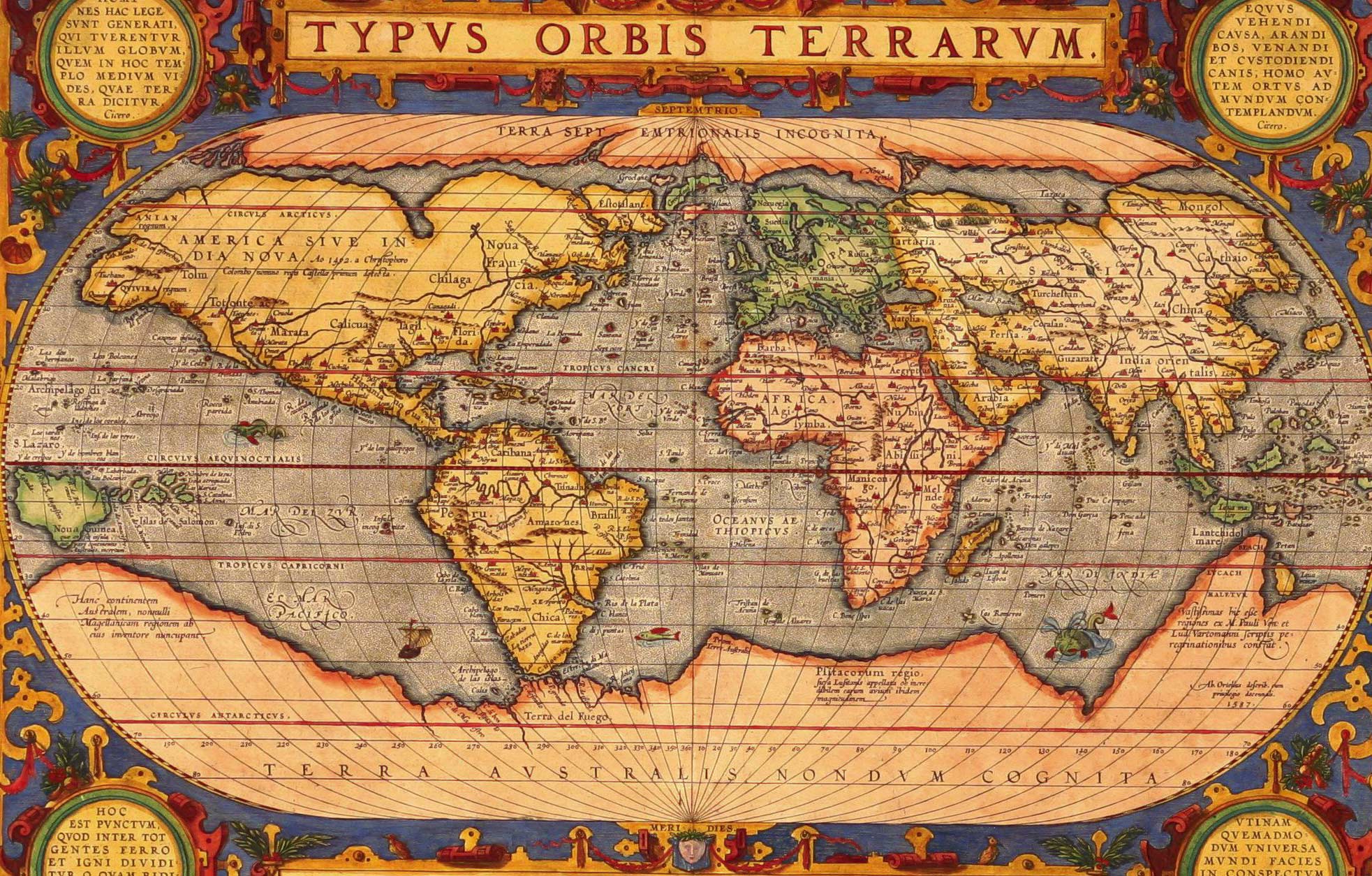
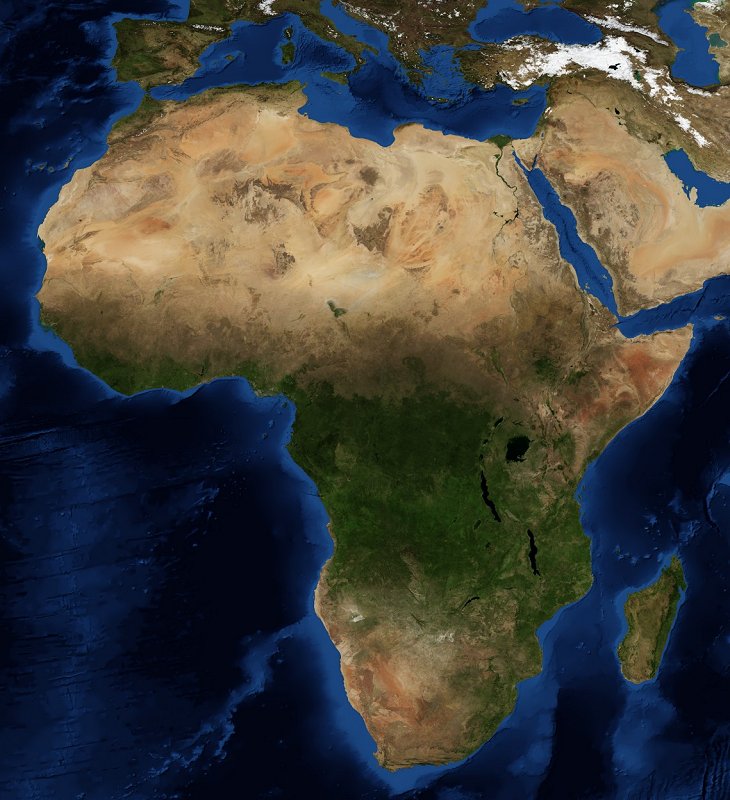
My example is this map, from 1587. Many areas are blown out of proportion and not accurate, but many of the continents are still recognisable to some degree. Without the labelling you could still identify Africa, because it looks somewhat similar to pictures of Africa taken from satellites recently. Even the Americas look recognisable despite North America being drawn extremely wide and South America being thicker than it actually is.
Without a map or GPS, I would have no knowledge of what my country looks like from space. How were cartographers of a world without GPS and space travel able to do this?
2 Answers 2017-06-04
1 Answers 2017-06-04
Thanks!
1 Answers 2017-06-04
For example, did he literally choose the location for a brand-new settlement? Or did he just take an existing settlement and decided to make it more important by leaving a bunch of soldiers/officials there? In either case, how many people did he leave behind? Did this affect the fighting capabilities of his army? Did the Greek settlers outnumber the locals, or vice versa?
Thank you for any responses
1 Answers 2017-06-04
I don't mean to be offensive at all to this post, and I am sorry if I do sound offensive, but I have been having several arguments with my classmates who claim that not all black people in USA right now are from Africa. What I commonly respond to them is that I think all of them came from Africa, because of the slave trade, but when I ask whether they have/know any evidence of black people living in the Americas before the Transatlantic Slave Trade, they just say that "they just know that there was." All I'm really interested is whether we have any historical evidence that maybe black people have lived in Americas before it, or that maybe Africans, much like the vikings, have reached the Americas way before Columbus did.
2 Answers 2017-06-04
Grace O'Malley, 'The Pirate Queen' lived from around 1530 - 1603 as a member of Irish nobility who became a notorious pirate and also later negotiated with the Queen of England, as I understand it.
Do we have any idea what she would have worn at the time? More specifically, what would she have worn during her piracy/seafaring (though I realize that spans a number of decades)? Also, as far as noble affairs such as her marriage at 15 or meeting the Queen later in life, would she have dressed similarly to an English noblewoman of the time?
I appreciate any answers - I'm painting a lady pirate mini and found myself curious about the fashions of Grace O'Malley.
1 Answers 2017-06-04
1 Answers 2017-06-04
The song "The Star Spangled Banner" has been the national anthem of the United States since 1931 and was popular for nearly 100 years before that.
A few things are distinctive about the way in which the song is performed:
Whether sung or performed by one or more vocalists, the last few lines (sometimes starting with "O say does that star spangled banner yet wave..." and sometimes with "o'er the land of the free...") are performed in a much slower tempo than the rest of the song.
the "o'er the land of the free and the home of the brave" part, when sung, is filled with indulgent vocalistic flourishes.
performers are very, very liberal about arranging the song.
One might think that the national anthem, being an icon of the country, would be performed in a very traditional and customary way, for the sake of showing dignity and respect for a national symbol. Yet the reverse is true for this song. How did this come about? Has "The Star Spangled Banner" always been arranged and interpreted so freely, or is this a recent phenomenon?
1 Answers 2017-06-04
Hi there /r/AskHistorians! I am wondering if anyone here knows anything more about the avocado pit ink that was used by Conquistadors? Apparently there are surviving documents that used this ink, however I am hard pressed to find any examples online of this historical ink. It is supposed to be red in color, indelible, and more well behaved than other historical inks (such as iron gall). Any information or examples of this would be greatly appreciated, but it is just for my curiosity as I really like ink.
To clarify: I was wondering if anyone could point me towards some historical documents/examples somewhere online where this ink was used and can be viewed. I know there is a tutorial on how to make it, but I was really looking for more of a historical document or use.
1 Answers 2017-06-04
I'm not sure if this is a very clear question, so to clarify: There are a lot of bad history tropes that get trotted out again and again, to the continual frustration of historians. People in the Middle Ages thought the world was flat! Rome collapsed dramatically (possibly due to Christianity, or immigration, or homosexuality) and was followed by hundreds of years of desperate barbarism comprising entirely of dirty savages hitting each other with badly-made weapons. Christopher Colombus was a radical free-thinker who dared to claim the world was round. The Inquisition spent the Middle Ages rounding up a million innocent women and burning them as witches. Something about Galileo. Etc, etc.
Now, as I understand it, in English historiography, a lot of this is due to Gibbon and other 19th century historians, who were mostly pro-Empire white men who really detested the Catholic Church (either because they were anti-clericists or anti-Christianity generally, or just Protestants). And so, they viewed the Middle Ages as a backward time (unlike the previous Roman Empire, which was great, like our great British Empire) held in feudal superstition by the progress-hating, freedom-hating, science-hating Catholic Church. Not to mention of course, that Britain was one of the countries where the collapse of Rome was most dramatic (Byzantium? What's that?).
But presumably 19th century Italian, Austrian and Spanish historians had a rather different set of biases (and French, but obviously there's a strong French tradition of anti-Clericalism anyway). So, this led me to wonder if the popular understanding of history held by most people in these countries, including pop historians, see the overall arc of history rather differently? Either without our Anglosphere anti-Catholic biases, or with their own, quite different, biases?
(I know my above description of BadHistory is a bit overwrought; I'm just making the point. Feel free to use more nuanced language in your answer!)
5 Answers 2017-06-04
1 Answers 2017-06-04
How vocal were they and what happened to them?
1 Answers 2017-06-04
It seems like the Middle East, North/East Africa and South/West Asia all have a history of Islam being a popular religion but East Asia, South Africa and Europe do not. Although I can understand the first two were far away and had little cross-cultural contact, why would Europe, especially Southern and Western Europe, never see widespread conversion or adoption of Islam if only because of trade and population movement?
1 Answers 2017-06-04
Around 800-1300, areas like Baghdad and Damascus were known as the "intellectual centers of the world". These areas were making advancements in science, medicine, mathematics, physics and astronomy not seen like anywhere else in the world at the time. From the invention of algebra, widespread use of arabic numerals, to the discovery of the pinhole camera and the physics behind it in a short period of time. What made this area so keen to such scientific advancements at the time. And what were some of the key events or happenings that led to a transformation out of this "Golden Age"?
1 Answers 2017-06-03
1 Answers 2017-06-03
1 Answers 2017-06-03
As far as I know, Mussolini never pushed for a pro-White society on the same scale as Hitler, but what was Italy's relationship with racism and the Nazi race doctrine really like? Were Jews and Africans viewed as "subhumans" as in Germany? Did Hitler's pro-Aryan stance spark any conflict amongst the non-Aryan Italians?
1 Answers 2017-06-03
I'm referring to attacks such as the ones in Paris, Manchester, London, etc
2 Answers 2017-06-03
Was it like a rivalry between brothers?
1 Answers 2017-06-03