3 Answers 2016-09-15
They seem to have a reputation of being the best of the best of the British army in conflicts from the American Revolution all the way to today. Was it training, innate cultural differences, equipment? What made them the best, or rather if they were not where did the reputation come from?
2 Answers 2016-09-15
Very specific exact pictures that reappear? (e.g. like we have grumpy cat, or ancient aliens guy), recurring jokes painted or on graffiti, ones they said and didn't write/draw (e.g instructions not clear, dick caught in ceiling fan).
If so did they ever acknowledge them somehow?
1 Answers 2016-09-15
While other grain-based foods (grits, cream of wheat, congee) are considered breakfast foods, the grains they're based on are also used in other foods that are traditionally served throughout the day.
So how did oats/oatmeal become a food so closely associated with breakfast, and generally not used for foods served during the rest of the day (oatmeal cookies?)
1 Answers 2016-09-15
During the era of the Roman Empire, so up to about the sixth century?
2 Answers 2016-09-15
I was quite young when personal computers came into existence, but I remember the rhetoric from the 70's and 80's - many people afraid that computers would replace their jobs. While indeed some jobs have been lost to computer automation, many new jobs have also been created thanks to computers and the internet.
Now all the news is talking about Robots and self-driving vehicles stealing jobs in the near future. So that got me thinking, what other previous technological advances spurred such fears that people would loose their jobs?
Steam Locomotion? Electricity? Telegrams? Television?
1 Answers 2016-09-15
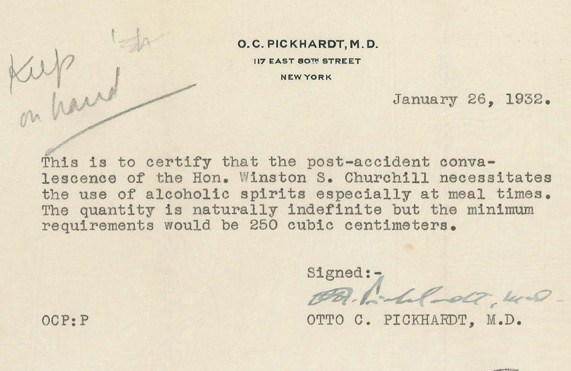
Was Winston Chruchill's permission letter exceptional? Did state laws on this issue vary? I've read articles on states with medical marijuana developing a cottage industry of ethically questionable doctors willing to sign scrips on the slightest pretense, did the same develop during prohibition? Was there much enforcement against this? What kind of conditions would get you a permission, either legitimately or spuriously?
1 Answers 2016-09-15
In The Rain Goddess (Peter Stiff) one of the main characters of the novel gets lured to Lusaka and more or less forcibly coerced into joining ZANLA (I don't think the name of the group is explicitly mentioned, been a while since I read the book). He is then flown to Moscow for political and weapons training. It also mentions that other recruits were sent to China for their training.
Was this a common method that the guerrilla forces used to recruit their forces? To what extent were the USSR and China involved in training communist or maoist forces fighting in Rhodesia at the time?
1 Answers 2016-09-15
I know they still exist, but I'm talking up to 1950s.
1 Answers 2016-09-15
1 Answers 2016-09-15
Is it good history?
1 Answers 2016-09-15
A few months ago, I watched a restoration erasure play called The Beaux' Stratagem, and I didn't expect its surprisingly modern outlook on sex, marriage, and relationships.
I may be misinterpreting the work through a modern lens, but it felt like the play emphasised consent as a requirement for marriage.
When did the idea that consent is needed for sex first appear? What about a mutual consent (from both partners) for marriage?
1 Answers 2016-09-15
[deleted]
1 Answers 2016-09-15
1 Answers 2016-09-15
1 Answers 2016-09-15
What was the Ancient Greek name for the Delian League? And did they have a symbol, or banner they flew?
1 Answers 2016-09-15
I remember seeing many speculations as to how the rocks got moved to their specific positions and in that place (IIRC, around 100 Km from the closest source of that type of rock), but I have been wondering about how they actually got such uniform blocks of stone out of the ground.
As far as I understand, the technology around that time didn't actually use many metals, if any at all, and the process of building a quarry without metal tools seems like it would take hundreds of years.
Has there been any research on the subject of how the people that built Stonehenge got the rocks out of the ground to begin with?
1 Answers 2016-09-15
Does anyone know exactly when tobacco really became in demand of use, and why so? At what point did it go from relatively no use, to such a major factor of life that it was brought to the new world?
1 Answers 2016-09-15
1 Answers 2016-09-15
1 Answers 2016-09-15
1 Answers 2016-09-15
Were there hand-cranked mechanical analogues to blenders in use, or did you just have to mash stuff with a mortar and pestle? Were puréed foods regarded as something of a luxury prior to blenders, usually only eaten by relatively rich people (and/or only on special occasions)?
Or was hand-puréeing food, in spite of the labor required, such a trivial part of the overall cost and labor that goes into food (e.g., in the case of hummus, puréeing the chickpeas might be pretty trivial compared to the effort involved in planting, harvesting, shelling, cooking, etc) that it wasn’t a significant contributor to food’s cost? (e.g. so even low-class fellaheen could afford to purée chickpeas insofar as they could afford chickpeas in the first place).
(I'm focused here on things that produce a wet purée rather than a dry powder, since of course milling and the production of flour, etc, have an extensive history that I'm somewhat more familiar with.)
1 Answers 2016-09-15