I'm an amateur genealogist, and I've traced an (obviously illegitimate) line back to the Arpads that crossed the Carpathians and conquered modern Hungary. I've seen that the Gesta Hungarium decrees that Arpad was descended from Attila, but I cannot find any definite answers. Is this true, fabricated, or simply unknown?
1 Answers 2016-07-26
1 Answers 2016-07-26
Reading the wikipedia article
https://en.wikipedia.org/wiki/Talk:Arab_slave_trade \
There is no mention of European slaves.
1 Answers 2016-07-26
He wrote (a) book(s) about the samurai and the ideologies of Japanese in a heavily Western biased way, to show how the Japanese weren't that different. The Empire of Japan later used his representation of Japan to boost moral for the men in their military.
1 Answers 2016-07-26
There's a load of victorian terraced houses in my home town. they were built around 1890 for the workers of a now closed brewery. Earlier today I was walking along a row of them and I looked up and saw "1892" carved in large stone digits to make when the street was finished. I found myself wondering
"was the sculptor who made those digits any more respected in society than the factory workers whose houses it was placed above?"
1 Answers 2016-07-26
We often read of Roman slaves in historical contexts being able to "buy their own freedom". How did this work? I'd have imagined that under slavery laws any possessions of a slave - for example his/her clothing - would have presumably belonged to the master.
By extension any money owned by a slave would have already belonged to the slave's owner. How then could a slave possess money independently to enable a purchase without that money already belonging to their master?
1 Answers 2016-07-26
2 Answers 2016-07-26
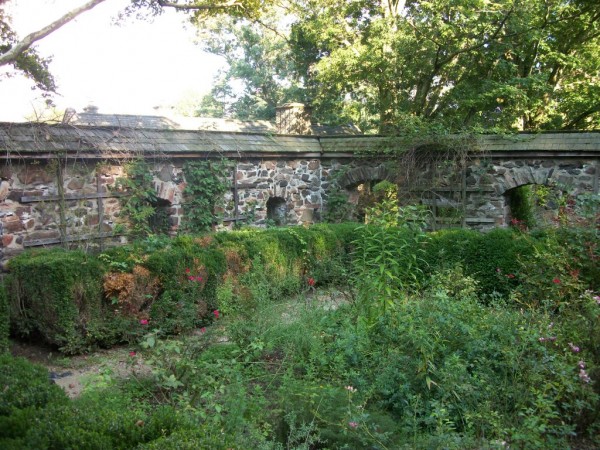
I'm asking as I grew up around these and would love to build one myself, but I need some more information. So could anyone help me out?
Like this or This - is that concrete on top? or This other shot at the walls - not the finest work :P or This - I see this design a lot
A lot of the photos are rather fancy. I'd just like to learn more about them, and generally how I could build something like it - but without having to hire lots of people or spend an exuberant amount of money. I mean if I ever did this project, I could hire someone for archers or windows or whatever, but building a wall I'd like to think I could do myself! And I realize these have mortar and aren't the stacking rock walls, though I don't know where I'd get enough stone for those. I'm told Blue Fieldstone works well but... it doesn't look like these rocks.
1 Answers 2016-07-26
People don't even trust doctors today, nevermind the incredibly gruesome sounding treatments back then.
1 Answers 2016-07-26
https://imgur.com/gallery/TKJPF Looks like a harp with a ring in the centre of radiating strings. Does anyone know if it exists? (Apologies for the imgur image link I am new here and cannot see how to post an image)
1 Answers 2016-07-26
I've been trying to find information about the Coca natives from Cocula Jalisco Mexico. I can only find a few paragraphs online. I want to know more about their culture and way of living. I'm a descendant from that town and have just over 100 years of family that lived there in the 1800's. Or if you can point me to a place that i can do some research, without having to fly there, as much as I would like to.
1 Answers 2016-07-26
1 Answers 2016-07-26
This has been bothering me quite a lot, because to find out the average life-span of a society you take the death ages of all it's members, add them up and divide by the number of members. But I also read somewhere that it was only hard to get through your first few years as a baby, after that it was relatively easy to get through life because you could hunt and take care of yourself and wasn't exposed to any greater danger than when you were young and defenseless. So let's say a society has 10 members, two adults who are both above 80 and they have had 8 children that have each died before their first few years. That means that the average life-span for that particular case was below 20 years old. Is my theory true to some extend or completely nonsense??
1 Answers 2016-07-26
Also, if you could address the rift between those two continents and the rest of the world.
By meaningful I mean: Politically and culturally relevant to the point where those ancient civilizations can be compared to some extent to civilizations of today.
1 Answers 2016-07-26
Considering that at the time of the alliance, both Charlemagne and Harun Al Rashid were in power, I find it strange that they could not suppress Umayyad supporters in Andalusia.
1 Answers 2016-07-26
This is a snuff box that came to America in the pocket of a pilgrim named John Howland on the 1620 Mayflower voyage. Any ideas on who the woman depicted on the front is? I know it's a long shot, but it would be cool to find out if it is someone "important" or just a random image on the front of a tobacco container. Any insight is greatly appreciated!!
1 Answers 2016-07-26
If my question isn't true, then what are some other sources historians use?
1 Answers 2016-07-26
1 Answers 2016-07-26
So what exactly did he do that revolutionized art as we know it?
1 Answers 2016-07-26
Say I am in an english army during the Hundred Years War on campaign in France.
How and what did I eat?
How did the army get the food?
Who was in charge of feeding me?
Who provided me with my arms and armor, assuming I am a regular foot soldier?
How did I get paid, how much and how frequently?
Who were my leaders at a local level?
3 Answers 2016-07-26
[deleted]
1 Answers 2016-07-26
For example, Great Britain, Denmark, Sweden, the Netherlands, and Norway seem to have had almost no internally-motivated, violent, radical, and authoritarian changes of government from 1750 to 1980, and reform happened relatively smoothly and peacefully. This contrasts with France (French revolutions, restoration, Napoleons, five republics), Spain (general instability in 19th century, two republics, civil war, Franco), Portugal (civil war, 19th century instability, 1910 revolution, Estado Novo) and Italy (19th century turmoil, Mussolini).
Is this mostly a coincidence, or does religion factor into the picture in some way (either as a cause or effect)?
Mostly asking about internal conflicts in independent countries, not foreign invasions.
3 Answers 2016-07-26