What should I wear? If I'm married, do I bring my spouse? What if I'm a man with multiple wives? Do I bring any kind of gift or dish? Where should I sit? What kind of food will there be? What should I talk about - and what shouldn't I talk about? Should I try to talk to Suleiman at all, and if so, what are the rules to address him? Where do I stay when the dinner is over?
6 Answers 2016-07-14
1 Answers 2016-07-14
Can anyone give there thoughts if shingen takeda was such a great military leader why was katsuyori so inept to knowingly send the takeda army straight at thousands of bullets and to there deaths I would say nobunaga oda had to be the smartest warlord of his time...
3 Answers 2016-07-14
2 Answers 2016-07-14
In movies such as Full Metal Jacket, Good Morning Vietnam and many others depicting the war, the soldiers seem to be highly bitter about the fact that they are in war far from their home, "just to save some gooks." I understand that the majority of people don't really understand how horrible war is before they're actually experiencing one and how their deep regret might make them say such statements, but considering that if they've all gone there because they wanted to, those statements would be quite groundless? Therefore, I ask you historians (because this has bothered me for quite a while), were American soldiers forced to go to Vietnam and if they were, how many?
2 Answers 2016-07-14
Did they have a similar setup to modern warehouses, with lots of shelving and just use some sort of pulley setup to get things down from high shelves, or were they just smaller buildings because it wasn't practical to build the same kind of expansive spaces we use now?
1 Answers 2016-07-14
I'm not sure if this is proper subreddit, so apologies if I am in the wrong place. However, I would like to know if anyone knows of any archives or collections of oral history of the Chinese Civil War?
My grandfather fought on the Nationalist side, and then ultimately fled to Taiwan after the war (eventually settling in the U.S.). Over the years, I've been interested in what my grandparents went through, but they have been reluctant to talk about it. Recently that has changed, likely as a side effect of their advanced age.
I'm curious if there are any historians of the Chinese Civil War in the U.S. who collect personal accounts of participants. If so, I would be interested in speaking to them.
Thanks!
1 Answers 2016-07-14
https://s-media-cache-ak0.pinimg.com/564x/19/32/cd/1932cd5c2b7c5fff739d7ad271d2f056.jpg
Above is the link to a painting of France surrendering to the Black Prince in a battle of the Hundred Years War. I was wondering about the legitimacy of the armor the Black Prince (right) is wearing/holding, I noticed he is holding a helmet along with what he's already wearing. I apologize for the vagueness. I am on a phone and it's difficult to navigate between tabs.
1 Answers 2016-07-14
2 Answers 2016-07-14
Hi all, I'm a budding historian (earning B.A. in May, applying for PhD programs) who is extremely interested in how societies represent themselves. I've done original research examining evolving treatments of area bombardment and the Japanese-American internment in U.S. high school history textbooks, and I've also written on propaganda in ancient Rome.
I'm interested in learning more about the history of propaganda over time, preferably in some sort of text that details its evolution, but I'm also interested in works that examine it over more specific periods of time, such as Nazi propaganda, or modern Russian propaganda.
Thanks for the help!
1 Answers 2016-07-14
I happened to catch a part of a radio show that had an author (can't remember his name) talking about the Knights Templar. He seemed to be talking about treasures they had hid across North America. He also said he believed Christopher Columbus was a Knights Templar, or at least affiliated with them because he had married into some royal bloodline, and that he was in fact searching for the treasure. Is there any truth to what he said? Can anyone perhaps expand on this idea/theory (even if its false)? It sounded pretty interesting.
1 Answers 2016-07-14
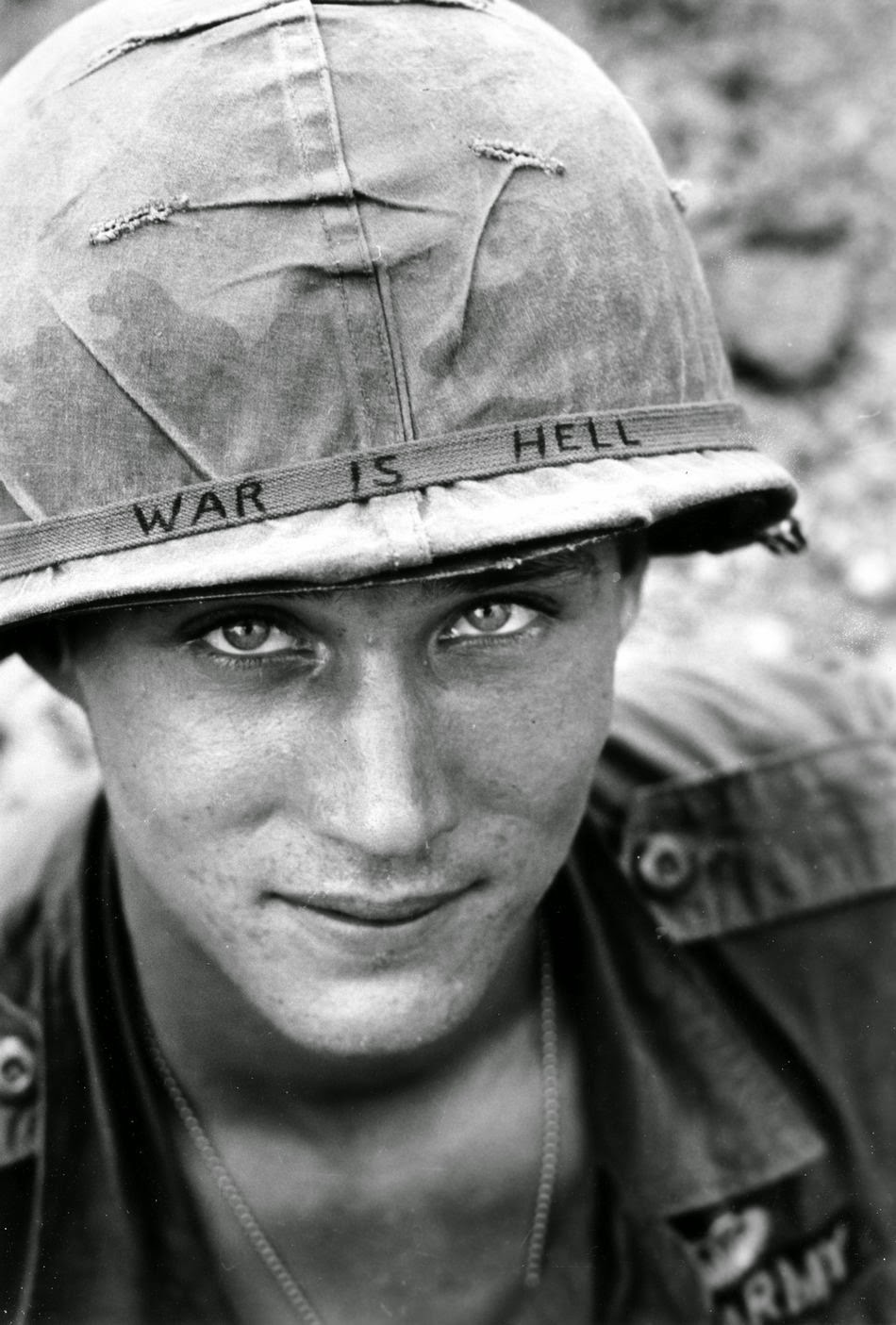
Many modern soldiers personalize their equipment with phrases of endearment/intimidation (Two examples, the Famous War is hell and Happy Easter Hitler). Whenever I see images of medieval or older armor it usually looks like this. While I doubt it would be this clean and pristine, I have never seen any writing, drawings, or other personalized markers on pre-modern armor.
Is this a modern pronominal? Did legionaries or knights ever decorate their armor with symbols or words to intimidate their enemies or personalize their armor? Would men operating a trebuchet or catapult ever write on their projectiles? How about archers? How common was it for soldiers to do any of the above?
3 Answers 2016-07-14
I'm trying to find information on how people began a career in the early Roman Empire. I know of some apprenticeships from Egypt for weaving etc., but I was wondering specifically about Bakers, Builders and Smiths. I'm having trouble finding good sources on the topic.
Thanks
1 Answers 2016-07-14
Given that there have been millions(?) of ancient everyday objects (eg. pottery) used throughout history, why do so few remain intact to this day? Why aren't beautiful handmade artifacts carefully handed down through generations?
I pondered this as I was walking around in an antique shop, which of course is limited to objects mostly <~200 years old. So where have the rest of human artifacts gone?
Were "antiques" not valued for most of history? Did most objects break eventually? Or perhaps I'm mistaken, and there are more ancient artifacts around than I perceive.
Anyways, would love to hear some thoughts. This is my first post... so hope this makes sense.
1 Answers 2016-07-14
I'm not entirely sure if this is the right place to ask this question but this idea is something I am exploring across The Tempest (1611), Strange Case of Dr Jekyll and Mr Hyde (1886), The Dark Knight (2008) and V for Vendetta (set in 2038.) I'm exploring how good and evil is represented in each text/movie, and why they are represented that way. For example many believe the tyranny of Prospero to Caliban is symbolic of European colonialism in The Tempest, while in Jekyll and Hyde this is context from SparkNotes about why characters are written a certain way.
'In its narrative of a respectable doctor who transforms himself into a savage murderer, Dr. Jekyll and Mr. Hyde tapped directly into the anxieties of Stevenson’s age. The Victorian era, named for Queen Victoria, who ruled England for most of the nineteenth century, was a time of unprecedented technological progress and an age in which European nations carved up the world with their empires. By the end of the century, however, many people were beginning to call into question the ideals of progress and civilization that had defined the era, and a growing sense of pessimism and decline pervaded artistic circles. Many felt that the end of the century was also witnessing a twilight of Western culture.'
How and why has the perception of good and evil changed over time? Is it a product of its society or innate human morals?
(If this isn't the right place to post this could someone point me to the right sub please?)
1 Answers 2016-07-14
2 Answers 2016-07-14
The definition is even "a couple and their dependent children, regarded as a basic social unit." AKA family, So why "Nuclear?"
Also I'm posting to this sub because when I think of "Nuclear Family" I think of those old 40-50's drawings (Which is not what comes up when you google it)
1 Answers 2016-07-14
1 Answers 2016-07-14
Who is the earliest 20th century female figure elected to a position as PM or President of a country. Mainly i guess Europe or South America would be the main places I'm curious in since they seem culturally similar to the US. And what was differently socially that enabled women in these countries to hold these offices as compared to the US? Could having female queens have affected their acceptance of female PM's/Presidents?
1 Answers 2016-07-14
Would I travel by boat, or was enough road infrastructure in place in the middle ages to allow me to travel across mainland Europe? What cities and countries would I find myself passing through along the journey? It seems like a very long trip even by modern standards and I'd like to know more about how it was completed.
1 Answers 2016-07-14
I'm asking about division of labor - which was the first society to have a group of people dedicated to defence, and who weren't expected to work in agriculture or trades?
1 Answers 2016-07-14
Hello,
I am fascinated by the Scythians and I had just read through some sources that the the Indo-Iranian nomads(Cimmerians, Massegetai, Scythians, Sakha etc.) were noted to have blonde hair and blue eyes. I'm having a hard time wrapping around my mind that a large portion of the Iran/Azerbaijan/Armenia area were populated by blonde haired and blue eyed people. So I suppose my question is, is their a consensus as to what the Scythians looked like, and is their a closest modern equivalent today? I've heard the Ossetians are very close.
1 Answers 2016-07-14
I would have thought this had been asked before, but I didn't see anything in the FAQ or find anything searching.
What did the work consist of? I imagine the real agents, no matter how elite, spent most days doing paperwork, as even the Fleming novels acknowledge. Did they really have licenses to kill and if so, have the records of targets been declassified? Was there an equivalent to the Q Branch?
What were the real objectives of their missions? The only one I've heard of is the overthrow of Mohammad Mosaddegh.
2 Answers 2016-07-14