The big question I've always had is was it possible for Germany to win WW2 in a way consistent with Hitlers goals or were his goals simply to ambitious?
My opinion has been that once Rommel was defeated at Al-Alamein there was no way for Hitler to meet his for oil needs outside the Caucuses and I have a hard time imaging a scenario where victory against the USSR was actually possible, but I am by no means a historian.
Was there a realistic path to victory for Hitler?
4 Answers 2016-03-26
Complementary question: if it was as devastating as superficially seeing, why?
1 Answers 2016-03-26
1 Answers 2016-03-26
I learned in school that Ancient Greece wasn't really one unified empire (or country), but they were city states with the same language, that often (as in the battle of Thermopylae) came to the aid of each other if needed. But, did they really speak the same language? Or can it be said that it was just similar enough to be called the same language, just different dialects? Are there any writings we know of that have significant differences between city states' different versions of greek?
1 Answers 2016-03-26
People often use that one event as the most important event of modern history, but how true is it? Obviously he was a very important guy, and that did kick off the events of the war, but what was the chance it would have happened anyway? They say Europe was a powder keg after all. Are there any other events that had a decent chance of happening that could have set the gears in motion?
2 Answers 2016-03-26
I've never really been taught much about what happens between the adoption of Christianity by the Romans and the majority of Europeans following the catholic faith. So what forms of organized Christianity existed before then?
1 Answers 2016-03-26
Where can I read and learn more about the various offices of the Spanish empire?
1 Answers 2016-03-26
1 Answers 2016-03-26
http://ifunny.co/fun/7if2W49k3
From what I've observed, the most popular way to bash this generation is to compare them to the young men that fought for US in WW2. However, this somewhat implies that all the men willingly enlisted. I feel that that is incorrect, however, given that US mass conscription in WW2 is not documented or referenced like Vietnam for example, I want to know the validity of such a claim.
1 Answers 2016-03-26
Land reform was one of the primary political issues of the 19th century in Mexico. How much was the thinking about land reform influenced by international (European?) intellectual trends and political philosophy, and how much was the thinking on land reform a product of local (i.e. Mexican, but perhaps broadly south and central American) intellectual currents?
Did this thinking about land reform have 18th century precursors, or was it largely the result of the late 18th and early 19th century?
1 Answers 2016-03-26
2 Answers 2016-03-26
Piggybacking onto the main question: Is there evidence of "slang" or vernacular in the writing?
1 Answers 2016-03-26
In your opinion, if you were to recommend a book about the history of the US, what would you recommend and why?
2 Answers 2016-03-26
Basically, did people then think that the Hamilcar Barca and the Barcids were descended from Melqart-Hercules or was it just Hannibal?
1 Answers 2016-03-26
I'm a part time history guide in a New Zealand WW1 Museum. I know all the 'big facts' but am searching for those little tid-bits that can entertain school kids (ages 5-14). All of us guides are massive history nerds but communicating this long war into school tours (which we have to do) is a bit hard.
The exhibit focuses on the Western Front and includes real guns, tank, cannon, uniforms, etc.
Thank you in advance.
3 Answers 2016-03-26
I was hoping for some advice and ideas. So far, I've written about the Investiture controversy and the couple years leading up to the pact, as well as a few of the pacts details (terms for electing bishops). I was just wondering if any of you wonderful people had any advice on what else to talk about, or anything I should expand on.
1 Answers 2016-03-25
From here:
While Alexander ruled Greece, the Celts dared not to push south near Greece. Therefore, early Celtic expeditions were concentrated against Illyrian tribes.[3]
...
In 335 BC, the Celts sent representatives to pay homage to Alexander the Great, while Macedon was engaged in wars against Thracians on its northern border. Some historians suggest that this 'diplomatic' act was actually an evaluation of Macedonian military might.[3] After the death of Alexander the Great, Celtic armies began to bear down on the southern regions, threatening the Greek kingdom of Macedonia and the rest of Greece.
it sounds like it was a multi-generational effort to invade the southeast. What was the reason for such a long term pressure to move out of the homeland (which seems to be the La Tene culture? centered in Switzerland and Austria?) and eventually take on what at the time was a state that even they considered too strong to attack for the time being? Political situation in the homeland? Climate pressure? Population growth, i.e. not enough land for everyone to stay home? Sudden adoption of some military technology (material? tech? social organization) that made them go, "Hey, I think we have what it takes to take on these rich Mediterraneans now that we couldn't before"?
1 Answers 2016-03-25
1 Answers 2016-03-25
2 Answers 2016-03-25
1 Answers 2016-03-25
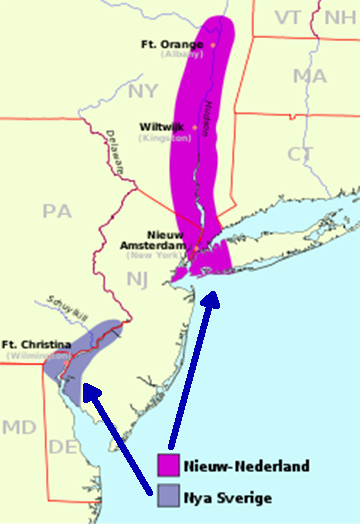
Those curious to see where these two colonies were in an overlay of a current day map of the US, see this graphic.
1 Answers 2016-03-25
It seems like after the Revolutionary War, the colonies didn't really care that much about each other's success. How united were they really? Was it likely, or even possible that they became individual countries instead of states of a single country?
1 Answers 2016-03-25