1 Answers 2016-02-29
I am looking to find some documentation on roman furniture. The finds at Herculaneum for example. Kind of like this . Any Scans available of any era ancient furniture?
1 Answers 2016-02-29
I'm aware of Norse exploration into Greenland and Newfoundland, but they had relative proximity to this area given the northerly latitudes and bases of operation.
ETA: Newfoundland
1 Answers 2016-02-29
And why were there so few afterwards, (ie, basically just Nintendo and a few others)?
1 Answers 2016-02-29
Countries like Usbekistan (90% Muslim), Kazakhstan (70% Muslim), and Kyrgyzstan (80% Muslim) were never part of the Caliphate or the "Arab World" in the strictest sense, so how did they become so predominantly Muslim? A lot of autonomous republics in the Russian Federation show similar numbers. And what kept other Altaic states, such as Mongolia, from doing the same?
1 Answers 2016-02-29
Spartans didn't have radio (probably), nor have I found any information concerning standards or horns like the Romans, so how did they get orders to the troops? By shouting? Messengers? Pigeons?
1 Answers 2016-02-29
Hello AskHistorians! I am here with a request on behalf of my niece.
A bit of background: She is a high school student. She has had some medical complications early this year and is not able to attend school. Her teachers have been awesomely accommodating and let her self-study and take tests on her schedule. But, as a part of the medical complications, she is not able to read for more than 20-30 minutes at a time.
So, we are looking for video/audio resources which can help her study while keeping reading to a minimum needed. I found the "Crash Course American History" videos on YouTube, but they are a bit too fast and intense for her.
So, I thought I would reach out to you awesome folks here. Do you know of any resources that a high school student could use to study.
Thanks for your time!
1 Answers 2016-02-29
Were the Bosnians just the Serbians who converted to Islam because of the Jizya and Turkish policies?
1 Answers 2016-02-29
First off, thanks to /u/Vertexoflife for suggesting the topic
Postmodernist theory has been a dominant historiographical force in the West over the last three decades (if not longer).
At its best, PoMo has caused historians to pay attention to ideas, beliefs and culture as influences, and to eschew the Modernist tendency towards quantification and socio-economic determinism.
However, more radical Postmodernism has been criticized for undermining the fundamental belief that historical sources, particularly texts, can be read and the author's meaning can be understood. Instead, for the historian reading a text, the only meaning is one the historian makes. This radical PoMo position has argued that "the past is not discovered or found. It is created and represented by the historian as a text" and that history merely reflects the ideology of the historian.
Where does historiography go from here?
Richard Evans has characterized the Post-structuralist deconstruction of language as corrosive to the discipline of history. Going forward, does the belief that sources allow us to reconstruct past realities need strong reassertion?
Can present and future approaches strike a balance between quantitative and "rational" approaches, and an appreciation for the influence of the "irrational"
Will comparative history continue to flourish as a discipline? Does comparative history have the ability to bridge the gap between histories of Western and non-Western peoples?
6 Answers 2016-02-29
As said, I'm no wealthy man or a politician or something like that, and I want to reach Moscow. Legally preferred, if not available, illegally. Were there transatlantic voyages available during war? After landing on France, how could I pass the Western Front, then hostile Germany, then Eastern front, then civil war ridden rural Russia, then to Moscow? How likely would I end getting killed or imprisoned?
1 Answers 2016-02-29
I've heard some stories about the USSR that the whole country partied for a week straight and drank every drop of vodka in the country, and of course I've seen the famous picture of the American sailor kissing the girl. Just how wild were these parties? If the USSR effectively shut down for a week of drunken revelry how did that work? Was there any sort of official control over these parties, did some people have to work? Also what did troops currently in foreign countries do to celebrate? Also did the USSR celebrate VJ day?
1 Answers 2016-02-29
[deleted]
4 Answers 2016-02-29
Out of all the literature and history I have read (which I will admit is fairly limited), I feel as though I have never read anything about ancient Romans or members of the General Assembly "going for a run" or "lifting weights." I know that there are probably many logical reasons, such as their lifestyles were much different, i.e. they didn't sit in a cube all day and eat junk food. But i'm curious at which point in history we decided that our daily routines didn't provide enough physical activity, so we needed to simulate it ourselves.
2 Answers 2016-02-29
3 Answers 2016-02-29
2 Answers 2016-02-29
Hair metal, glam metal, etc. You know, Poison, Ratt, Motley Crue, Warrant, Trixter, all those guys. We all know how Nirvana came along and wiped them off the map, but how did they take up so much of the map in the first place?
I was at a sociology conference once, and one of the sessions had to do with music and popular culture. One of the presenters quickly mentioned, in the preliminary lit review section of his presentation, that the reason that hair metal got so big is because the advent of video games (Nintendo, etc.) made it so that a lot of indie record companies went under. Teens only had so much disposable income, so they spent their money on video games that they otherwise would have spent on below-top-40 rock records. As a result, hair metal became the hugest genre among that age group.
I don't know where the guy got that bit from, and his thesis had nothing directly to do with hair bands or the 1980s (it was an abstract statistical analysis of consumer behavior), but I was like "huh!" I suppose that's not the whole truth and that there's more to it, but I wonder.
I was 11 in 1990 so I don't remember what was going on behind the scenes, I only remember that that's what they'd show on MTV all day, with a few British new wave videos thrown in here and there, maybe the B52s and REM, but for the most part, AquaNet reigned supreme.
4 Answers 2016-02-29
I know there are still other calendars, like the Jewish calendar and Islamic calendar, but for the most part everyone uses the Gregorian calendar that includes February 29th as the leap day.
When and how did this international acceptance come about?
1 Answers 2016-02-29
Yesterday I was at Edinburgh Castle. Where an author was telling the tale of the Crimean War focusing on the 93rd Highland Regiment. He made it seem that Campbell's strategy was to make the Russian cavalry believe it was a trap. Before that I heard that it was because Campbell had a very low opinion of the Russian cavalry. Did the man exaggerate to make a better tale?
1 Answers 2016-02-29
Everything I've learned about the Cold War era is that the two sides were extremely antagonistic to one another, leading me to imagine that the there wasn't much trading or cooperation going on between the two. In a modernizing world that focused more and more on international trading and cooperation it sounds like these sporadic Socialist or Communists uprisings were doomed from the start
1 Answers 2016-02-29
1 Answers 2016-02-29
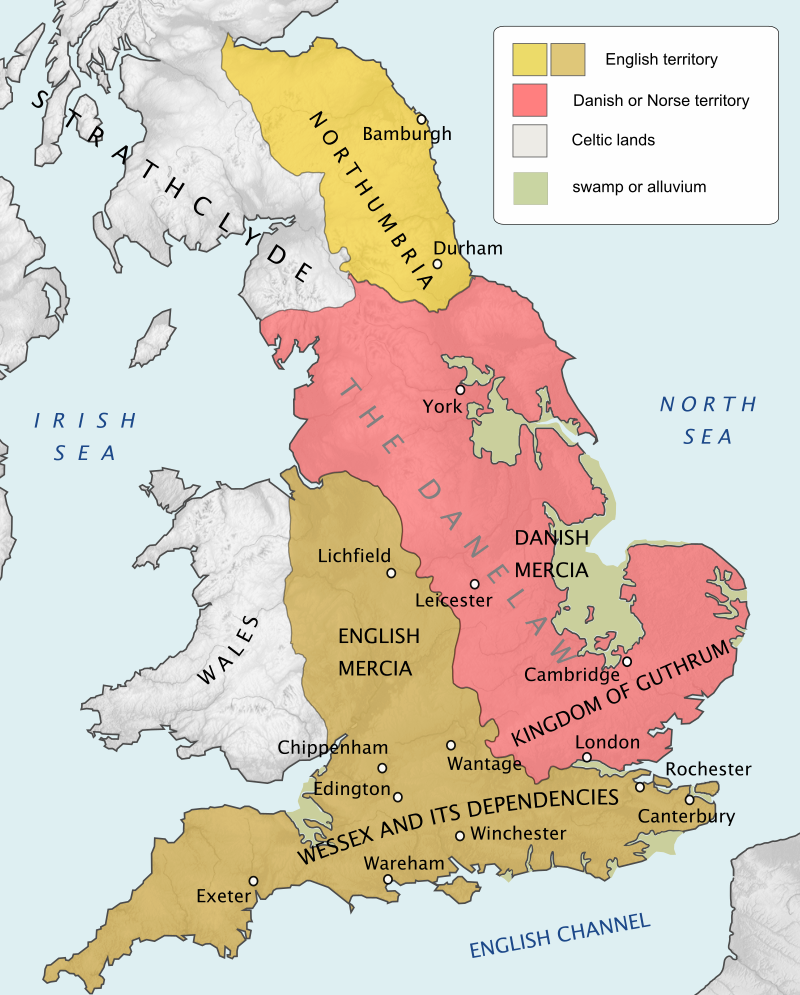
In English schools, children are always taught about the Celtic, Roman, Anglo-Saxon, and Norman periods of English history. The occurance of Viking raids is also usually mentioned, but they're almost always portrayed as foreigners who came to rape and pillage.
Consequently, very few people are aware of the Danelaw, the Norse colonisation of a huge area of England. Is there any particular reason that this period is so often omitted?
As a side question, is this history well known in Scandinavian countries?
1 Answers 2016-02-29