Was it common for Union regiments to form in succession states? Are there any resources available where I can learn more about how Union and Confederate soldiers interacted as neighbors?
2 Answers 2016-02-04
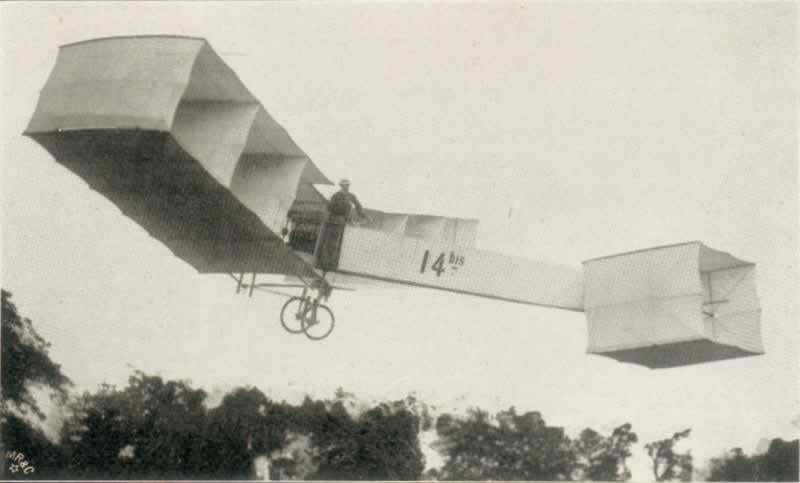
As a brazilian, i always had doubt in this matter, as in school we're taught that the first models that resemble an aeroplane were invented by the brazilian Alberto Santos Dumont while he lived in france.
Was it just a political maneuver to incite nationalism or was it really true?
I know most of the world accept the American version, but could that be because of the influence of the USA as a great power?
1 Answers 2016-02-04
I heard a discussion over this buy neither side really seemed to have a solid grasp on the actual facts. Basically what I'm asking is - was Operation Market Garden a failure because it was a bad move to drop into the Netherlands, or was it just handled so poorly that the battles lost turned the entire operation into a failure.
As I understand it, the entire plan was to end-run around the Sigfried line and open up another path into Germany. However, with the Russians knocking on the door in the East, the Sigfried line had been stripped down and didn't pose as big of a threat as first thought.
It seemed like an unnecessary adventure, especially putting the burden of crossing the North Sea for resupply into play when you're already crossing the English Channel to resupply the bulk of the forces.
So, tl:dr - was Operation Market Garden a bad idea all around, or did it just fail because the German resistance was solid?
1 Answers 2016-02-04
1 Answers 2016-02-04
Was the wakizashi meant to act as a shield? Also by no means am i claiming the japanese were the only warriors not to employ shields, but they are the only ones i know of. Thanks in advance
2 Answers 2016-02-04
So I recently went and saw The Revenant (awesome movie btw) and during the course of it I found myself wondering how these people could survive after doing things, such as primitive fishing techniques, that required them to be partially/fully in the water in freezing conditions. Another similar instance that I've been pondering is the fact that most of George Washington's Army was shoeless up to and including the Crossing of the Delaware River in the middle of winter!
Yes, I understand that it is a movie and all that entails, but I imagine that life went on regardless. As evidenced by the American Continental Army, people found ways to cope without suffering from frostbite, hypothermia, etc. So... how did they do this? Or did they all actually get frostbite and tons of people died from exposure/hypothermia?
2 Answers 2016-02-04
It seems like most languages wouldn't require you to learn to pronounce new sounds, that most of the sounds used are similar to those used in other languages, only a minor difference in accent.
Like the rolling r in Spanish (though Spanish is very similar to English anyway) is a new sound, but most of the rest of the letters are easily pronounceable.
1 Answers 2016-02-04
It seems that generally the early Hungarian states were solidly in the Byzantine cultural and diplomatic sphere, with the future Bela III even at one point being the heir apparent to Manuel Komnenos, but they ended up being Catholic. Why was this the case?
1 Answers 2016-02-04
I was learning about this in my History 151 and they never really touched on what life was like pre-1830ish.
1 Answers 2016-02-04
In the Victorian era, how/where did women go to the bathroom when at fancy balls, dressed up, and with a ton of people, etc... I mean, no inside plumbing and all the work to get into and out of their clothes... that seems like a really big problem during a night of drinking.
1 Answers 2016-02-04
From my layman's understanding, wouldn't destroying the city give the Americans the "victory" they needed to pull out of the country and end the war possibly several years earlier?
1 Answers 2016-02-04
When the Netherlands drained parts of the Zuiderzee to create the province of Flevoland (and added the Wieringermeer to North Holland), how did the government distribute the newly-reclaimed land? Were there enticements to move into the new province? Were there any major trends about who moved to Flevoland (outsized migration from any specific provinces, for instance)?
Any guidance from Netherlands experts on Dutch water works in general would also be appreciated.
I apologize if this has been already been asked. You all do a great job with moderation.
1 Answers 2016-02-04
I have been reading a bit about the first and second Persian invasions of Greece and noticed that the Greek armies of Athens, Sparta, etc. lacked cavalry units against their contemporary Persian opponents at Marathon, Platea, etc. For that matter, some like Sparta didn't even have archers. I would assume this would put the Greek armies at a large disadvantage, when you consider what happened in a different context at Carrhae where Parthian cavalry were able to defeat a much larger Roman army.
Were Persian cavalry tactics not advanced enough? Did Greek armies make any specific strategies on how to deal with mobile threats?
Edit: I am referring to pre-Macedonian-dominance Greece, specifically during the first and second Persian invasions of Greece.
2 Answers 2016-02-04
I've recently been in a ongoing debate with coworkers over the effectiveness of the English longbow in comparison with crossbows of the time. To sum down the entire discussion, my coworkers, archery enthusiasts, do not believe a crossbow had greater range than a English Longbow during the high point of the longbow's use. I counter with sources saying that crossbows generally had a slightly greater range. But the problem comes in that said sources wildly vary on statistics for either or both weapons. In addition, there are many variables that come into play when comparing the two weapons; such as the draw strength of the bows, materials in construction, and so on and so forth. I ask, can someone give a comparison in statistics of the English Yew Longbow and the crossbow equivalent in the field? If a time frame would be needed, I was starting with 1346 after the Battle of Crecy and onward. In addition, for both my coworkers and I, what are some good books or sources to further educate ourselves on this subject?
Thank you for any answers that might help settle this intense debate of ours. Or for any that further it.
1 Answers 2016-02-04
I am thinking about going to college for a history degree, i was wondering what jobs, besides teaching and how difficult it is to get into these positions.
2 Answers 2016-02-04
I know this will vary by era and military force but I'm really interested in all the different ID methods that were used as far back as we know, and how ID was improved upon to get to the point of dog tags.
3 Answers 2016-02-04
I was curious as to how Australia changed after World War 1 in regards to like women's roles and government and other ways.
2 Answers 2016-02-04
Are there any good resources on the origins of iced tea drinking in the American south? Given the historical dominance of coffee over tea in the US the logical extension in the hot climate would be iced coffee. Where did the tea come from?
Also, with air conditioning and rise of other cold drinks such as coke, why didn't iced tea spread up north? Even today, in northern states I typically find horrible soda fountain "iced tea" more like a soft drink than real tea, whereas in the south practically every restaurant has real tea available in sweet and unsweet made from actual tea in teabags.
1 Answers 2016-02-04
Is there written testimony in German by officers at the moment evaluating the Russians and concluding an invasion would it all likelihood be a cakewalk? How much overconfident in their ability/lack of on the other side, show in actual/factual period records?
1 Answers 2016-02-04
2 Answers 2016-02-04
I am currently reading the Tsutsumi Chunagon Monogatari and the Konjaku Monogatari Shu and am absolutely fascinated. Outside of the classic literature produced at the time, what are the books to read to better understand the Heian period ?
2 Answers 2016-02-04
Okay, so the title could be considered a tad "broad", but seriously... What's up with The Congo?
I gather that the First Congo war occurred as a result of the Rwandan genocide. The Tutsi government in Rwanda was pissed off about the fact that the Congo was sheltering Hutu militias (who up until recently, presumably, had been slaughtering Tutsis) and sent some dude over there to kick Congo's ass.
This dude wound up taking over the Congo entirely, and falling out with Rwanda. Who sent another bunch of dudes over to take him down. This mutated into the Second Congo War, or "Africa's Great War".
I think I'm cool so far, but for a few gaps in my understanding. First, who even was this dude? How did Uganda and Angola get involved in all of this? What about all of the other countries that somehow got involved? How come Uganda and Tanzania were like, best friends all of a sudden? What the hell did Gaddafi have to do with anything? Isn't Libya like, really far away from the Congo?
Also, what was up with all the white mercenaries that were chilling in the Congo in the 1960s? What happened in Katanga? Did any of that stuff have anything to do with the other stuff I mentioned? And wasn't Che Guevara in the Congo at one point? If so, did he have anything to do with any of the other stuff I mentioned?
Thanks, askhistorians! Sorry if I've dumped a lot on y'all. I'm just hoping at least one of you is an African history buff who can enlighten me.
1 Answers 2016-02-04