Knowing that the climate in areas like Vietnam, Malaysia, Indonesia, and the Philippines is very hot, I was surprised when a search for armor in southeast asia turned up some results that look like this:
and this: http://img246.imageshack.us/img246/7130/thequeenoflangkasukathevh9.jpg
Now i realize most of this is re-enactment type stuff and doesn't necessarily represent the types of armor these people would wear into battle. I'm personally a bit skeptical of the plate (though mail seems appropriate as a large heatsink) but then again I'm pretty ignorant on the matter. What sorts of protection would these people utilize and how did it differ between various social classes? Would peasants have been provided any armor outside a shield?
1 Answers 2016-01-22
I'm watching the World War II in Color series (it's fantastic) on Netflix, and while it touches on a lot of areas, it does so briefly and leaves me questions sometimes. A major one is Operation Barbossa and the Japanese invasion of the Philippines. My question is why the Japanese attacked the US and drew in another combatant instead of coordinating with Germany to attack the USSR (whom they each border). And obviously, the Soviet Union is huge, but it seems like they drew in two major powers into a conflict in such a way that wasn't necessary or forced upon on either of them.
Now for the timeline, the events are separate: Japan declares war on December 7th, 1940 and Operation Barbarossa is six months later, with Japan's impetus as needing supplies to continue their conquests (which they attain from the Philippines if I'm understanding everything right) and Germany attacks the USSR for well, I'm not quite sure. I get that the eventual plan was create a massive German state through Eastern Europe but I don't understand why they chose 1941 to attack (after they declare on the United States). The Japanese attack makes some sense, because they needed the resources, but all indications show that Stalin was pretty comfortable with the Nazis diplomatically at least, and didn't pose a threat to them.
I guess, what I'm asking is, did Japan coordinate with Germany in any way prior to Pearl Harbor in the strategic decision to attack the United States or was Germany as surprised as the US was? And vice versa, did Japan know that Germany was planning to attack the USSR and if so how early did they know? Could the resources they needed from Micronesia have been obtained from the USSR instead?
And did Italy do much of anything in all of these major operations listed above?
1 Answers 2016-01-22
I commonly see Paul's letters dated to around this time, but I haven't seen any reasons listed for why this is except that it says so in Acts, but Acts is usually agreed not to be historical.
EDIT: I didn't get an answer, so I started a new thread over in /r/AcademicBiblical https://www.reddit.com/r/AcademicBiblical/comments/4293hg/why_are_pauls_letters_dated_to_around_50_ce_xpost/
2 Answers 2016-01-22
1 Answers 2016-01-22
If so, how did it turn out?
1 Answers 2016-01-22
A coworker was telling us about an article she had read (and of course, can't remember the subject's name), about an explorer who went to the arctic in some vague historical period and got lost, was rescued, went back, lost again, and his wife went to rescue him and succeeded, because SHE was the talented explorer, not him. This seems like enough information it should be readily findable, but it's not, so foes it ring any bells for anyone?
1 Answers 2016-01-22
1 Answers 2016-01-22
Say compared the British, Spanish, French, Belgian, Dutch and Portuguese policies. I understand some tried to create lasting societies before they left, some just got out, and some waged wars to try and hold onto their holdings.
1 Answers 2016-01-22
[deleted]
1 Answers 2016-01-22
Was there a difference between how an imperial province was goverened when compared to a senatorial province? Was there also a difference between a province in the east and a province in the west?
3 Answers 2016-01-22
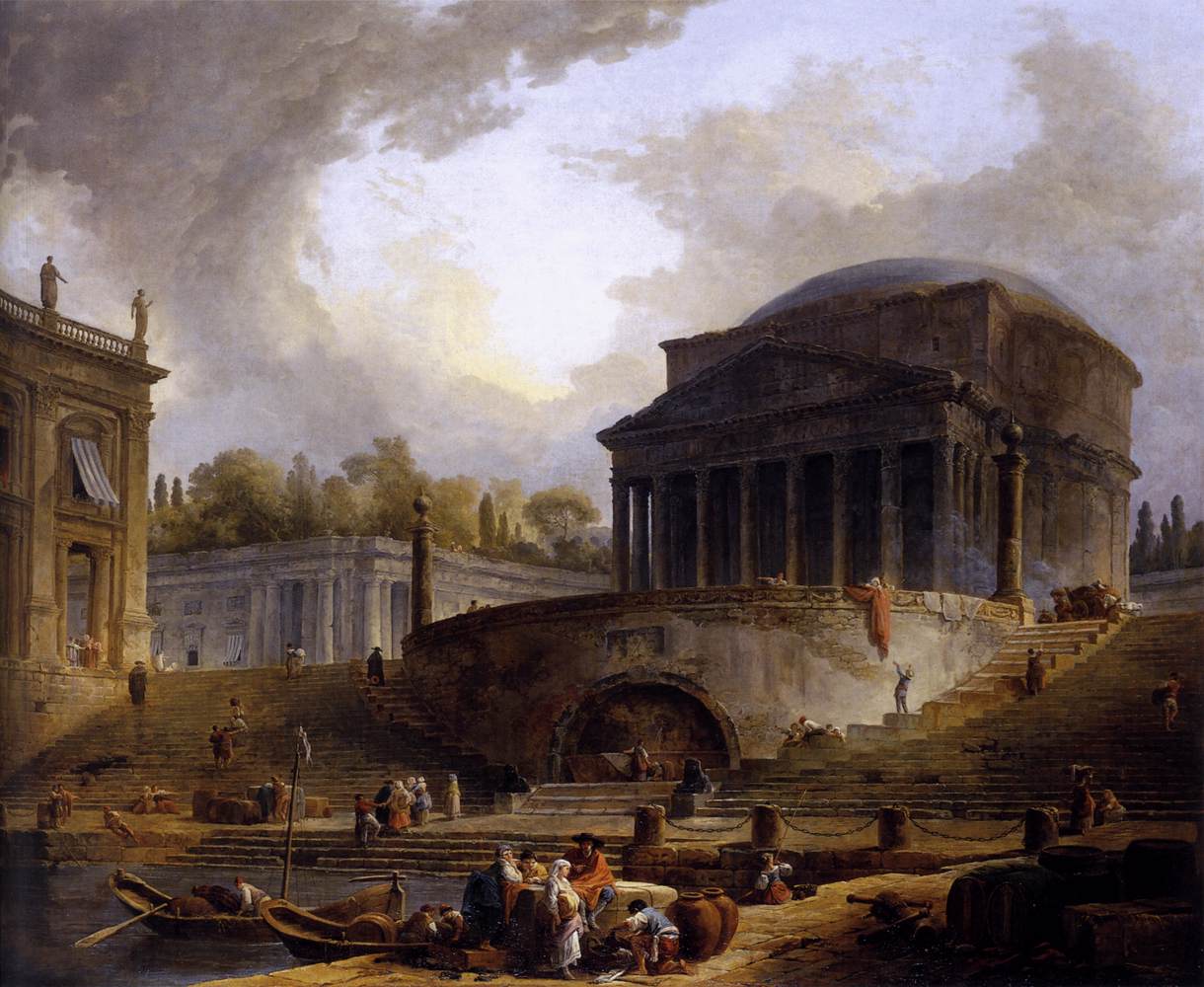
I am asking this because I have seen a lot of paintings that depict archaeological sites as abandoned and forgotten ruins.
I'm Italian and this baffles me, as our main source of tourism is - aside from natural scenery - given by archaeological sites as in Rome and Naples (Pompeii and Herculaneum being the best examples).
Is this interest for archaeology something recent or did people actually care back then?
It looks to me that the interest began in the late 1700s and exploded at the end of the 19th century, but I'm no historian, so I'm asking you.
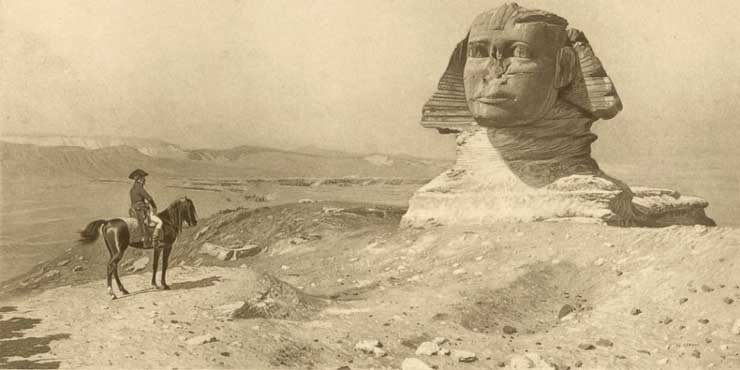
EDIT: To add more, even supposedly known things, like the sphinx or the pyramids were forgotten, same with the parthenon.
2 Answers 2016-01-22
Erasing all judgments, deeds, and historical records could cause mass chaos it seems.
1 Answers 2016-01-22
I doubt Persians were any less literate than Greeks , so what's the deal?
1 Answers 2016-01-22
I have met many people including people in my own family who claim to be part Cherokee or to have a significant degree of Cherokee heritage. My girlfriend's grandmother from Connecticut claims to have Cherokee ancestry, but I don't think there were many Cherokees up there historically. Additionally, a few days ago a girl told me her great great grandfather was a Cherokee warrior chief of the Potato Clan. She had no idea what the Dawes Roll was when I asked if he was on it.
I don't believe many of the people who tell me this are lying, but I do believe they must be mistaken. Why do so many people claim this? Did the Cherokee, more so than other groups, procreate a lot with white settlers? Are people making this up to make their heritage more interesting? Could these people have genuine Indian ancestry, but incorrectly assume they are Cherokee due to familiarity? What's going on here? Also, when did this trend start?
3 Answers 2016-01-22
Doesn't seem to be that much information on this topic. Hopefully y'all can help!
1 Answers 2016-01-22
I can't imagine them being employed to teach white and black students with the racial tension of the time. Were they all simply put out of the job?
Would it follow that anti authoritarianism would be fostered in an enthronement with the absence of teachers the students can relate to i.e. of the same background and community?
On another note was the overall curriculum different in majority black schools before integration? For example would they touch differently on the black experience in American?
2 Answers 2016-01-22
2 Answers 2016-01-22
Today:
You know the drill: this is the thread for all your history-related outpourings that are not necessarily questions. Minor questions that you feel don't need or merit their own threads are welcome too. Discovered a great new book, documentary, article or blog? Has your Ph.D. application been successful? Have you made an archaeological discovery in your back yard? Did you find an anecdote about the Doge of Venice telling a joke to Michel Foucault? Tell us all about it.
As usual, moderation in this thread will be relatively non-existent -- jokes, anecdotes and light-hearted banter are welcome.
13 Answers 2016-01-22
I'm a junior in high school, and I want to go into some type of engineering. In APUSH, we learn about specific laws and battles and generals, and I just don't get the point. Whenever I ask someone this question, they reply with that bullshit "Learn history so you don't repeat it" line. So why should someone like me learn history.
8 Answers 2016-01-22
I've heard many stories of how apparently the German military was notoriously full of inter-element animosity and infighting. How much truth is there to this? Did it exist between all elements? Was it particularly strong between certain groups (i.e. Wehrmacht vs. SS)?
Additionally, as a member of the Army myself I know I've made many disparaging statements against the Navy and Air Force amongst friends, but this is consistently done in good fun. The rivalry between elements in my country doesn't adversely effect our actual performance. Is this true as well for the rivalry present in Germany, or was theirs more malicious? Or even potentially dangerous/fatal?
2 Answers 2016-01-22
The language I'm constructing is supposed to be in a society on the technological level of around the neolithic revolution. The written form is (mostly) for rituals, protective amulets, etc.
The writing is carved into wooden tablets, long and vertical. The tablets can have a hole at the top, to put a leather cord through. That way they can be hung up somewhere, or multiple tablets can be arranged in a certain order. So:
Did we back then have tools to make such tablets and drill/carve holes in them? Did they have knives/blades strong enough to carve the runes in the tablet? How would the tools influence minimum size of the tablets? Would a cord of braided leather strips be strong enough to carry them?
1 Answers 2016-01-22