As far as I know, the reign of the Mughals was somewhat of a golden era for India, bar Aurangzeb and his successor's failings, so was there any desire to restore the monarchy after the 1857 rebellion, or during the later independence movements?
1 Answers 2015-10-25
Being ruler of England at one point included swathes of France as well... How distinct a nation was England considered to be? Or was it seen as just a province of a greater kingdom? When did England and France become clearly separate in their administration?
2 Answers 2015-10-25
The city of Rome had many alliances within Italy which proved vital to their success.
Why did cities continue to be loyal to Rome when the war looked utterly hopeless (After Cannae)? Ratio wise, how many Italian cities switched sides?
1 Answers 2015-10-25
In Western society "escorts" have always maintained the legal fiction that they solely offer "companionship" services in order to escape prosecution/social stigma. In reality, escorts have sex with their clients 99% of the time because that's what clients reasonably expect - one would have to be quite sheltered to take the "companionship" story at face value. Although one might take an "escort" to a social function for her elegance and conversational ability, her real role is the sexual service she provides.
Given the taboo associated with exchanging sex for money, isn't it quite likely that geishas were actually sophisticated sex workers? Isn't it quite likely that - like Western "escorts" - geishas maintained the outward impression that their primary role was "sophisticated companionship" whilst the tacitly acknowledged reality was that the service they provided clients usually included sex? Further, wouldn't historical sources from the period be somewhat naive about the actual practices that occurred because of the uptight social mores of the time? Is the Western notion of the geisha as primarily a "sophisticated companion" who does not offer sexual services merely a myth that started when naive, prudish Western people recorded their observations of Japanese culture?
1 Answers 2015-10-25
1 Answers 2015-10-25
Whenever they are portrayed in documentaries they sing in perfect tune. I was wondering if slaves actually sang that well, or it was just done by the actors to make the show more appealing?
1 Answers 2015-10-25
So Washington DC was founded in 1790. The White House wasn't completed until 1972. But, the Treasury was founded in 1789. Where was the Department of Treasury before their Washington, DC location?
1 Answers 2015-10-25
When I look back on music it seems like a lot of instruments have a natural progression to the present but, I don't know anything about the drum kit. I always think about classic music and symphonies and all these symbols ans larger drums are played by separate individuals. I guess; where/when/why did the modern drum kits happen?
1 Answers 2015-10-25
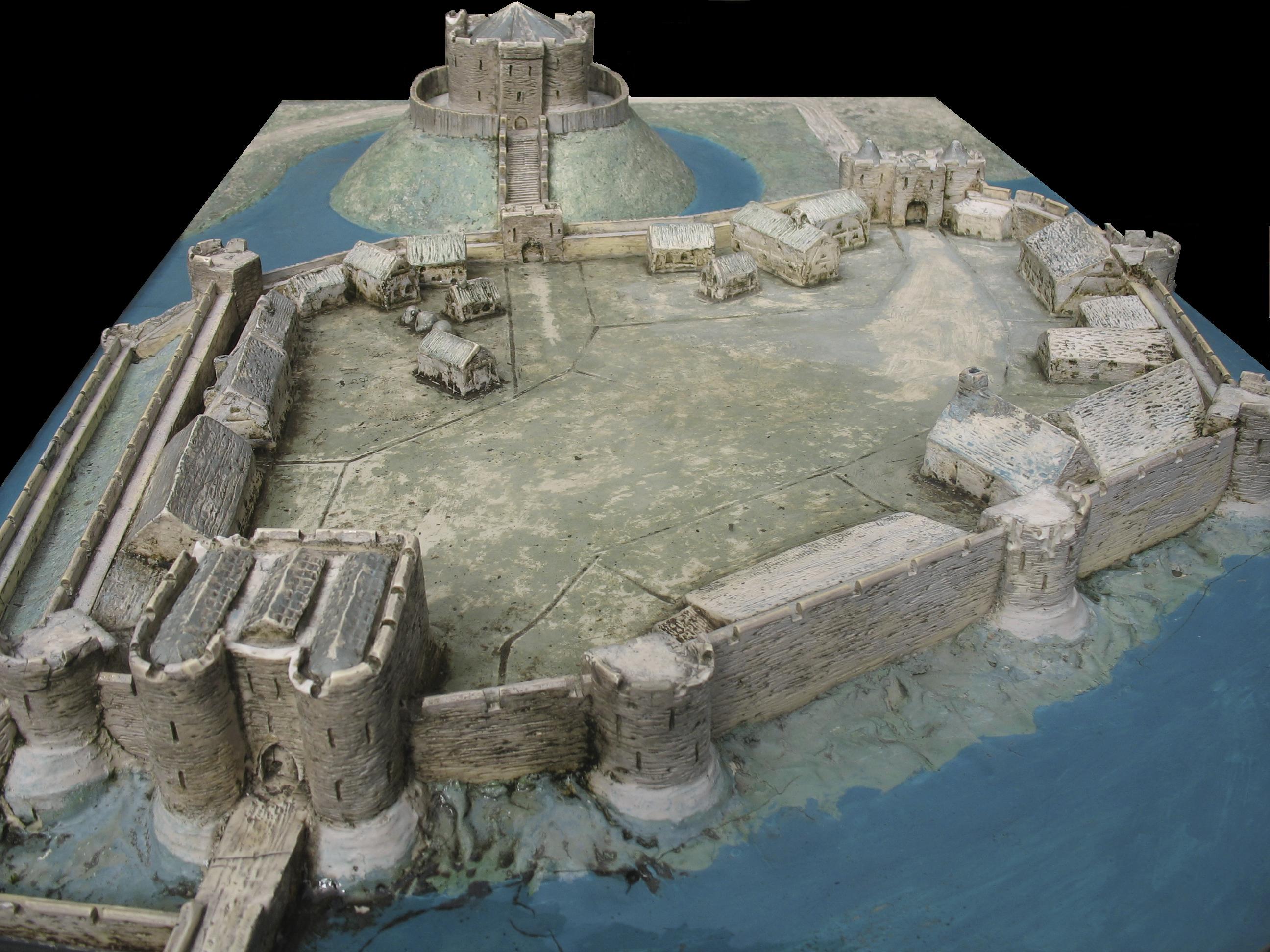
Here's the wiki link. I know the tower in the background is the keep and the open space in the foreground is the bailey. But, what is/are:
Finally, how translatable is this particular castle setup to others. Did they keep these different buildings in relatively the same places?obviously, there would be differences based on what natural defenses the lay of the land gave, but is --I'm making this up-- the church always the closest building to the castle, and farm animals as far away from people as possible, etc etc. So, if I look at another castle plan, I can identify other basic buildings with (relative and slightly) confident ease?
Thanks!
EDIT: I played with a photo editor and labeled some of the buildings here. I also labeled the points of my questions and added them above, too.
1 Answers 2015-10-25
Just curious, somewhere I heard the assertion that "Nothing Aristotle ever said was correct". Ever since then, I haven't found a single example of a correct statement by Aristotle. Maybe I just suck at searching though.
(And naturally, I'm just talking about hard science facts, I'm not considering theology/philosophy/etc.)
1 Answers 2015-10-25
The bible refers to Israel and the Hebrew tribes as "god's battle axe and weapons of war." Is there any history of axes or war hammers as traditional Jewish weapons?
1 Answers 2015-10-25
Both the Wikipedia page and the largest post on this subreddit seem to reflect the contested history surrounding the topic.
Common charges against Reagan is that he delayed in recognizing the disease, failed to fund research, failed to speak out on behalf of the ill, and actively prevented others from addressing the disease, and that his actions or lack of action were driven by a disregard or dislike of homosexuals.
2 Answers 2015-10-25
A friend of my Dad once told me that while the Templar were being persecuted, King John of Portugal took them in as the Military Order of Christ, and that he also absorbed the entire Templar navy, that's why the Order of Christ's Cross looks similar to the Templar cross.
Is this true? And if it is, could you say that because Portugal suddenly had this large fleet, that it encouraged them to go exploring?
1 Answers 2015-10-25
While researching this topic, I found that Tokugawa Japan was pretty much secluded to the entire world and so they would otherwise not be affected by European Exploration right? Thanks.
2 Answers 2015-10-25
pardon my ignorance on the subject--my favorite movie though....
1 Answers 2015-10-25
I am writing a book and I'm trying to find long established names in Manhattan for the Democratic party. I am particularly interested in society women fundraisers in Manhattan (not other boroughs). Thanks.
1 Answers 2015-10-25
Difficulty in retrieving supplies for large armies often comes up as an issue when hearing about Roman warfare, and I often hear about those armies supplementing what supplies they had with foraged and pillaged food and supplies.
How did armies coordinate hunting/gathering/foraging? How were supplies from foraging distributed? And the biggest thing I'm having trouble understanding is, how did armies of thousands possibly sustain themselves for long(ish) periods by foraging? Even if on the move it seems like there couldn't possibly be enough food without going miles and miles out. And if during a siege, I would think that crops and foodstuff in the immediate vicinity would be decimated in a very short amount of time, did they simply keep casting a wider and wider net, going further for food each time?
Edit: another question I thought of. How did camp followers and the like get a hold of possibly foraged supplies, considering they did not have direct affiliation with the military?
1 Answers 2015-10-25
As I've read about the history of slavery, I've found it to be sort of a theme for slavery to be accepted as part of a society through many dead civilizations; If I'm not mistaken, it dates back at least to Mesopotamian cultures, where people would go into slavery to pay off debt.
I have heard that slaves were treated at their absolute worst in the decades leading up to the American Civil War, and given the vivid details we have on that, I wouldn't be surprised. Is this true?
2 Answers 2015-10-25
How were they able to re-emerge united by Nurhaci centuries later? Were they simply allowed by the Mongols under Genghis Khan to move back to their homeland in what is now modern day Manchuria? Or maybe a portion of them had always stayed behind in Manchuria and didn't settle down in Northern China?
1 Answers 2015-10-25
I think it's fascinating that the Maltese language is not an Indo-European language like the vast majority of European languages, but is a Semitic language more akin to Hebrew and Arabic. Despite this difference, it seems that Malta has mostly been inside the European cultural sphere. Did mainland Europeans take much notice of this difference, or comment on their strange tongue, or did they just think of them as another European island? Did opinions change after linguistic knowledge about Maltese grew?
2 Answers 2015-10-25
I'm asking because I am taking a course on greek literature and most of the historical bibliography we got (which is kind of old, newest seems to be from around the '70s) claims she was head of one, but this The New Yorker article says that idea was false. Also, could you provide a source?, if it's false, I'd like to bring it up with the teacher.
2 Answers 2015-10-24
Don't know if I am allowed a follow up question but why didn't the Italians or Germans invade it.
1 Answers 2015-10-24
Are there actual records of incidents such as when all the villagers are burned alive in the church? Or butchering wounded US soldiers? Or is this merely portraying the colonists in a positive light as the victors often are.
Also out of curiosity, and I know I am asking for speculation, is there any academic insight as to what America would be like today had war been avoided between England and the colonies? What were British plans for North America?
1 Answers 2015-10-24
2 Answers 2015-10-24
I find it interesting that Mesopotamian Civilizations traded with China through the silk road, a road that spanned 4000km starting around 200BCE, whereas; I am not aware of any kind of historical contact between the Old World and Sub-Saharan Africa until the Age of Discoveries around 15th Century.
Was it simply because Sahara Desert was a tough barrier to cross from land? Was it ever attempted?
Was sailing from the coast of Africa from Gibraltar to Cape of Good Hope too dangerous of a journey? Was it ever attempted?
Was sailing from the Red Sea towards the Horn of Africa and then to Cape of Good Hope, again, too dangerous of a journey? Again, was it ever attempted?
Or, were Old World Civilizations never curious enough to find out what was beyond the Sahara Desert or where this great continent ended?
3 Answers 2015-10-24