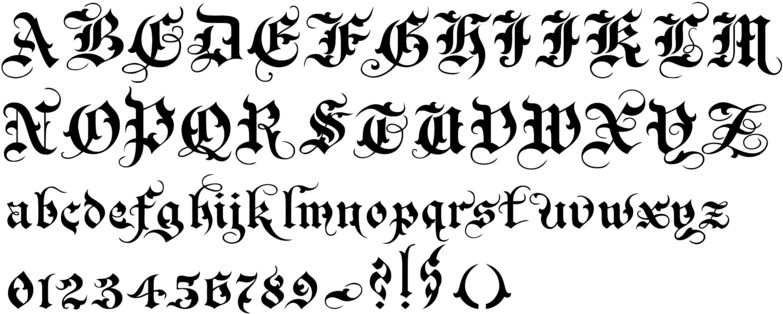
By Gothic I mean something like this. I'm vaguely aware it was favored by the Nazis for its 'Germanness', but why was that, and is there any connection to today's use in brands like Ecko and other kinds of streetwear? Is it possible it's connected through Punk culture and their use of the swastika in the 70s?
1 Answers 2015-10-21
I recently read The Republic of Pirates by Colin Woodard, and spent some time in the Dutch Maritime Museum in Amsterdam. The line-of-battle ships used by De Ruyter and the like seem to have more in common with frigates of later periods, and Woodard referenced a typical warship of the Golden Age of Piracy being armed with nothing heavier than 6- or 8-pounders; it seems to me that even frigates of the Napoleonic era, like the Constitution were far better equipped (with 12-, 18-, and 24-pounders). What changes in naval thinking and practice took place that allowed this to happen? Also, thanks for this awesome sub!
1 Answers 2015-10-21
How extensive was the slave trade in pre norman Ireland? Were many Irish people in Ireland slaves? Is it true that Brian Boru allowed the slave trade to continue? Did Irish aristocrats / petty kings sell Irish people to the Vikings?
1 Answers 2015-10-21
[deleted]
1 Answers 2015-10-21
(Hopefully this is the right sub for this)
I am interested in learning more about the history of China. I realize my knowledge of history is mostly classical/western and China is such a big part of the world I want to know more about.
Ideally, I would like an overview of the ancient to modern, but I know that's a lot. Even more ideally, I wold like something with a slight flair/narrative and not a dry presentation of the timeline, but I'm not picky.
If I could be pointed in the right direction I would appreciate it. Thanks.
7 Answers 2015-10-21
It seems inevitable that lances would break and/or get stuck in an enemy in the violence of a cavalry charge. Did the riders just drop them after the initial charge and switch to a shorter weapon like a spear, sword, axe, or mace? And if they did, were lances made as disposable, cheap weapons only intended for one use? Of course this question has a pretty broad scope, but I'm more interested in how cavalry charges with lances worked, so examples from any period and cultures would be fine (and by "lance" I just mean a long spear for cavalry to use, not necessarily a European lance)
1 Answers 2015-10-21
4 Answers 2015-10-21
1 Answers 2015-10-21
I've read a bit about FDR and a bit about TR, but one thing I've never seen is a discussion of whether the fact of their extended familial relationship helped FDR politically in any way, especially in the run for President. Even though they were members of different parties, it seems like TR's relatively recent popularity and legacy as a progressive trust-buster could have had some appeal to New Deal voters in the middle of the Depression. The gap between TR's presidency and FDR's was 24 years, which doesn't seem too long (especially when you think about how, for example, people still think of Reagan today, 26 years after he left office).
In 1932, did then-Governor FDR make any explicit attempt to associate himself politically with TR in the public consciousness, either on matters of policy substance or even just to further cash in on the name? Would he, his allies, or his supporters in the press have even needed to? And is there anything to suggest pro-FDR voters drew on the memory of Teddy or the Bull Moose?
(Keep in mind too, I'm specifically asking about the Roosevelt name and legacy in a national political sense in 1932. I know FDR grew up with all the advantages of an old privileged New York family, so obviously in that sense the Roosevelt name did him a big favor!)
Thanks in advance!
1 Answers 2015-10-21
I remember reading a while back that either L. Ron Hubbard or some other prominent Scientology official explicitly said the religion was invented and used to get money. Do I remember it right? Thanks.
EDIT: Downvote. Might I ask why?
2 Answers 2015-10-21
There classical myths which contain notions of prophesy and destiny which implies that time can be experienced out of order, but at what point in human history did we start getting stories in which someone travels to a past time.
1 Answers 2015-10-21
An example is Finland and American countries. Finland was Russian for more than 100 years. The Russian language is not a main language of Finland. All American countries use languages which are not indigenous as the main languages.
What determines whether the country uses its indigenous language as the main language or a foreign language as the main language?
2 Answers 2015-10-21
This weekly feature is a place to discuss new developments in fields of history and archaeology. This can be newly discovered documents and archaeological sites, recent publications, documents that have just become publicly available through digitization or the opening of archives, and new theories and interpretations.
1 Answers 2015-10-21
5 Answers 2015-10-21
What do we know about the climate events that happened around 535/6 CE? I've read suggestions of volcanic eruptions or comets impacting the earth, and claims that these events resulted in several years of terrible famine which may have accelerated the social restructuring that followed in the latter half of the sixth century (in Europe, at least).
What is the current consensus about these ideas? Was there a serious climatic event? What caused it? Do we think climate played a role in later 6th century society?
It's weird that I don't know the answers to this - it seems to never come up in Anglo-Saxon archaeology, which makes me question whether the idea itself is bogus, or whether Anglo-Saxon archaeology is still too mired in culture history (or radical postprocessualism) to ask these kinds of questions.
3 Answers 2015-10-21
I've come across this theory before and it has fascinated me. But is it true? There are certainly examples in the past of Democratic states going to war but throughout most of the 20th century it seems that states with functioning democracy's have largely remained peaceful with one another. Does this theory have any justification as we go further back in time?
Also would people have any recommended literature on the topic?
2 Answers 2015-10-21
1 Answers 2015-10-21
This is specifically for british culture, I guess. There are quite a lot of references to the idea in victorian stories (e.g the introductory scene in 'Around the world in eighty days' etc.).
Basically, was it ever actually common belief that exceeding a specific speed would be fatal, or is it just an urban myth?
3 Answers 2015-10-21
Also, what were the motives?
1 Answers 2015-10-21
I'm reading David McCullough's book on Truman, im just at the end of WW1 and found myself wondering about a quote from Truman:
"As far as we're concerned...most of us don't give a whoop (to put it mildly) whether Russia has a Red Government or no Government and if the King of the Lollypops wants to slaughter his subjects or his prime minister it's all the same to us."
Who is he referring to as the King of Lollypops?
1 Answers 2015-10-21
From a religious point of view, it would be the Quran at number 1, and Bukharis hadith collection at 2. What about from a historical point of view?
1 Answers 2015-10-21
[deleted]
4 Answers 2015-10-21