1 Answers 2015-07-27
It is my understanding that civilization (permanent settlements, rudimentary systems of government, the establishment of laws, etc) is considered to have arisen independently in six separate spots around the globe: Mesopotamia, India, China, Egypt, Mesoamerica and Peru. At the time, there were still humans living all over the rest of the globe, but they weren't "civilized"; they were hunter-gatherers who lived in small tribes or individual family units.
So how did the idea of "civilization" spread? How did these early civilizations lead to civilizations in different parts of the world, like the Greeks and Carthaginians, the Mayans, the Polynesians, the Japanese and the Navajo? Was it just travelers from one area meeting people in another and going "hey, you should check out this agricultural permanent settlement thing, it's pretty awesome"?
1 Answers 2015-07-27
Hi, i'm reading Michael Shermer's book "The moral ark". One of the things discussed in the book is how modern sensibility of empirical science and reason came about.
Shermer goes to great pains trying to explain why, for example, people could have felt justified, from their perspective, to administer a test of a witch by drowning her. In short - if you believe that witches are responsible for dead babies and such, not only they felt justified, but also thought it was their moral duty. In other words, they had faulty assumptions and information, not lapse in judgment and logic. And a lot of people say you cant judge ancient people through the prism of modern mind.
And it looks to me that it's more than that. That they couldnt for some reason apply logic to the situation. Why couldnt someone stand up and say - wait a minute, if this woman turned out not to be a witch afterall, all we have is a drowned woman. Let's device better test?
Or why they couldnt reason through torture as a way of getting a confession? For example if a person is tortured and he's innocent, the fastest way for pain to end is to confess of everything you're being accussed of. Hence it's no use as a means of determining truth. It's not terribly complicated logic. It doesnt require scientific facts or knowledge. You dont need to have empathy for other's suffering. Just basic logic. Why didnt they use it?
I'm perplexed by all of this. And "The moral ark" is also a bit frustrating, because a) it doesnt dwell long on this period b) is mostly prescriptive, focused on what and not why. So maybe you guys could suggest something about this important period of human history? On ancient people's capacity for logic and reason? Or maybe you could offer some explanations here?
One thing I thought about was Flynn Effect. How our IQ is increasing every generation. As I understand one of the forces for that is our technology. You need to be more logical to make use of machinery. So it could explain our evolved capacity for logic. Except industrial revolution happened after scientific one. After Salem witch trials. So what would explain it? How to best go about trying to find this out?
Btw, maybe it's better question for r/AskSocialScience?
2 Answers 2015-07-27
They're a lot more expensive than fiction as the average text seems to hover around $40-60 CAD in my country, so do they make any money?
Who buys these books?
Who decides if they get reprinted?
Which country buys the most books?
How are the authors paid and what affects demand and how does it affect the academia?
If nobody wants to read, say, a book about Kazakh rituals and ceremonies, does that automatically mean a book like that will never happen since funding becomes nonexistent? How has popular demand affected historical academia?
Who funds these authors if the books don't make any money?
Do they ever make a profit? Who are the most profitable historical writers?
How do Historians feel about people like Dan Carlin who is a "fan of history" but monetizes his podcasts based on his "hobby", and has become a household name when it comes to historical discussion? Meanwhile more credible historians who do not have a popular podcast but write authoritative works on their subjects receive less attention, or remain outside of popular imagination.
Do any "normal" people buy these types of books and how would they find them since they're normally never supplied in regular book shops like Chapters, or are the primary customers just other historians and figures in similar fields?
3 Answers 2015-07-27
2 Answers 2015-07-27
I just started watching westerns and I'm hoping for a little background info on some of the inspiration for them.
1 Answers 2015-07-27
Also, what was considered a delicacy? Did people eat anything we don't anymore today? Thanks!
1 Answers 2015-07-27
Let's assume the cold war went hot and the WP launches their attack plans on western europe. Both sides use tactical nukes on each others forces and it eventually escalates into a full blown nuclear exchange - the nuclear holocaust is a fact. To say that it would be bad is an understatement, but what if not all military forces and capabilites were wiped out?
If there are any other questions or aspects that would be interesting that I've left out, please feel free to bring them up and answer them.
1 Answers 2015-07-27
While I study medieval European history in university, I am much more familiar with manorial agriculture in the United States, due to its large amount of sources and modern cultural relevance. Often, when reading medieval accounts of serfdom, I find myself thinking of it as "slavery with white people", but presumably less brutal. Because this kind of presentist thinking isn't very effective, how did medieval serfdom and American slavery actually compare? I'm specifically interested in Southern England during the early Norman period, compared to Virginia, the Carolinas, and Georgia during the 1820s-1850s.
Were serfs beaten with the same frequency as slaves? Were serfs really allowed to become free if they escaped their lord for "a year and a day"? One medieval source (from the fourteenth century, after the specified time period) encouraged wealthy men who desired serf women to "take what they are owed". Did the rape of serfs happen with the same frequency of the rape of slaves? Next, was there a house serf/field serf dichotomy? How regularly were serfs manumitted? Were English serfs allowed to be educated? Flemish sources from this period report that marriage between free men and slave women was restricted. Is this true of England as well?
1 Answers 2015-07-27
1 Answers 2015-07-27
My fiance recently discovered these medals from WWI that belonged to her great grandfather. We know very little about his military service, so we'd love to know what these medals mean, especially if any of them link him to specific dates, events, etc.
3 Answers 2015-07-27
You always hear about the leapfrogging strategy practiced by the U.S. of bypassing heavily fortified islands by capturing more strategic locations. Near the end of World War II which islands still had a large amount of Japanese soldiers on them and what is the extent that these outliers surrendered/held out?
2 Answers 2015-07-27
Edit: Thank you, guys. This is a remarkably funny story.
2 Answers 2015-07-27
I posted this in /r/History but I'm getting a lot of speculation.
1 Answers 2015-07-27
1 Answers 2015-07-27
I've always been interested in the Soviet Union (and by extension, the Warsaw Pact) since I lived in Russia while studying for my MA in Soviet military history (specifically the civilian contributions to the Siege of Leningrad). The Cold War saw humanity make the quickest leaps of technological progress we have seen to date - ten years from the time of the first artificial satellite to reach the Moon until Neil Armstrong set the first human foot on a celestial body. We went from rudimentary V-2 rockets in 1945 to nuclear ICBMs. We went from the first model of jet-powered fighters to U-2 spy planes.
How did the invention of things like ICBMs impact the planning of national defense for the two main belligerent alliances in the Cold War? Here are some more specific questions that will help me get the answers I am looking for (also, being a fellow historian, the more primary sources the better!!)
Can anyone tell me more about the proposed defense plans involving the Fulda Gap? I know that NATO considered that the prime choke point to defending Western Europe from a Soviet tank invasion, but I haven't found much more information on that. Were the NATO plans to hold the Soviets at the Gap or to launch a counter-attack through something like a tactical nuclear weapon (thinking the Davy Crockett nuclear artillery here)?
How did Civil Defense work for the Soviet Union? I can find absolutely loads of information for the US but finding USSR information is substantially harder since I no longer have access to the (limited) Russian archives. How did the Soviets plan to attempt a defense of their cities and civilians in the event of a nuclear first strike by the US? By and large, I know that civil defense doctrines are more for the population's psychological benefit, but did the Soviets have anything like Duck & Cover or other similar programs?
What kind of Last-Resort weapons were planned or in existence at the time of the USSR's dissolution? I know about the Dead Hand/Perimeter system, which is supposedly still receiving system upgrades (I saw what I believed to be the radar stations for it when I was travelling to Moscow), but were there any others besides a generic arsenal launch of ICBMs and strategic long-range bombers and MRBMs launched from subs?
Some of the planned US weapons were absolutely insane. Rods from God, the Project Pluto nuclear ramjet that would power ballistic missiles while spraying everything below it with radiation from its unshielded reactor, which was part of the SLAM (Supersonic Low Altitude Missile) project. SLAM itself would carry a payload of multiple nuclear warheads, and coupled with the Pluto ramjet, would circle the planet dropping the payloads on targets before proceeding to fly over populated areas for several weeks, irradiating as much enemy territory as possible. Keep in mind that SLAM was also travelling at supersonic speeds so in addition to the radiation, the shock waves would also be damaging to the enemy. Did the Soviets have anything on the order of this magnitude except Perimeter? Obviously the US never proceeded with developing this project beyond a prototype, but did the USSR have anything like it planned? What were some of the more extreme, crazier defense plans for the Soviets?
Sorry for the giant wall of text! I have been waiting to post this until I felt I had enough questions to warrant a decent discussion, and I tried to keep it all on-topic as much as possible.
1 Answers 2015-07-27
Welcome to another installment of our "defining a term" series.
Today we will be discussing the concept of Legitimacy. Some questions to consider-
What makes a ruler legitimate? Is the acquiescence/acceptance of his/her rule by the populace the sole measure of legitimacy? Or have their been other definitions in the past?
Is legitimacy a static or dynamic state? Can a ruler gain legitimacy and if so, how? Can a ruler lose legitimacy?
In a society in a situation of uncertain leadership, should a struggle between contending claimants/factions be seen through a lens of contending force as well as a contest for legitimacy? Can legitimacy be built upon the use or restraint of force?
Next week we will discuss: Drawing Historical Parallels with Current Events
3 Answers 2015-07-27
I found a few small Protestant monastic groups with a little searching, but they seem to be small and far between. I'm aware of Luther's reforms leading in part to the dissolution of many existing monasteries, but I'm wondering why in the intervening centuries a Protestant monastic tradition hasn't grown or taken root?
2 Answers 2015-07-27
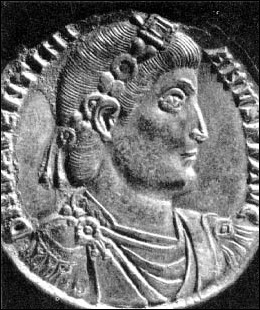
I know it's a difficult question, and I guess it's sometimes hard to discern a straight, simple development of artistic quality of Roman coins, but after a wikipedia binge on Roman emperors, it struck me that the coins often used as examples in the articles gradually got less "realistic", and it's difficult putting my finger on where the development starts. Whether or not it's just my prejudice (linking it to the 3rd century crisis), or a valid observation, the change seems to start somewhere in the 3rd century.
Coins that come to mind are coins from the reigns of Commodus (r. 177 AD – 192 AD) and Elagabalus (r. 218 AD - 222 AD) and comparing those with post-3rd c. crisis coins of Diocletian (r. 284 AD - 305 AD) and Valentinian (r. 364 AD - 375 AD).
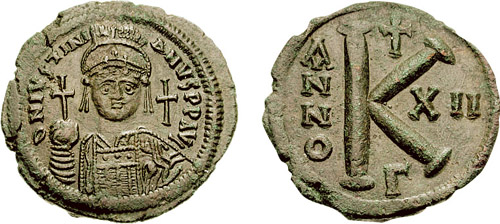
As for the time beyond the fall of Western Rome, I allow myself to use some Eastern Roman coins to further illustrate what I mean:
Justinian the Great (r. AD 527 – AD 565)
Justinian II (r. AD 685-695)
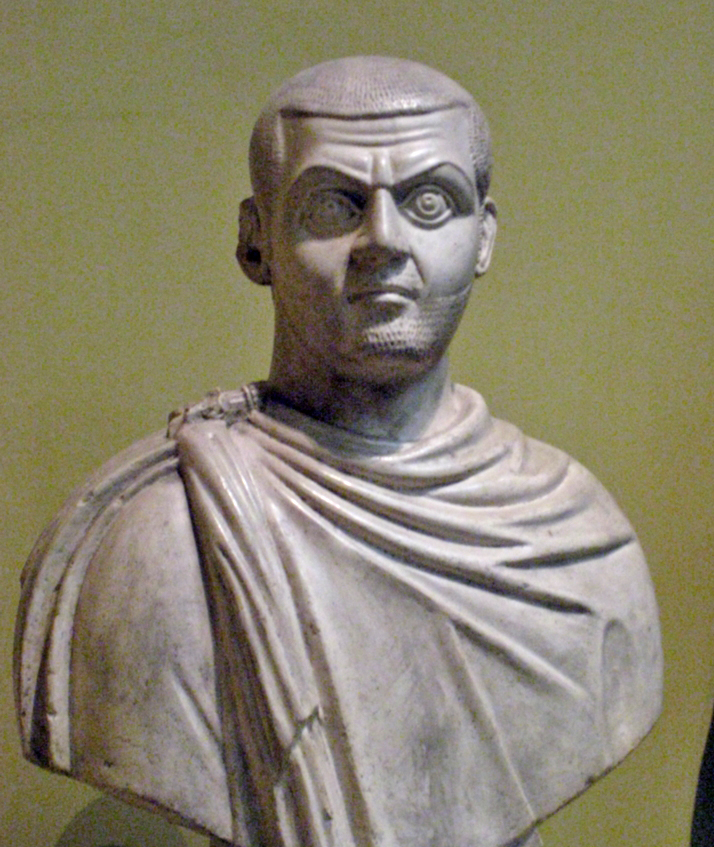
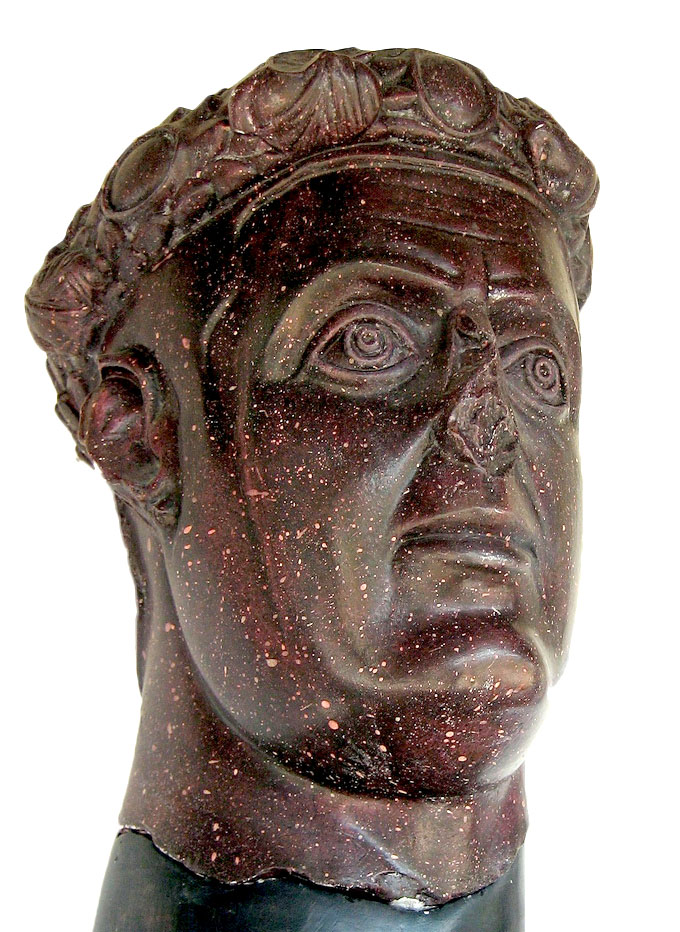
Is there anything to be said surrounding this shift? Is it a change in artistic taste (As some say started around the introduction of the Dominate and the Tetrarchy and can be seen in some imperial portraits from that era, examples 1, 2, 3 ), a change in economy and thus the use, quantity and quality of coins or maybe a combination of both?
1 Answers 2015-07-27
The show Reign on CW is very very very loosely historical fiction. Most of the plot lines seem to have some semblance of history in them. But there is this whole thing with pagans living in the woods who sacrifice people and make spells and what not. It feels completely out of left field. Is there any basis to this whatsoever? Are they supposed to be like a twist on the Jews? What's going on here?
2 Answers 2015-07-27
For a book I'm doing research for.
1 Answers 2015-07-27