3 Answers 2015-06-11
1 Answers 2015-06-11
I recently had a conversation with a number of people about left handedness. They all had stories from about 50 years ago and they all knew someone who left handed and was mistreated for it. One told a story about a boy getting hand beaten for writing with his left hand at a catholic school.
These are all anecdotal examples, but I assume those types of things happened to people at least sometimes in the past, whereas they never happen today.
Where did this stigma come from? How did it develop?
1 Answers 2015-06-11
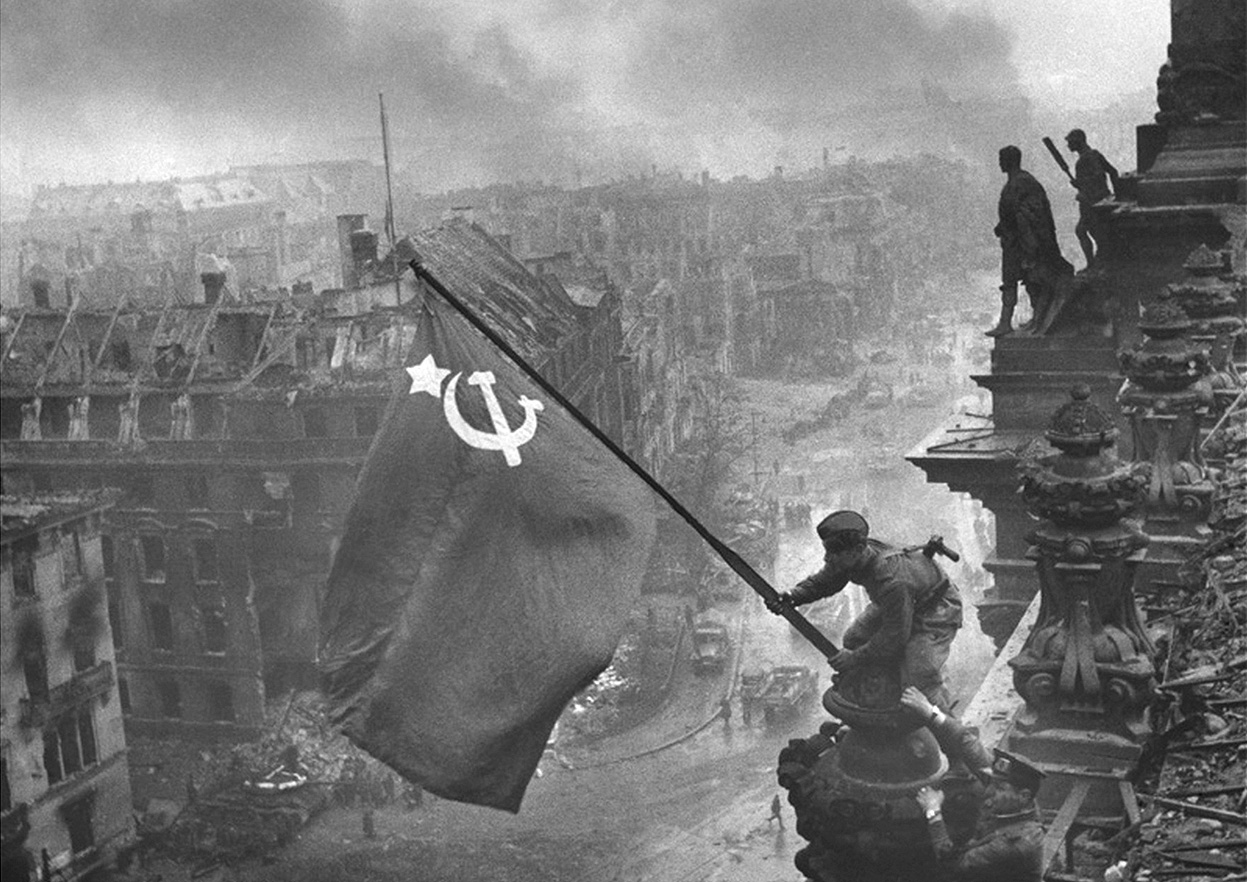
I currently live in Berlin and recently went to the top on the Reichstag building. I thought up there it might say where the image of the Soviet Soldier was snapped but it did not. I think, based on the buildings in the background it is looking over the city and if it wasnt rubble you would see the Brandenburg Gate in the background, can anyone confirm this or know which way it actually is?
https://reconsideringrussia.files.wordpress.com/2015/05/soviet-flag-reichstag-berlin.jpg
1 Answers 2015-06-11
2 Answers 2015-06-11
When did commoners grow aware of the calendar year they were living in? Was it ever common for everyday people to have no idea what year it was or how long ago distant events occurred (for example, how long ago Charlemagne ruled relative to when they were alive)?
1 Answers 2015-06-11
3 Answers 2015-06-11
I've always just assumed (perhaps incorrectly) that those who completed their sentences settled in Australia, with some even given parcels of land from the government.
2 Answers 2015-06-11
2 Answers 2015-06-11
In the context of any kind culture, especially pre-industrialization, is there any evidence of people riding atop the noble hippopotami?
1 Answers 2015-06-11
1 Answers 2015-06-11
From my understanding, Germany had a number of African soldiers who fought in East Africa. Did any of them see the trenches of Europe?
1 Answers 2015-06-11
1 Answers 2015-06-11
As I understand it part of the reason many cultures drank a lot of alcoholic beverages is that the water in densely populated areas became too dangerous to drink. How did the muslims get around this in huge cities like Cairo and Istanbul. Were they harder hit by dysentery and Cholera?
1 Answers 2015-06-11
I understand that the war in Europe was raging and the USA was not involved full scale until Pearl Harbor attack. But it seems like the USA first was fighting in Europe - then it took on Japan. Why does the chronology seem this way? I know there was the Doolittle raid - but was the USA committed to the war with Japan before VE day? Did one "front" effect another? Thanks.
SOLVED ! Thanks all!
3 Answers 2015-06-11
The Wikipedia article on Olga of Kiev claims, without any citation, that she was "hypothetically of Varangian extraction Old Norse: Helga." What evidence is there to support this? Moreover, is there any evidence that she was the daughter of Oleg of Novgorod?
Looking back through the history of the article I found some more details in a paragraph that has since been deleted by someone for being "a pack of nonsense from non-reliable sources":
The Life of Saint Princess Olga explains that she was born in the village Vybuty (Выбуты), Pskov Oblast, 12 km south of the city Pskov on the river Vilikoye, into a family of Varyag origin. By some accounts, she was the daughter of Oleg of Novgorod.
This cited Russiapedia:
According to the most traditional theory, recorded in the Primary Chronicle, Olga was born in Pskov (currently a city in the northwest of Russia) into a family of Varyag origin. [...] This theory about Olga's birth also explains the origin of her name, which is derived from the Scandinavian "Helga." Other historical versions state that Olga was either a daughter of Oleg Veshchy, the founder of the state of Kievan Rus, or had Bulgarian roots.
The Primary Chronicle doesn't actually appear to say that Olga was of Varangian origin, only that she "was brought from Pskov." The introduction to the translation by Cross and Sherbowitz-Wetzor (1953) concurs that Olga reflects the Old Norse Helga, and a note reads:
Hagiographical tradition characterized Olga as of Scandinavian origin and of non-noble birth; Makariy, Istoriya Russkoy Tserkvi, I, 3rd ed. (Spb., 1889), 268; Golubinsky, Ist. Russ. Tserkvi, I, i, 74.
If she was of "non-noble birth" then that would presumably rule out her being the daughter of Oleg, and I've found no sources for that one. However, I have neither book titled История русской церкви, and I can't read Russian anyway, so I'm not able to follow it up further.
1 Answers 2015-06-11
I understand why alchemy, wizards, witches, knights are associated with Medieval Europe, but why and when did dragons become associated with Medieval Europe?
3 Answers 2015-06-11
1 Answers 2015-06-11
1 Answers 2015-06-11
How much has spoken English changed?
1 Answers 2015-06-11
1 Answers 2015-06-11