2 Answers 2015-06-01
I have read a lot about how he had very strong convictions but at the same time they drove him to commit crimes against humanity. I also wonder if he knew or was happy about the increasingly tyrannical regime of Castro in Cuba that he played a major role in forming?
1 Answers 2015-06-01
1 Answers 2015-06-01
Historical events that come to mind are World War II and the story of Esther in the Bible where King Xerxes' assistant Haman issued a decree to wipe out the Jews in Babylon.
They even get their own word for the ongoing prejudice: anti-semitism.
1 Answers 2015-06-01
2 Answers 2015-05-31
Hi, a couple of months ago I read a very interesting book called "Cicero: The Life and Times of Rome's Greatest Politician" by Anthony Everitt. The book mostly concerned itself with what Cicero did during his life and his motivations, but there wasn't a lot about his overall effects on history. Wikipedia says that Cicero's influence was so great that "His influence on the Latin language was so immense that the subsequent history of prose in not only Latin but European languages up to the 19th century was said to be either a reaction against or a return to his style."
Is it true that Cicero remained so influential for over 2000 years after his death, or is there some exaggeration to it? It's hard to believe that one man could have such an impact on the entirety of European languages like it says he did.
Thank you!
1 Answers 2015-05-31
I'm fairly interested by this time period (specifically Buccaneering in the 17th century), can someone here provide a decent list on books that are focused on this subject in particular? Thanks.
1 Answers 2015-05-31
1 Answers 2015-05-31
Background information for those checking in:
The Confederate, hand-cranked submarine HL Hunley became the first sub in history to sink an enemy warship when she rammed the USS Housatonic with a spar torpedo but also sank in the process. The HL Hunley was recovered in 2000 and is now in a laboratory in North Charleston undergoing conservation.
Across town, only a few miles away, is a resort that claims to have the anchor from Hunleys victim the Housatonic. I’ve asked local old-timers about the authenticity of the anchor and the best answer I can get is, “the anchor was found by shrimpers at the Houstonic site and now the resort has it.”
Maybe we can’t confirm it is authentic but perhaps some smart people out there can eliminate it from consideration.
Was this type of anchor used on a ship like the Houatonic?
Here is a illustration taken from a 1999 site assessment of the Housatonic. An anchor was found but it doesn’t look like the one at the resort to me.
How many anchors would a ship like this have?
What could be done to authenticate this anchor?
Maybe somebody already knows where the anchor(s) are?
Here is the site assessment to the Housatonic if you are interested.
I can run out there and take better pics of the anchor if needed.
Thank you!
1 Answers 2015-05-31
Hello everyone,
As title states, my grandpa and I are staking out on our own and doing a grand tour of Mount Vernon, Monticello, Montpelier, and maybe several other historical stops if we have the time. I'm hoping to take him through DC to the WWII Museum and the Korean War Memorial (he's never visited, despite serving in the war). Also, if you have any recommendations for other destinations around the aforementioned areas please let me know.
In terms of requests, I'm just wondering if there's any podcasts/listening materials I can snag for us to listen to on the way down. It'd be great if they related to Jefferson/Washington/Madison, but it's definitely not required. As a side note, my Grandpa absolutely loves studying and reading about the civil war, so if there's anything related to that out there, that would be fantastic.
Thanks so much in advance!
3 Answers 2015-05-31
I'm curious what actually happened, as obviously both sides have probably embellished the books a little at least/
1 Answers 2015-05-31
My understanding is that when Croatian nationalists (namely Franjo Tuđman) came to power in 1989, they insisted on using the Croatian Coat of Arms.
This inflamed the Serbian minority living within Croatia, as they saw this emblem as the sign of the fascist group, the Ustaše. Considering this group was well-documented for torturing and murdering Serbian civilians because they were "racially impure", their reaction was no surprise. It would be similar to a Nazi Swatiska or the Confederate flag in the US.
Why did Tuđman and his cohorts insist on this symbol? Did Tuđman et al knowingly provoke the Serbs within their borders? Why is this symbol still used today on the Croatian national flag?
Furthermore, what did Josip Broz Tito think of this symbol?
Any more information is appreciated.
1 Answers 2015-05-31
I see characters in kung fu and samurai movies put money in their sleeves, or take money out of their sleeves. Was there a pocket or a pouch hidden up there?
3 Answers 2015-05-31
What I mean is do we know that he truly believed in this ideology of antisemitism? There are examples of religious leaders just taking advantage of a situation and not really believing their message. Is there anything to suggest he did the same?
1 Answers 2015-05-31
1 Answers 2015-05-31
It's edible, you can spin its fibers for cloth, you can make oils with it. So why did people (by and large, I know it is still grown today, but it's hardly ubiquitous.) drop it in favour of other things?
2 Answers 2015-05-31
I'm currently reading "The Republic of Pirates" by Colin Woodard that was referenced in a thread about pirates a while back here (it's very well written, I highly recommend it). In the book they describe how escaped African slaves often joined pirate crews or created their own communities in places like Jamaica. Are there any written accounts of escaped slaves integrating into native American communities or any books you would recommend on the topic?
2 Answers 2015-05-31
There's a stereotype around WWI that the officers and higher ranks were all taken from public schools rather than due to experience, which is why so many stupid decisions were made. If this is true, are there any known diaries or letters recording these officers as admitting / realising they had no idea what they were doing?
If so, is it known whether they stepped down or carried on with what they were doing?
Also, why was this this not recognised and the officers replaced with experienced soldiers regardless of class as the war went on? where there any attempts to or examples of actually doing that?
1 Answers 2015-05-31
2 Answers 2015-05-31
Was there any indication let's say 10-20 years prior to WWI that there would be a war or rising tension between European countries?
2 Answers 2015-05-31
1 Answers 2015-05-31
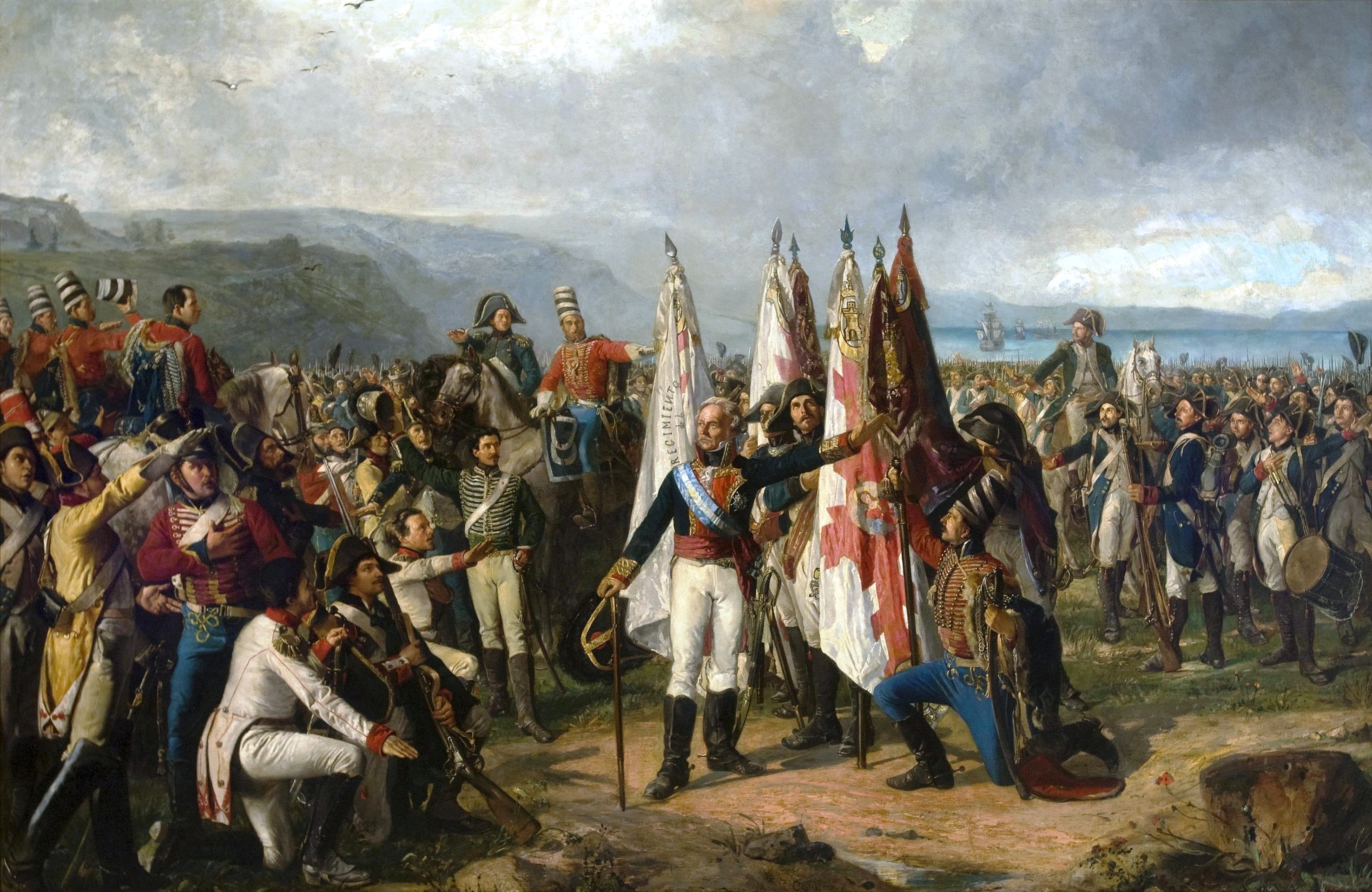
My Google-fu has failed me and I can't find anything about The black and white striped hats in this.
The ones that looks like a shako minus the brim.
1 Answers 2015-05-31
I am currently reading Charles Mann's 1493. There and elsewhere I've seen the claim that the Europeans and Native Americans practiced slavery, but it was not like the system that later came about in the American South. So what was it like then?
2 Answers 2015-05-31
I assume they probably could tell something big was being planned, but did the leaders tell the lower ranking soldiers what was going to happen, were they kept in the dark, or were they fed false information?
1 Answers 2015-05-31