Did it continue? Continue in the northeast and die out in China proper? How was it remembered, and how did it fit into the court's image of its origins? Was it ever referenced in dealing with Chinese practices of widow suicide? And what is the history of widow sacrifice in China more generally? English language reading recommendations would be appreciated too.
1 Answers 2021-09-05
1 Answers 2021-09-05
Today:
Welcome to this week's instalment of /r/AskHistorians' Sunday Digest (formerly the Day of Reflection). Nobody can read all the questions and answers that are posted here, so in this thread we invite you to share anything you'd like to highlight from the last week - an interesting discussion, an informative answer, an insightful question that was overlooked, or anything else.
4 Answers 2021-09-05
From what I have read from people's informed responses on this topic, the idea of things being 'built to last' has an actual basis in history for several reasons.
I do not understand where the 20th century comes into this picture. Which is where a lot of us nowadays get our social pre-conceptions from (assuming a few generations' influence).
It seems like by the early 20th century, mass-production was becoming a thing. How far back can we go until this claim is not true anymore?
1 Answers 2021-09-05
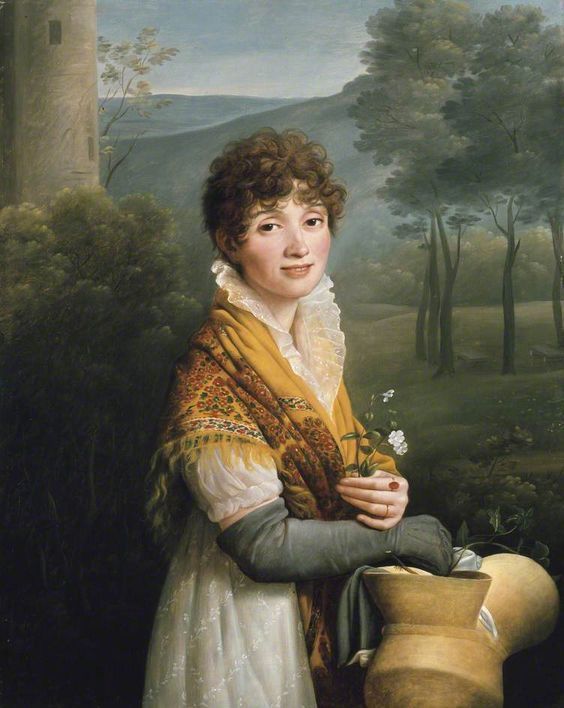
I just got done watching that great 500 years of haircuts video, where Morgan Donner did her best to recreate various historical hair styles. For the Regency period she did the classic Jane Austen updo with those lil side curls, pointing out that for many historical hairdos you basically had to cut layers to achieve them. However she brought up that during the Regency some women opted for what is essentially a pixie cut.
I know from stuff like Bernice Bobs Her Hair by F Scott Fitzgerald that at least at the start of the 1920s, getting short hair could be scandalous. But these Regency women have even shorter hair than flappers and I'm assuming they were society ladies since they got their portraits painted.
So what gives? Some of them have such severe pixie cuts that it would have raised eyebrows in the 1990s, and this is approximately the era where women might be punished by having a forcibly shaved head, right? Do we know what people thought about these hairdos? Was it something to do with how women moved away from giant pannier dresses to more simple muslin gowns? I know at least English court dress was a bit more restrictive in this time - could a woman appear in the palace with this sort of 'do? Or was it just an artistic exaggeration by painters?
1 Answers 2021-09-05
For instance, Jackson's The Fall of France states: "[The trial] had become a public relations disaster because Daladier and Blum succeeded in turning the tables on their accusers and demonstrating the flimsiness of the charges against them."
1 Answers 2021-09-05
Who were eunuchs as a social class to the authors/original intended readers of the scriptures? Would early Christians have known any eunuchs? What about the authors/readers of the book of Esther? How ‘other’ were they in these times and places? It seems to me like the Ethiopian eunuch story portrays a wealthy and powerful foreigner who happens to also be a eunuch - is the detail that they’re a eunuch maybe supposed to indicate a sense of exotic difference, or what would it have signified? Any surrounding info about this would be fascinating!
2 Answers 2021-09-05
I’m reading Walter Scheidel’s book “Escape from Rome” which posits that the reason for the “Great Divergence” is that Europe was reasonably Unique in not having once had a major empire taking up 80%+ of its population at one time, but then never again, unlike China, India, or the MENA, regions.
I am not finished with it yet, but in the macro sense it seems well researched and well reasoned without making any large leaps of reason or evidence, is there any significant concensus on this book? What do people here with relevant flairs think? It kind of seems a bit like guns germs and steel if that book weren’t, well…bad?
1 Answers 2021-09-05
I’m reading Walter Scheidel’s “Escape from Rome,” and one point he’s made is that merchant interests were much stronger in Europe than in China for much of the last 1500 years or so. However, while he argues this led to technological change and an increase in military and state power, it often had negative effects overall on societal welfare for the benefit of elites, for example extensive protectionism and monopolistic trade companies which hurt the majority agricultural population and the urban workers while enriching merchants and industrialists. Or how taxes were far far higher per capita in Europe than in China due to demand to build competitive military forces especially navies.
He explains how in China the merchant class had much less input from the merchant class in government and it had less power politically, and the imperial governments often spent money on relief schemes or those to reduce inequality, rather than other things to build state capacity, due to a general lack of peer opponents for much of the period from ~1350-1850 or so.
I’m oversimplifying to get this all down and because I’m not as eloquent as Scheidel, but.m, Especially if you’ve read this book, are the things he claims helped spur eventually long term growth and industrialization things that may have hurt people’s standard of living in the short run? Or even most of the long run? (rather than “all time minus the last century)
1 Answers 2021-09-05
1 Answers 2021-09-05
Now, before you kill me for not knowing I want to say I know that fascism is bad, but not why. Obviously, Hitler, but I don’t recall any particularly bad things from Mussolini or Franco’s regime, not like the Holocaust at least, so what exactly is it? What does it entail, like policies, freedoms etc. how was Mussolini’s regime different from Franco’s and that from Hitler’s?
3 Answers 2021-09-05
1 Answers 2021-09-05
Where can I find an unbiased truthful resource about the historical accuracy of the Bible. It seems to me that every thing that talks about it is very biased and has some agenda. I just want the truth.
1 Answers 2021-09-05
1 Answers 2021-09-05
1 Answers 2021-09-05
Would she go through an apprenticeship? What kind of money could she be expected to make? What would the difference be between owning her own shop and being a personal dressmaker in regards to income? How could she supplement income if needed?
1 Answers 2021-09-05
As I understand it, castles didn’t really become a thing until after the Norman conquest. What kind of building would an Anglo-Saxon king have lived in? Would there have been a permanent “royal seat” that would have been inherited by a king’s successors?
1 Answers 2021-09-04
1 Answers 2021-09-04
1 Answers 2021-09-04
I know John Adams was the second president but he also wanted George Washington to be called your majesty and he was suspected of being a monarchist. Was he in fact a monarchist?
1 Answers 2021-09-04
1 Answers 2021-09-04
A possibility that comes to mind for me is a disruption of migration routes for animals; do we know if anyone noticed that? What about diverting water or anything else for maintenance or construction? Thanks!
2 Answers 2021-09-04
My wife has been watching Bridgerton recently and suggested that one of the characters could have dealt with his dilemma easily (not wanting to carry on his family name by having children) by assuming his wife's family name instead.
Was this something legally possible in the UK at the time? Did it ever happen?
1 Answers 2021-09-04