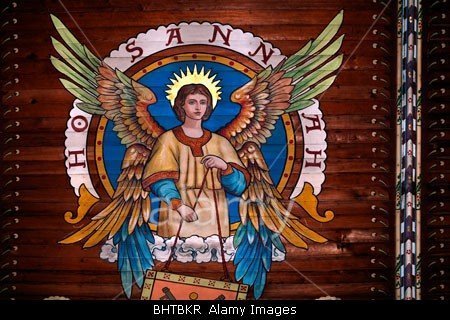
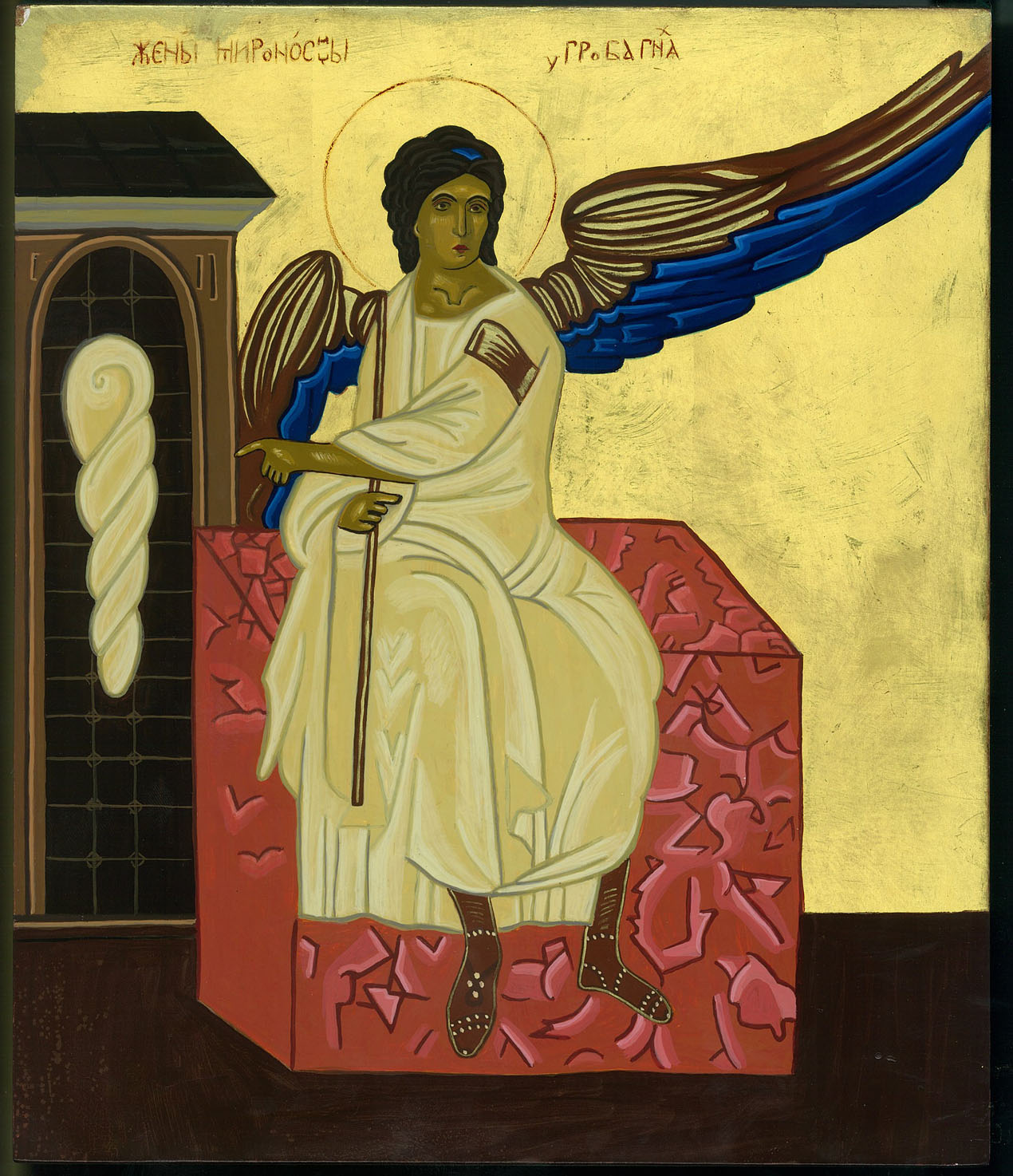
For clarity's sake, something like this angel from England or this angel from 13th century Serbia has colourful wings. However, this painting from 17th century Spain has white wings. Was this difference based on geography? Time? Why is there a difference in wing depictions? Why do we now almost universally see white wings? Is there some significance to each colour?
1 Answers 2015-04-25
Travelled in Europe a bit this summer. The Doge's palace armoury in Venice had a quite interesting collection. I've linked some pictures I took.
Included are arquebuses, sword-guns, sword axes, dual-cock flintlock rifles and multi-barrelled black-powder firearms.
Sort of curious how commonly and effective weapons like this were, and how widespread was there use.
I'd be interested in any background that could be provided to these sorts of weapons.
EDIT:
huh, apparently the multi-barrel weapons are called "pepper-box" pistols or rifles. Some details here: http://en.wikipedia.org/wiki/Pepper-box
2 Answers 2015-04-25
Its ANZAC day today and it's gotten me thinking about the parts of the war that weren't a part of Europe. And follow up questions, what was happening in Africa and Asia?
1 Answers 2015-04-25
One of, if not the primary reason that the Conquistadors were so successful in their campaign against the Mayans, etc, was due to the diseases they brought with them from Europe. The indigenous population had no resistance to the diseases they brought, which is understandable. But why were the Conquistadors not just as easily felled by the local diseases that they had not been exposed to in Europe? Why was the harm so one sided?
1 Answers 2015-04-25
I've heard many stories about Romans and their excellent "castra"s (forts/camps). With some of the pictures I've seen on the internet I'm wondering how Roman troops were able to construct such organized forts so quickly. Especially ones with stones and permanent building materials!
I've been able to find plenty of information on the design of the camps, but next to nothing on the actual construction of them, so I thought this would be the place to ask!
1 Answers 2015-04-25
As it says on the tin, I'm curious about which History podcasts /r/Askhistorians is actively listening to, which they'd recommend, and perhaps even which they'd warn against.
Aside from the eponymous podcast featured here some of of my go to listens while out and about are the BBC's In our time and the Virginia Foundation for the Humanities' Backstory. But, there are so many more well made ones out there: too many seemingly good ones even to cue up for weekly listening.
There are many published lists floating around and this topic has been visited on here in general form before (e.g. 1, 2, 3, 4, 5, 6) but I'm curious what has your ear and should have mine at the present moment.
EDIT -- Thank you for all the wonderful suggestions. I'm going to compile the offered podcasts here into a single list by the end of the 29th EDT
20 Answers 2015-04-24
It seems the Senate and Patrician level families had more to lose if a tyrant came to power while the majority of people might not be effected or possibly could even benefit. Especially when it came to people like Julius Caesar who, at least on the surface, seemed much more populist than many in the Senate.
1 Answers 2015-04-24
Magyars, Finns, Pechenegs, Mongols and Turks all have their origins in the Central Asian steppes. What led these societies to clash with Europeans and defeat them so effectively?
1 Answers 2015-04-24
I was watching White Tiger, a Russian fictional film about a mystical German Tiger on the eastern front, when I noticed a peculiar uniform, at odds with the otherwise pretty well constructed atmosphere and period clothing, I can't seem to find anything on the internet, nor do I recognize it myself- I'm not even sure if this is the right sub for this kind of question- but does anyone know what branch of the Soviet military this uniform or patch originates from?
1 Answers 2015-04-24
I'm asking this in /r/AskHistorians because I'm assuming that the use of forks and spoons was introduced, or influenced by, the British when they colonized the area. I recently travelled to Malaysia, and usually got a fork and spoon with my food. If this question is more appropriate for a different subreddit please let me know; I tried looking for the answer online, but have unearthed very little.
1 Answers 2015-04-24
For example, did puppet states of the USSR that weren't official members of the soviet union know their country was essentially controlled by Russia? What about other puppet states through history?
1 Answers 2015-04-24
I understand this question is very specific, but it's confusing me. The standard layout for US-engineered coups is, resources are nationalized, the US and domestic corporations engineer a coup, and resources are re-privatized. Except in Chile, that re-privatization never occurred. So how did Pinochet come to be seen as a bastion of hope for capitalists, if copper remains nationalized to this day in Chile? Is copper a unique case?
Was the Chilean coup less about nationalization and more about containing the Soviet sphere of influence?
1 Answers 2015-04-24
Wouldn't it make more sense to call it the East Indies?
1 Answers 2015-04-24
The US Secret Service seems to be the only federal agency that incorporates "United States" in their acronym. Presumably, they do this to avoid being called the "SS."
Was the Secret Service ever known as the "SS?" When did the custom of calling them the "USSS" begin?
Edit: There are other federal agencies that incorporate "US" in their acronym. It seems most of the other "US" agencies were founded before the 20th Century. Was this a 19th Century thing? Maybe to emphasize these are federal, not state, agencies?
Edit 2: I've made a few false assumptions. Demonstrating this is a helpful way to answer my question. Thank you.
5 Answers 2015-04-24
I'm really interested in why burning a flag in protest gets such a strong negative reaction out of people, but I think understanding this would help.
1 Answers 2015-04-24
1 Answers 2015-04-24
Humans were hunger-gatherers for the longest time - what happened to make them settle down and create civilizations like Babylon or Egypt? Did a specific thing force them to do so, or was it a gradual thing, where people started to discover agriculture and so settled down?
1 Answers 2015-04-24
I mean like, the first serious scientific source confirming them as mammals. I remember reading somewhere that Aristotle knew they couldn't be fish and concluded they were mammals. Perhaps I'm not googling correctly but I can't find any sources to answer my question.
I mean, there have probably been smart people since the Ancient times that found a beached dolphin or whale and realized that it was breathing and had no gills, but when did some actual taxonomer say "wait a minute"?
1 Answers 2015-04-24
Just had this thought.
3 Answers 2015-04-24
Especially because the new religions seem very distinct in structure, more "absolute" in a way. Was something social going on for Roman society to start favoring a different kind of religion than its old faith, eventually settling on christianity?
2 Answers 2015-04-24