A theme that seems to repeat itself is that empires are often invaded by nomadic horse people from the steppes. What specifically drives these groups to migrate rather than establishing their own empires in the steppes? Lack of natural resources? Tales of riches from afar?
1 Answers 2015-03-07
There is almost nothing left of the ancient Forum. It is somewhat unclear to me how all these temples, amphitheaters, pillars, sculptures fell and vanished from the eternal city. Is anyone able to enlighten me?
1 Answers 2015-03-07
As an extension, what are the original origins of the numbers? I cans see how 1 to 3 were just lines of that number, and 0 is pretty simple, but what about the others?
2 Answers 2015-03-07
1 Answers 2015-03-07
Ok, I originally thought that 'Mediterraneans' were dark-skinned people from the Mediterranean and Middle East, that the 'Nordics' were blond-haired blue-eyed people from the Germanic world and that the 'Alpine' people were people from the rest of Europe who didn't look quite as Scandinavian as the Nordics. But I've seen maps where the Celtic peoples of Wales and Ireland were considered 'Mediterranean', and where Tajiks were considered to be 'Alpine'.
So, what exactly was the logic behind those three categories? Was it just completely subjective and defined by pure prejudice? And also, which of the 3 sub-races would people from the North of India or the Horn of Africa have been classified as?
1 Answers 2015-03-07
The US did have a number of enemies at the end of World War 2, and it seems they could have used nuclear weapons to significantly weaken their enemies even without following up with a conventional invasion. Why didn't they do so?
Edit: Obviously they used nuclear weapons against Japan, but I'm asking about the early phases of the Cold War.
1 Answers 2015-03-07
If you were to take the greek myths in a timeline what event/story would take place last? and or what was the last verified greek myth written?
2 Answers 2015-03-07
2 Answers 2015-03-07
I hear a lot about them being these ultrapowerful invaders who always won. However, I've read many books, and have come across stories of the Vikings being defeated in parts of Spain, Italy, and Russia and not only not really confronting the Byzantines but serving in their militaries by choice.
I am familiar with the heavy colonization of Britain and Northern France, and am aware that Norman Vikings were invited by the Neapolitans to rule Southern Italy, but there doesn't seem to be a list on wikipedia of Viking defeats, and I'm sure there are some areas of the world where they were stopped.
1 Answers 2015-03-07
Was French seem as a vulgar language by some and it just caught on, or what?
2 Answers 2015-03-07
1 Answers 2015-03-07
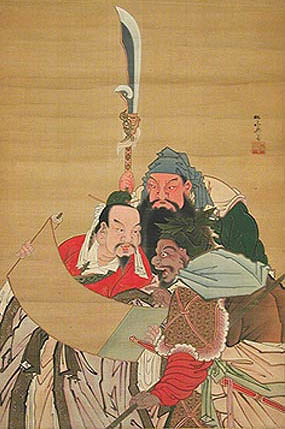
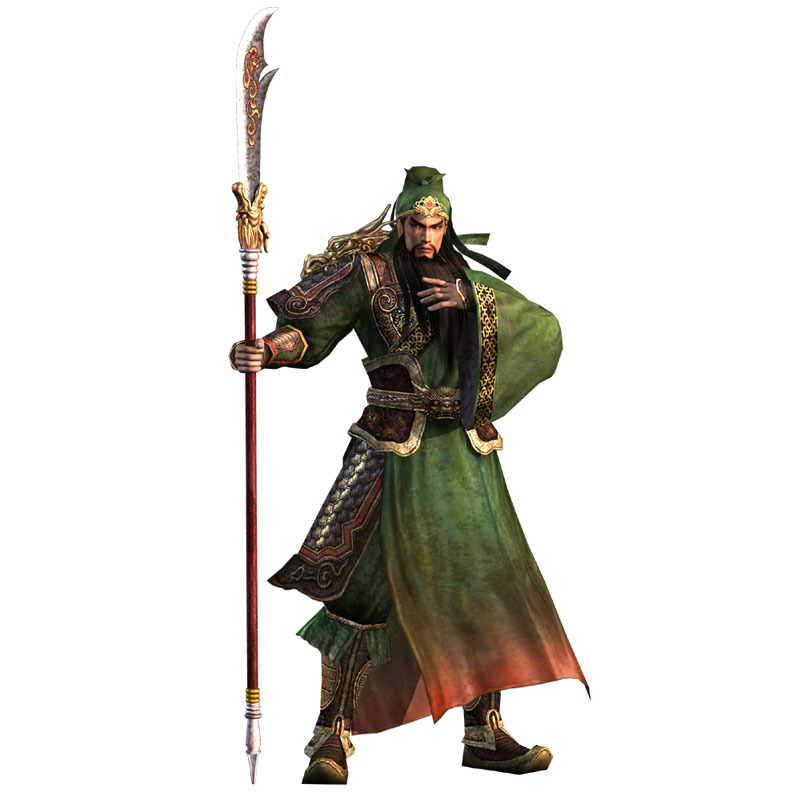
I was going through this thread and came across this picture of a statue of Guan Yu.
Wikipedia says this of Guan Yu's appearance:
No descriptions of Guan Yu's physical appearance exist in historical records, but his beard was mentioned in the Sanguozhi. Traditionally, he is portrayed as a red-faced warrior with a long lush beard.
Most historical depictions depict him like this. For reference, this, this, and this is the typical artwork of Guan Yu from Omega Force/Koei, the creators of the video game series Dynasty Warriors. This is the look of Guan Yu that I've come to recognize instantly in many modern day depictions of him. Everything I'm finding in modern media from stuff pre-2000 doesn't share the same looks.
So my question is this:
I know this may be blurring the lines of the "no past 20 years rule" as part of this concerns modern art, but I want to know if this modern day depiction of Guan Yu is influenced by something historical or if it is a recent creation.
1 Answers 2015-03-07
Hello /r/AskHistorians! Before I get into it, if this is in the wrong subreddit, let me know where it might fit better, and I'll move it over there.
So, the past couple of days I've been reading Peter Borwn's "The World of Late Antiquity" and am having trouble really synthesizing all the information into something that makes sense. Part of my trouble stems from my lack of familiarity with the era; I have no experience with this period of time, which makes it hard to follow a lot of the events that Brown discusses. I'm also not a fan of Brown's style of writing; it comes off (at least to me) as pretentious and self-indulgent (how many times can you say "grandiloquent" without coming off as snobbish? Answer: none). I understand that he is one of the preeminent historical scholars today, but I feel like reading his book is like trying to catch an airplane with a butterfly net.
Are there any resources out there to better understand Late Antiquity? Can someone summarize what exactly Brown is trying to say in his book? Any help would be greatly appreciated.
1 Answers 2015-03-07
Central Europe in the times between the decline of the Western Roman Empire and the rise of the Christian Frankish rule is something that interests me a lot, though I don't know of many contemporary literary sources from the region. if you know of any interesting pieces, I'd be very appreciative, though I know not a whole ton was written down.
1 Answers 2015-03-07
Anything at all that does more than scratch the surface. Religion, culture, warfare, anything at all on Ancient Egypt that is slightly more academic than pop history.
1 Answers 2015-03-07
1 Answers 2015-03-07
1 Answers 2015-03-07
1 Answers 2015-03-07
I remember hearing in grade school that pale skin was desirable in the past as it was a sign of a life of leisure, indicating a lifestyle that did not have you working outside constantly and developing a tan. These days, however, everyone is eager to get their "summer tans" in time for the beach seasons. I was wondering at what point (or during what period of time) and for what reasons tan skin became desirable.
1 Answers 2015-03-07
It seems like many early machines were less carefully designed so much as put together, and modern machines like a plane are substantially more complex than early planes. However design software and systems have also improved as well as an increase in trained engineers and specialized design project teams. So how long would say an engine (Steam, diesel or other) take to design in say 1800 1850 1900 1950 or 1995?
1 Answers 2015-03-07
2 Answers 2015-03-07
In my American history class we were taught that at one time, France and Spain had a presence in the Americas and France had even planned to try to take over the colonies before they had a revolution of their own. This got me wondering to how the established powers such as Spain, France, and Britain viewed this colony that overthrew their imperial control, quickly grew and amassed power, had civil war, and had the audacity to pick a war with a power (although much reduced by then) in Spain in these different phases of America's history. I'm especially interested in a decade or so after Revolution had ended and France and Spain had territories in the Americas.
1 Answers 2015-03-07