3 Answers 2021-08-16
I am painfully ignorant of the history of the Taliban before Bin Laden & 9/11 and I guess I am trying to understand what their end game is. I.e. is it really to get foreign forces out of the country or is it to repress and marginalise large groups of people based on religion, ethnicity, gender etc. and to rule through fear and intimidation.
I know this might be too recent for this sub but it seems important and I would like to get a better understanding of current circumstances through knowledge of the past.
edit: edited to clarify that I am ignorant of the Taliban before 9/11 as I assume Bin Laden was around for a fair while before that happened.
1 Answers 2021-08-15
I would like to be able to do this in general, but I do need two specific dates.
What I need is the date July 17, 187 BC according to the Roman Calendar used at that time. I also need to know what date they would have considered to be exactly one year prior that on both their calendar and ours.
I hope that makes sense. Here are the two questions reframed:
On July 17, 187 BC, what would a Roman have said the date was?
What would one year prior to that date, according to that calendar, have been?
1 Answers 2021-08-15
India and the historic core of China seem very similar in geography. A large, fertile plain in the north, with a more rugged south, and a singular direction yielding major threats (the northern steppes for China and the lands west of the Indus for India). Yet throughout history, there have been numerous empires to conquer and hold all of China for centuries, yet the only empire to finally hold all of India from the Himalayas to Sri Lanka were the British, in the 1800s. What prevented any Indian state from holding the entire thing? If the question is too counterfactual, then what made Chinese empires able to hold all of China repeatedly?
1 Answers 2021-08-15
In historical films its quite common to see people with a commanding position to charge in the battlefield, mostly as a sign of their bravery and fighting proficiency. Also in popular beliefs there are images of e.g. Alexander the Great charging into fights like a normal soldier would.
But how much this represents historical reality? I would guess that it would be a not so wise choice for a commander to do so, even if we ignore the power dynamics inside the army (why a person in a position of power would risk his life like that)
1 Answers 2021-08-15
In any museums or history books I've read, 'Ancient History' would cover approx 30th Century BC to around 2nd-4th century AC... But only covering Europe, Northern Africa, Middle East, and Central Asia
China already has figuritive art from Longshan culture (30th century BC?) And written history from Shang Dynasty ( 15th century BC)
Is it because there's no trades or communication between the cultures above and China? Or is it because non western history is considered 'outsider' history?
2 Answers 2021-08-15
Many sources I have read have stated that "very little" is actually known of those called Vikings and all that surrounds ancient Norse culture, as it was very early on that these peoples were active. The idea of the Vikings wearing horned helmets was (and perhaps still is) very prevalent, and strikes a very iconic image in the imagination, yet I have read articles from National Geographic and the like that dispute this very "fact".
I also wonder very much about the accuracy of Norse myths and legends, as I am a practicing witch, and am accustomed to many folks within the community holding these perspectives as their chosen path. I respect this in any case, but I am very curious as to how much we actually gather from historical findings.
I am also very curious to know the actual ancient origins of this I know as mead. Did these ancient peoples keep bees? Was honey not a luxury product? Why is it so closely related to these cultures who supposedly thrived in cold climates?
Why am I consuming "mead" to forget about my "Viking" ex whom had a "warrior's cut"? At six feet tall, could an actual historical Viking even compare in height? How could a Viking even shave the sides of his head?
Please help! I'm curious
2 Answers 2021-08-15
With the Taliban coming back, and each time before that with ISIL, it always reminded me of the crusades. So my question can be general or specific based on examples below.
Did the soldiers or new government tear down, destroy, or deface mosques, artifacts, or other non-Christian important monuments?
Were the local Muslim population, who stayed, able to lead normal lives (go to mosques, wear their religious clothing, celebrate religious festivals, etc.)?
1 Answers 2021-08-15
Iceland seems to have an enormous literary production what with Norse mythology, sagas and romances. Why did such a small nation write so much? Or is it just that their production gets more attention?
1 Answers 2021-08-15
1 Answers 2021-08-15
I’m asking this inspired by a recent thread that discussed norse gods and religion, where I found a link to this comment.. While I’m sure that we have a lot of documented information about my inquiry, I also thought that we were not in such a bad situation regarding the religious practices of old norse religion.
In this case, however, we do have a lot of trusted stories and documents regarding the myths, the gods are well-known and (as far as I understand) we also have a very decent amount of knowledge about the structure of the religion.
But, as I said, that’s as far as I understand. With modern paganism and the internet, there’s also a ton of misinformation or badly-informed takes going around and, coupled with pop culture itself, it’s very hard to be sure of a lot of things.
Do we actually have trusted sources, backed by verified evidence, that offer in-depth knowledge about old greek religion? Do we know the minor details about religious practices in different regions? Do we actually know how individual people actually worshipped their preferred gods/goddesses? Do we suffer from major misunderstandings due to pop culture or myths overtaking actual knowledge about the religion?
Maybe I am asking for a very broad answer, since I did write a lot of question marks, but I will be very grateful if someone is able to answer me at least the central question: Based on the comment linked that talked about old norse religion, do we have trustable, in-depth, “non-mythological” sources of knowledge about old greek religion?
1 Answers 2021-08-15
In the little reading I've done, the Ottoman conquest of the Mamluk state (which reached as far as Diyarbekir in modern Turkey) is dealt with rather matter-of-factly. However, for such a massive state with a long-standing military tradition to just collapse is an odd occurence. What gives?
1 Answers 2021-08-15
I have a lot of admiration for the Resistance and I'd like information about it. How did the resistance contribute (from a military/strategic point of view) to the Allied victory, whether it be the Polish, French, Italian, German or any other Resistance. I know they did a lot when it came to the morale of their people but I'd like to know how involved they were in the military victory of World War Two. Thanks !
1 Answers 2021-08-15
I was recently reading about the incredibly high rates of suicide (as high as 2 people per week) among Indian migrant workers (read: modern day slaves) in Dubai and the UAE.
I assume that the number is not higher only because many of these people have family back in India (and other places) relying on them to hopefully send money back home.
But what about ancient Rome and Egypt, or even black slaves in America, where entire families and generations were slaves and they were not working for the purpose of trying to provide a better life for their families in their homeland? Was suicide common among these people?
Thanks!
1 Answers 2021-08-15
The plot revolves around three main characters, a Father, and two Brothers. The father held a precarious position of power and or wealth, having married into it, or acquired the position under questionable/unknown circumstances. Imagine a figure like some sort of cross between Donald Trump (Pre 2016) and Doctor Barnardo, an activist and opinionated individual, but with the means to enact his visions far more than most. However, this persona is a façade the Father uses to further his agenda, which is a more radical and anarchistic belief system. Ultimately he realises this ambition with an act of terrorism/theft/vandalism. A little bit of Guy Fawkes' gunpowder plot, The Great Train Robbery and the idea of stealing the Crown Jewels. The father gets away with this, but leaves his family disgraced and lives the rest of his life on the run. Years later when, the brothers are both about 30, they get wind of his trail and set off in a globe trotting pursuit to confront the father. So My main questions are: What sort of title/position could the father hold so as to fit the description given and how could he have realistically got there? What monument/person/establishment/object could he deface/murder/destroy/steal that would have the same historical significance as the examples? And what job/position would the brothers have to have in order to legitimately fund the first leg of a trip to find the father, for example, a boat ticket to South America?
1 Answers 2021-08-15
I first read this article years ago, and it has stuck with me ever since. The writer insists that the role of women in historical conflicts has been drastically under counted and overlooked. What is the historical consensus on this?
2 Answers 2021-08-15
1 Answers 2021-08-15
Today:
Welcome to this week's instalment of /r/AskHistorians' Sunday Digest (formerly the Day of Reflection). Nobody can read all the questions and answers that are posted here, so in this thread we invite you to share anything you'd like to highlight from the last week - an interesting discussion, an informative answer, an insightful question that was overlooked, or anything else.
2 Answers 2021-08-15
Western Christians often had some odd ideas about Islam many of them contradictory. However what recently popped into my mind was well what did the Muslims think about their faith? Due to the nature of Islam and the fact that Muslim states had many Christian subjects they would have better general idea about what Christianity was. However did they understand or care about the split between the Pope and the Patriarch of Constantinople? Was there any Latin practice that really stood out for them? Was this something they would have understood as being analogous to their own splits i.e Shia vs Sunni?
1 Answers 2021-08-15
I understand that a coup is destabilizing and, often, anti-democratic. I'm trying to see if, beyond my own western cultural way of thinking, there have been situations where coups didn't end up being too terrible for the inhabitants of the local people? Has it ever led to a good outcome?
I'm thinking about the Taliban in Afghanistan, and about how, if I understand correctly, the US government is particularly notorious for training and arming home grown organizations to overthrow goverments because it's convenient to them. The US only gets mad when their militants stop listening to their directives? My brain says 'Latin America?'
While we (probably) didn't directly arm them and tell them to do it this time, aren't there trails going back and back and back with the Taliban and the US?
What can history tell us about the citizens of countries that suffered a coups d'état?
1 Answers 2021-08-15
Over time I've read that Germany went crazy for 12 years, and everyone was totally fanatical about this guy Hitler.
But I look at the recent Trump era, and I see that half of the population was extremely enthusiastic for him (very similar to what the history books and films are saying about Hitler) and the other half wasn't. It actually somewhat resembles the normal distribution of the IQ curve, with 50% above and 50% below.
So... was the majority of Germany crazy for Hitler, or just 50% like the recent Trump era? (and the other 50% couldn't stand him)
1 Answers 2021-08-15
During my childhood, I heard it wasn’t actually referring to the bubonic plague, like I’d thought up to that point. However, this did leave me wondering, if it he plague, what’s ‘Ring around the Rosies’ actually about?
I am aware that there probably isn’t a definitive answer, but are there any theories on its subject matter?
Thanks in advance (:
1 Answers 2021-08-15
My girlfriend went to a car boot sale yesterday near her family home in Caerleon, South Wales. Historically, it was one of the most important Roman sites in the UK (and has a great amphitheatre and other Roman archiological sites of interest).
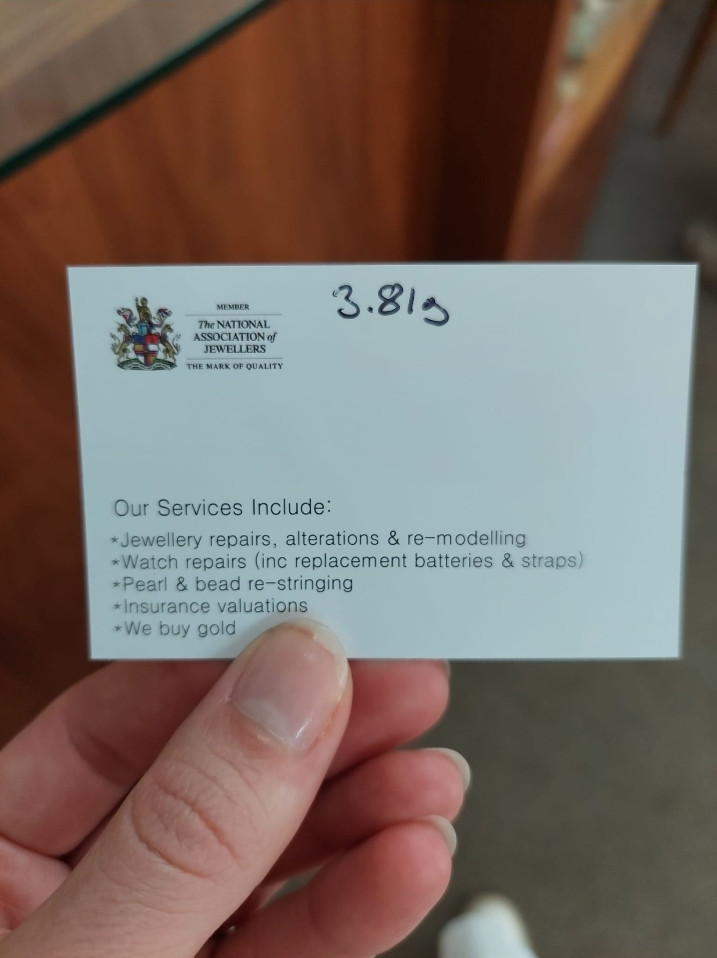
She picked up this ring for £1 with several other items - thinking it looked old and interesting. She took it to a jeweler to see if it was real gold - he excitedly tested it and said it is 24k gold, weighed 3.81g and appeared Roman (although was not an antiquities specialist). It has been reported to the local archaeological liaison officer for the area who will assess it formally but we're keen to know more as impatient whilst waiting!
Ive done a little digging online (finds.org.uk is awesome) and can't find anything particularly similar. Any budding archaeologists able to say if appears more Roman/Medieval and what the design is (not sure if lightning bolt or arrow)? Not planning on selling - if it's of significant historical importance then will speak to local museum to see if they would want it but would like to learn more.
Photos: https://imgur.com/a/RbIhVd9
Thanks!
(Photo from when checked with jeweler: https://iili.io/RRz5I2.jpg )
2 Answers 2021-08-15
I've heard a lot about Greek and Roman Historians such as Herodotus, Livy, Plutarch, etc.. but what about ancient Historians from other cultures? I know that there were some ancient Chinese Historians. Did any other ancient cultures record histories like these, and if they did how accurate are they comparably?
2 Answers 2021-08-15
I was just wondering how common atheists or non believers were in the medieval times (especially in Scandinavia and Britain) was there absolutely none like is commonly portrayed in movies and tv shows? Or was there a noticeable population of them back then?
1 Answers 2021-08-15