I don't know history well, decided to ask there, why kill so many people to scare Japan into surrender, when they could literally just kill the men who was responsible for Japan not surrendering
1 Answers 2021-08-03
1 Answers 2021-08-03
1 Answers 2021-08-03
If so, we’re there any documented historical events where this mistake took place? In the way of “it is very strange that this person was poisoned, it is very possible it could have been an allergy/medical”, and if so - how big of an impact could those small bits of knowledge could of had on history?
Thanks a ton! Love this sub
3 Answers 2021-08-03
Today we have plenty of way of finding people from pinging phones to passport checks.
In TV and film we often see a character be hunted by knights or guards across country and they will often "Pick up a trail" which seems a tad far fetched.
So how were outlaws pursued across country? Say a high profile traitor to the kingdom of Mercia in the 9th century, as an example of the time period I'm after.
Cheers in advance folks
1 Answers 2021-08-03
I was at a museum not too long ago, and I read a bit about how even before the sharp rise in antisemitism in the medieval period, Jews seemed to constantly have things go wrong for them, forced to convert, exiled, etc. I'm wondering why this has been happening for thousands of years?
1 Answers 2021-08-03
I've been reading and learning history in Wikipedia but I don't know if it's historically accurate. So what websites do you use?
1 Answers 2021-08-03
1 Answers 2021-08-03
To my understanding, cannons were not used in Europe before the early 13th century?
1 Answers 2021-08-03
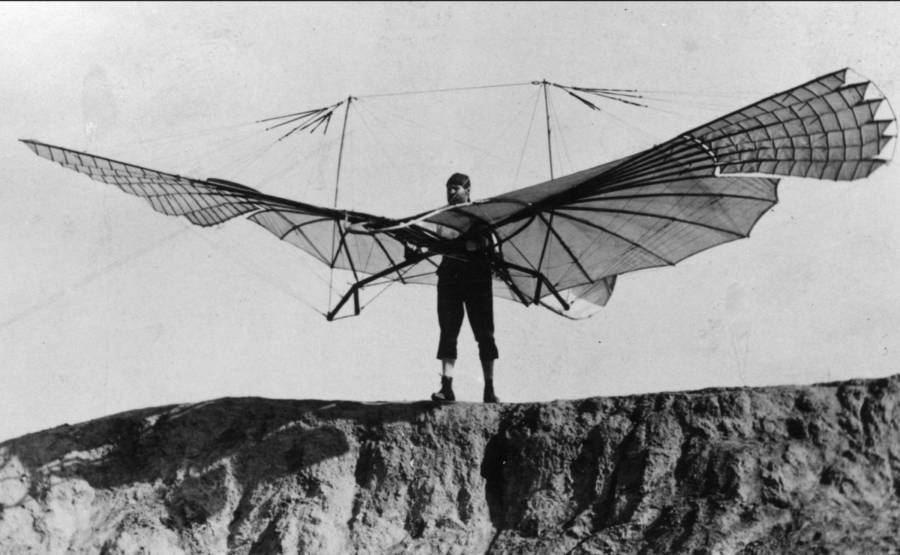
I'm really interested in the early history of heavier than air flight. There was a period that I would call "copy cat" when we tried to make bird suits, etc... Essentially slavishly followed how nature had done it without working out or really thinking about what it would take for humans to *actually* do it.
Think this: https://allthatsinteresting.com/wordpress/wp-content/uploads/2017/03/otto-glider-flying-machines.jpg
At some point the Wright brothers sat down and started from basic physics and worked out how to actually do it.
What I am particularly interested in is this sort of transition. From technology we pursue because "That is how we have always done it", or "that is how nature does it", to actual functioning technology. Any sources that cover this kind of historical thought transition?
1 Answers 2021-08-03
1 Answers 2021-08-03
1 Answers 2021-08-03
13 Answers 2021-08-03
So I recently watched this video:
https://www.youtube.com/watch?v=QPlxqADoVNE&ab_channel=PotentialHistory
In it, his main point is that History is not written by the victors Citing, as an example, that many early historians doing research into the the defeat of Nazi Germany used memoirs of ex-Wehrmacht generals as main sources (such as "lost victories" by Manstein), thus their research concluded that the reason for the German's losing the war was the sole fault of Hitler, for not listening to his generals.
This got me curious so I tried to find such books trying to make this claim, using these said memoirs yet I have yet to find one, does anyone have any suggestions on any that do?
Thanks in advance.
1 Answers 2021-08-03
2 Answers 2021-08-03
Hello.
Spain was not in a good shape after the USA war for Cuba and the Philippines, but they still were a modern country, with a lot of mountains like the one you can find in Morocco, with their old cities built like Moroccan ones, they already had some colonies in Morocco hence had previous knowledge about Morrocan warfare methods. So how did they manage to lose so hard that they needed the French to join in order to anihilate the Rif's resistance ? It's not like the Vietnam for the USA where unknown terrain was fatal, since the terrain was mostly known to both belligerents.
(and also, if you can think of good books on the Rif War from both colonizer and colonized point of view, I'd be very happy)
Have a good day
1 Answers 2021-08-03
Hello. To be honest, I'm an EU4 player and that's why I'm wondering, but I realize that asking a real historians would probably give me more fruitful answers than asking on EU4 subreddit. I have a couple of questions, the most important being the one in the title, but I will write in more indepth points. I should also note that I know that real history isn't exactly what I see in EU4, so I might make a fool out of myself, so sorry in advance for my ignorance.
First, as already mentioned, what made Spices so common in India and Indonesia while basically non-existent in other parts of the world? I'm not even trying to compare the climate with European one, but let's say Africa, South East Continental Asia (I mean countries like Vietnam, Laos...), Polynesia... They all had monsoons, they all had a rather tropical climate, right? So why are spices so rare and rather expensive?
Next, Incense. My only guess that's it similar to Porcelain and Silk, Europeans just didn't know how it's made so they had to import it. Am I right?
Third, Cotton. Once more, I'm probably missing something major, but as far as EU4 and my knowledge go, there was a lot of it in what today is southern USA and ingame like 1/3 of India produces it. What's so unique about it? Also, why was Cotton more important over time than Wool? Quick read about the subject left me a bit dissapointed, wool is supposed to stop the heat better, so it's good for winter and worse for summer, while cotton doesn't stop the heat so well, so it's the opposite, but why Cotton is more popular (and ingame, more expensive) in the end?
Coffee. Ingame it's at first produced only in Yemen/Ethiopia, over time it's also grown in Columbia and loses it's very high price. So why was it only cultivated over there? Why not even in a neighbouring country, Oman? Is it once more a secret similar to Porcelain and Silk or something else? Then how did Europeans get to know it and started growing in Americas?
I'm also a bit curious about Ivory. I've heard somewhere that I think the French (? I'm really not sure, but obviously someone in Western Europe) hunted for whales in the Atlantic. Also, ingame, Greenland can produce it, so I'm pretty much sure it's about walruses and other sea animals can give you something similar. So what made Elephant ivory more popular? Quick google was basically an advertisement that they are similar, so I can't really imagine the reasoning why I've heard more about elephants than narhwals and stuff. Lack of technology perhaps...?
Gems. What made things like Diamonds, Sapphires, Rubies and all that so unique? And could someone explain to me why there is a chance to get it in places like Polynesia or why it exists in Konigsberg? My only guess it's that EU4 simplifies the reality and also included Amber as gems, after all I've heard about the Amber Road from the Baltic Sea to Rome.
And one last little thing. Food market. I'm looking at the map and well, it seems like countries like Poland and Russia have a ton of grain (I mean, ingame it's called grain, but it also includes potatoes, corn and many others) and livestock, while countries like England have barerly any. How did it work? When country wasn't able to feed it's population? Today in our globalised world when you have country like United Arab Emirates or something, they are rich enough to sell Oil (or whatever) and import food, but back when it wasn't the case? Is the game simplifying the reality (once more) and looking at GB, where the entire British Isles (around 56 provinces in total) has only 5 provinces producing Grain and 10 producing Livestock normal? While let's say Poland out of 31 provinces has 9 producing Grain and 5 producing Livestock? Or Ruthenia, where out of 43 provinces 14 produce Grain and 11 produce Livestock? The total amount of provinces is almost half of GB's and they produce twice as much food, and what I mean by that, how does GB not starve and Poland (altrough they do have seven Cloth, two Salt and one Dyes) or worse, Ruthenia (two provinces produce Cloth and 4 produce Iron) doesn't produce some more luxury goods, how was that profitable?
Thanks in advance and sorry for my ignorance!
1 Answers 2021-08-03
Arabic was spread along with Islam and it can be said that Latin was spread along with Christianity (and the Romans). But Latin is now a dead language and was transformed into other languages (like French, Spanish, and Italian), while Arabic is still used across much of the world. Why does this disparity exist?
1 Answers 2021-08-03
Was it to protect their families from a similar fate?
Was it because they were actually in love with him?
Was it because they wanted to be spared and shown mercy at the last minute?
Or was it for some other reason?
1 Answers 2021-08-03
Polynesian Islands were started to to be explored around sometime BC. A great human adventure. How many boats were in each exploration fleet and how were the trips possible, given the small size of the boats, limited storage space for fresh water etc
2 Answers 2021-08-03
1 Answers 2021-08-03
I’m investigating the religious pagan roots of my ancestors and got the following results. Now, I compared the geographical locations of England with that of an Anglo-Saxon/Celtic rendering and will be putting what I understood to be the dominant religions (in parentheses) following. I’m a filthy American however, and geography isn’t my strongest suit. Would this be a fair interpretation of my DNA?
S. Central England (Germanic) 29.5
S. England (Germanic) 10.7
N. Ireland & S. Scotland (Germanic) 10.4
Northumbria (Germanic) 10.2
S. Yorkshire (Celtic/Germanic)7
N. Yorkshire (Celtic/Germanic) 6.8
Devon (Germanic) 5.7
NW Scotland (Celtic) 2.9
Central England (Celtic/Germanic) 2.1
S. Wales (Celtic) 2.1
Ireland (Celtic) 2.1
NW England (Germanic) 2.1
Cornwall (Celtic) 1.5
S. Germanic (Germanic) 5.7
1 Answers 2021-08-03
For people who play Wargames, either with 'toy soldiers', boardgames or computer simulations - one of the great appeals seems to be the drawing of minute differences between similar troops - this unit moves a little faster, this one is less likely to retreat and so on.
Were such distinctions ever actually apparent beyond general role and perhaps raw/veteran/guard status? Did commanders actually take anything like it into account? Did anyone ever say "The Piedmontese are excellent swimmers - send them to take the ford" or was it more "Move some troops to the left"?
Asking specifically about the era of Napoleon, but would be interested in any period.
1 Answers 2021-08-03
I’m currently reading his biography by Ronald C. White, which portrays Grant in a favorable light. When I see presidential rankings, they never vary as much as they do on Grant, however. Do most historians view him as a progressive leader, too much so for his time? Or is he still a drunk, corrupt, easy to take advantage of fool? It’s always one or the other it seems.
1 Answers 2021-08-03