I was watching a show where they sentenced someone to 10 years hard labor in the mines. I began to wonder what their life would be like, what hours do they work, where do they sleep, what would they eat. what is the life expectancy. Is there life beyond the mines
1 Answers 2014-12-05
1 Answers 2014-12-05
I asked /r/whatisthisthing and got downvoted and no help. I received this as a gift. It's about 10 inches tall and is carved out a 2 inch solid piece of wood, quite hefty. It pictures the 12 disciples (I presume) and other than the person who gave it to me saying that it was valuable I really don't know much else about it, but I would like to!
1 Answers 2014-12-05
1 Answers 2014-12-05
I'm interested to know if primitive man played more of an emotional role in raising his young than we like to imagine.
1 Answers 2014-12-05
One hardly ever hears of things like The Flintstones Save Arbor Day or Charlie Brown Saves Presidents' Day. Why is it Christmas that's so often under threat, and why have stories about it being rescued from this threat become so popular? How did this trope begin?
1 Answers 2014-12-05
Doesn't it have the same meaning as "it is" and "it's"? Seems quite useful to me! Tis puzzling why such word would be lost to the sands of time.
2 Answers 2014-12-05
I understand it all magnified as firearms became more widespread, but no nation would go "welp guys we're not gonna use metal armor anymore", since metal armor also provided some kind of defense against firearms.
1 Answers 2014-12-05
Was having an uneducated conversation about this last night and was wondering if you could shed some light.
2 Answers 2014-12-05
A friend of mine stated the other day that the Romans were quite close to achieving the use of steam power, and I didn't quite believe him. While I know a few Greek mathematicians/inventors envisioned some limited steam power, to my knowledge it was never anywhere near commercially viable. Searched for the topic and didn't see anything.
2 Answers 2014-12-05
I thought the film was beautiful and evocative, but I don't know much about the neolithic era. It seemed that the people in the film regarded the paintings as fine art, but is that a legitimate category for the time (or could we even know)? Also, I wanted more detail regarding the claim that Neanderthals didn't produce art (e.g., Venus statuettes). What actual evidence rules out Neanderthal cave painting? I realise I'm asking several different questions here, but any answers would be welcomed. Thank you.
2 Answers 2014-12-05
3 Answers 2014-12-05
Today:
You know the drill: this is the thread for all your history-related outpourings that are not necessarily questions. Minor questions that you feel don't need or merit their own threads are welcome too. Discovered a great new book, documentary, article or blog? Has your Ph.D. application been successful? Have you made an archaeological discovery in your back yard? Did you find an anecdote about the Doge of Venice telling a joke to Michel Foucault? Tell us all about it.
As usual, moderation in this thread will be relatively non-existent -- jokes, anecdotes and light-hearted banter are welcome.
10 Answers 2014-12-05
1 Answers 2014-12-05
De Valera is recorded as saying 'It’s my considered opinion that in the fullness of time history will record the greatness of Collins and it will be recorded at my expense.'. What do you think of the statement? I have to say that from what I have found De Valera is not seen in as great a light as Collins. De Valera did a lot of good in setting up the free state yet is largely seen as a villain due to his role during the Civil War. Do you guys think that he was right when he made the statement or would you disagree?
2 Answers 2014-12-05
Can someone list for me some issues that modern day historians might consider the mysteries of classical or medieval warfare? Like, quirks about weapons, armor, or fighting in general that might have been understood by many people of the era, but that for one reason or another is controversial to modern historians.
For example, I remembering seeing a documentary that claimed we don't really know how Vikings even held their swords, because their swords had tiny hilts. I'm not sure if there's a verdict in on Viking swords yet, but I'm looking for controversies like that. Other examples I can think of are how we don't really know what Greek Fire is made of, and I'm told the Romans have a system for rotating exhausted legionnaires out of the frontline and replacing them with fresh soldiers, but we don't know how they managed that in the chaos of battle.
2 Answers 2014-12-05
For instance, since 1945, no industrialised countries have engaged in total war.
I'm also having some trouble finding literature arguing against this statement.
Any help is greatly appreciated.
1 Answers 2014-12-05
The AskHistorians Podcast is a project that highlights the users and answers that have helped make/r/AskHistorians one of the largest history discussion forum on the internet. You can subscribe to us via iTunes, Stitcher, or RSS. If there is another index you'd like the cast listed on, let me know (I am working on adding a few at the moment, and getting us on YouTube)!
This Episode:
/u/jasfss continues our examination of the Mongols, this time on the Eastern side of Asia. We start with the socio-political -- even artistic -- state of China on the eve of the Mongol advance before moving on to Kublai's establishment of the Yuan Dynasty and the final fall of the Song. We then move on to how the Mongols dealt with finding themselves as the ruling dynasty of China and their eventual downfall.
If you want more specific recommendations for sources or have any follow-up questions, feel free to ask them here! Also feel free to leave any feedback on the format and so on.
If you like the podcast, please rate & review us on iTunes.
Thanks all!
Coming up next fortnight: /u/AsiaExpert speaks on the post-war politics and society of South Korea, with particular attention to some pivotal student protests.
4 Answers 2014-12-05
I heard recently that the aftermath of a battle was absolutely atrocious, with dead and dying bodies all over. It's got me curious, so I'd like to ask a few questions if I may. By the way, in this scenario, the Romans have won, the size of armies each side fielded is up to you.
Did the Romans search for their wounded? If so, what injuries could they actually fix? (what kind of wounds usually weren't mortal?)
What state are the bodies in? Movies tend depict battle wounds as simple splashes of blood...Just how gruesome were some of the wounds?
Is it true that the Romans counted the number of kills for the sake of the famed Roman triumph? If so, was there a system to this?
Lastly, if this isn't too broad of a question, would it be possible to get some sort of summary of a general "hear, see & smell?" of the entire thing?
Thanks so much for any replies.
4 Answers 2014-12-05
1 Answers 2014-12-05
1 Answers 2014-12-05
I have to do a case study, research, inquiry thing. It is about the differing opinions of historians about an event, or topic in regards to a historical period or some sort of historical topic. Any ideas? (for example the Fischer controversy) (I would like an ancient topic)
3 Answers 2014-12-05
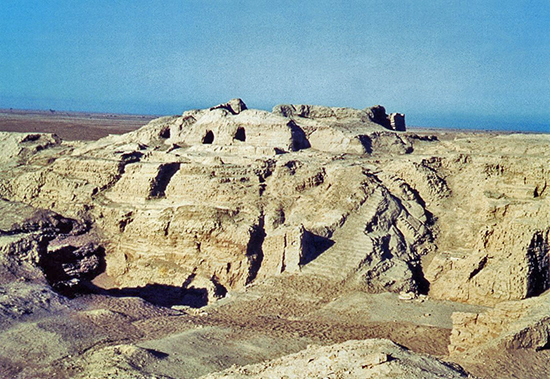
Uruk was build in 5000 BC by the Sumerians. In the Bronze Age it was the center of civilization but would be displaced by Babylon in that role later. A plenty of Sumerian words were taken up into the Akkadian language and I've still encountered some of them in the etymological dictionaries of Hebrew and of Arabic. Presumably you can expect to find some more in those of Greek and Persian as well. In 700 AD Uruk was abandoned because it no longer was a gleaming metropolis but a desert with some fancy ruins.
Did the flow of the Euphrates change around the time of Sumerian decline?
2 Answers 2014-12-05
I happened upon a song called ['Shave 'Em Dry' by Lucille Bogan](https://www.youtube.com/watch?v=gkPCmIxv-3k gkPCmIxv-3k) from 1935. It is an extremely sexually provocative song containing frequent usage the words 'fuck', 'titties', 'grind', 'dick', 'nuts', 'cock', and other common profanities. Here are some examples of the lyrics:
I got nipples on my titties big as the end of my thumb. I got somethin between my legs that'll make a dead-man come...
I would fuck you baby, honey I'd make you cry. Now your nuts hang down like a damn bell sapper, And your dick stands up like a steeple, Your goddam ass-hole stands open like a church door, And the crabs walks in like people...
My back is made of whalebone, And my cock is made of brass, And my fuckin' is made for workin' men's two dollars, Great God, round to kiss my ass...
Here we find usage of the word 'dick', 'cock', 'titties'- even using 'come' as an ejaculatory term. I didn't even realize these terminologies and euphemisms existed back then let alone be used so densely in a song. I knew the other 'general' profanities existed back then obviously, but it's just so bizzare hearing them all being so openly and vulgarly used in a 1935 vinyl record song. It seems like society sometimes generalizes older centuries as extremely conservative and non-provocitive, but obviously that's not the case and this is just a taste of how unconservative and provocative people of olden times can be. I've just found this all extremely interesting for some reason.
So really I have two questions:
1. What profanities and euphanisms from modern times existed back in the early 1900s and even earlier? Expecially words such as 'dick', 'cock', 'titties', 'grind', and 'come' that you would have no clue were used back then if you weren't told otherwise.
2. How commonly was swearing used back then in comparison to today? I'm expecially interested in the pervasiveness of words such as the above-mentioned in people's vocabulary back in the 1900's.
5 Answers 2014-12-05