3 Answers 2014-11-25
Wikipedia says that Indiction began in 3rd Century Roman Egypt, and was used for tax-collection:
Indictions originally referred to the periodic reassessment for an agricultural or land tax in late third-century Roman Egypt
At the same time, Egypt had a similar tradition of cattle-counting, originating from the Old Kingdom, which was similarly used for tax purposes, and was also used for dating.
Are they related? Did the indiction as practiced in Roman Egypt represent an unbroken tradition of cattle-count? Or was it discontinuous?
1 Answers 2014-11-25
When browsing the internet you often seen the point that Nikola Tesla was essentially stolen from by Thomas Edison, along with seeing a lot of Nikola Tesla's inventions in the mainstream media.
Was there any truth behind the rivalry or the claims that other people seem to make between Thomas Edison and Nikola Tesla?
1 Answers 2014-11-25
I've been thinking about both of these organisations and wondering which one would have been more combat effective. I realise that the Home Guard was never tested so this is more hypothesis that anything.
My present conclusion is that the Volkssturm was more effect than the home guard, given that they at least had widespread access to viable anti-tank weaponry such as the Panzerfaust. Meanwhile the Home Guard while they did have access to Spigot Mortars in limited numbers seemed to have been primarily supplied with grenades/Molotov cocktails for anti-tank use.
In anti-personnel weapons as well the Volkssturm seems to be more well equipped having more access to machine guns while during the most threatening period of invasion the Home Guard was short of rifles.
But then again you could argue this shows what each organisation was built for. The Volkssturm was a true defence force designed to supplement the depleted German army in combat, while the Home Guard was a morale boosting force to take rear area jobs off the conventional forces.
Is my hypothesis right?
1 Answers 2014-11-25
I was just participating in a lecture about it, and it struck me that large powers were providing arms and equipment to both sides in this war, from the other side of the globe. On the one hand, the British were equipping their soldiers and the loyalists, and on the other, the French were equipping the colonists, providing a large navy and arms. Furthermore, Spain and the Netherlands were supporting France, as a means of providing indirect support for the colonists. Do you think the War of Independence was one of the first proxy wars?
1 Answers 2014-11-25
About territories that the KR still reigned after the Vietnamese invasion: Were there any atrocities committed? Did the Khmer Rouge still follow their agricultural plans, or was it completely different to the Democratic Kampuchean Regime, if so, how?
2 Answers 2014-11-25
1 Answers 2014-11-25
I often see women warriors in modern culture depicted with curved armor that compliments their natural physique and I began to wonder if that was done for entertainment purposes of if it was accurately depicted.
1 Answers 2014-11-25
Apologies if there is a more appropriate language-history related sub.
We've all heard the phrase "Nice job, Einstein" when someone does something dumb, and often the smart kid in class is referred to as being an Einstein. Was there another person whose name was used in such a manner before Albert Einstein?
Similarly, we've probably all heard "It doesn't take a rocket scientist to (understand point speaker is trying to make)" -- what was used before there were such things as rocket scientists?
2 Answers 2014-11-25
4 Answers 2014-11-25
I am finishing my senior thesis. Once this semester is over (and I have free time) Id like to get back into some easy reading. I am most interested in American, Euro, military and Russian history. But Im open to anything.
2 Answers 2014-11-25
I'm aware that Ogham was used in Ireland, and Runes in certain Germanic areas, and Greek was used and still is used today.
I'm interested in how the people of Britain, Gaul, Iberia, the Baltics, and Slavic areas wrote before the Roman Empire and later kingdoms popularized the Latin and Cyrillic scripts?
3 Answers 2014-11-25
Did they have warfare techniques unique to their culture? Did their warriors have a command hierarchy, and if so, how was it organized?
1 Answers 2014-11-25
Thank you, thank you and thank you.
1 Answers 2014-11-25
Or if there was how did they compare to the English archers?
1 Answers 2014-11-25
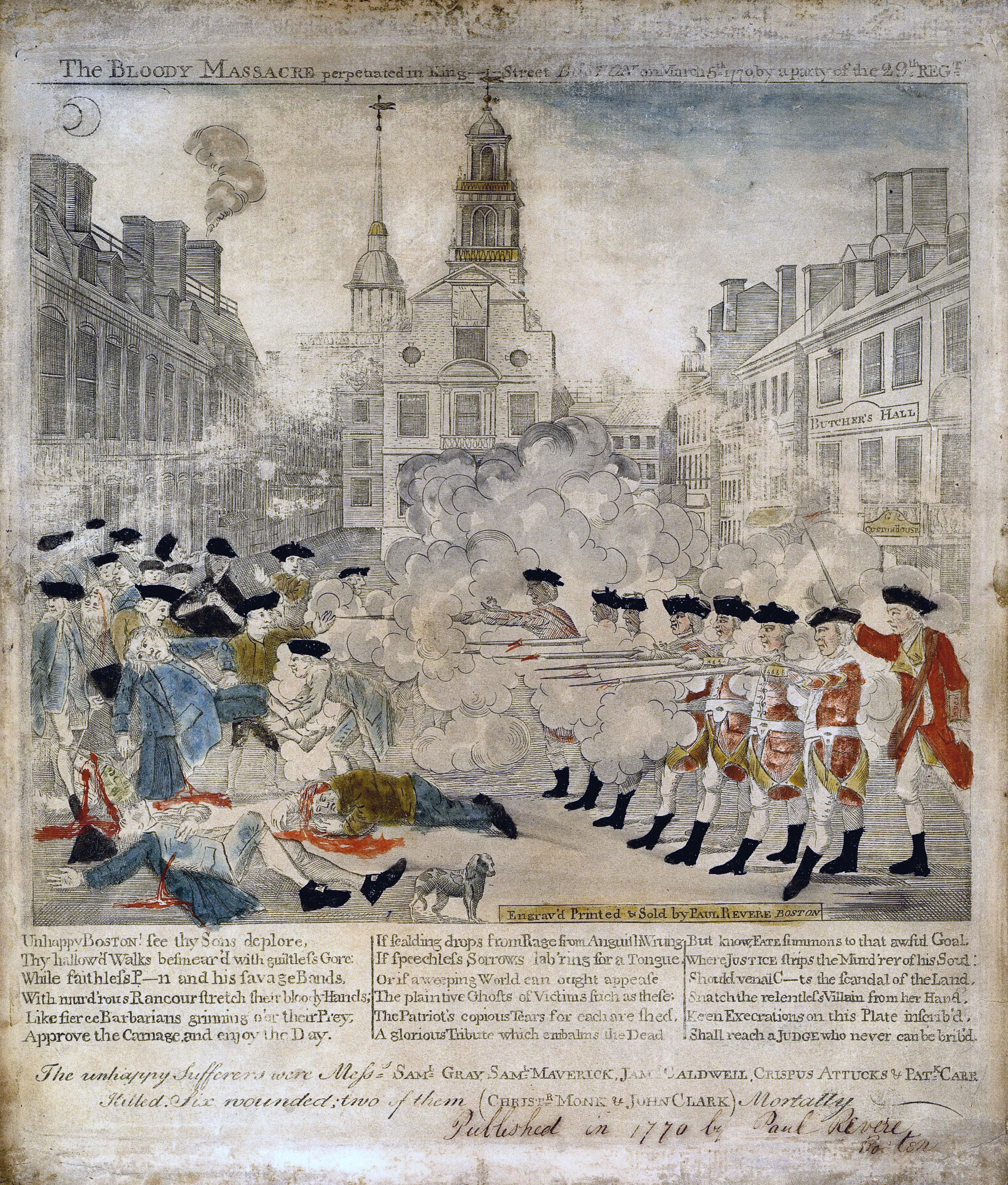
The words at the bottom of Paul Revere's famous print of the Boston Massacre reads "Unhappy Boston! see thy Sons deplore; Thy hallow’d walks besmear’d with guiltless gore; While faithless P____n and his savage bands..." What word is taken out and why? Was this censorship of a swear word, or omission of a name? More importantly what is he trying to say by using the word and omitting it?
1 Answers 2014-11-25
Something sorta relevant to this made me wonder about this. Even in my AP History classes, French involvement is really vague. They didn't brutalize the people like the Spanish and they didn't (afaik) turn on the natives like the English. As far as I can tell they just sold furs and married into tribes. Other than the obvious French influence on Canada and the Louisiana area, what exactly did they do?
Keep in mind I'm not talking about Hispaniola or the Caribbean.
6 Answers 2014-11-25
I just watched the movie "JFK" and I was just wondering if any new developments were made since the 60's.
2 Answers 2014-11-25
Tried searching on this but nothing answered it exact enough.
When did people start referring to the prairies and West Coast as Canada? Did they ever refer to the lands as Canada before they were officially federalized?
Was it strictly a word for the country or was it ever used in a larger sense?
I know there were provinces with "Canada" in the name and am aware of the early French history of the word but I am not sure if areas like Rubert's Land would be referred to as Canada at all before they were federalized. Thanks.
2 Answers 2014-11-25
1 Answers 2014-11-25