When is the first recorded instance of humans using any sort of furniture?
A bed, chest of drawers, book shelf etc?
Also, in ancient days, how were household items stored? I understand that "ancient days" is relative, so whatever would be the best guess (Egyptians/ Greeks/ Romans etc.)
Thanks!
1 Answers 2014-09-29
In a lecture on the decline of the Mycenaeans, my professor said that Greek society was stunted or retarded due to the collapse of the bronze age. During that time, literacy declined, Linear B was lost, outside trade came to a halt, and people left the major cities. Are all these descriptions true? Are they truly a negative events, or are historians just biased towards these kinds of social changes?
1 Answers 2014-09-29
1 Answers 2014-09-29
And why didn't George Washington stay on longer?
1 Answers 2014-09-29
This might be a bit out place amongst the more serious questions here, but...
1 Answers 2014-09-29
It seems that every time we see nuclear waste/ materials in pop culture (especially cartoons) it has a distinctive green glow. Where did this trope come from? Nuclear materials rarely glow, and in the rare cases that they do, the color is blue, not green.
1 Answers 2014-09-29
What did some countries have that made them better equipped for nation building once they became independent? For example, the United States and India (both at some point British colonies) gained independence and reconstructed their nation with varying degrees of success. What contributed to this?
1 Answers 2014-09-29
I am a Junior in High School, and I've been researching bows for general knowledge and this question was posed in my mind. Almost every continent in the early ages had a Bow, the first one found was in Homegaard (sp?)nearly 5000 BCE. But exactly how was this weapon spread so far over the world?
1 Answers 2014-09-29
Belgium after World War II was split over the Royal Question, and this took on aspects of right vs left and Flemings vs Walloons. There was a serious chance of Wallonia seceding. Anyway, if you got past the title, I'm hoping you already know this.
My question (which I ask here because r/althistory is frequented by too many fools) is what would have happened to the Belgian Congo had this happened. This is not intended as a counterfactual, I'm just curious what the exact procedure would have been. Would it have remained a colony of rump Belgium? Could Wallonia legally raise any sort of claim? Did France have a right of preemption over the area? What about Rwanda and Burundi?
1 Answers 2014-09-29
1 Answers 2014-09-29
On facebook this morning, one of my friends posted the following and it sounds like a bunch of things someone made up to fit the phrases. I'm really interested in history, but am far from any type of expert, and just want to know if any of this is true before I start seeing it posted everywhere and everyone be falsly educated, or if it is true, because some of it would be interesting if it were. Anyway, here's the copy paste of it: They used to use urine to tan animal skins, so families used to all pee in a pot & then once a day it was taken & Sold to the tannery.......if you had to do this to survive you were "Piss Poor"
But worse than that were the really poor folk who couldn't even afford to buy a pot......they "didn't have a pot to piss in" & were the lowest of the low
The next time you are washing your hands and complain because the water temperature isn't just how you like it, think about how things used to be. Here are some facts about the 1500s:
Most people got married in June because they took their yearly bath in May, and they still smelled pretty good by June.. However, since they were starting to smell . ...... . Brides carried a bouquet of flowers to hide the body odor. Hence the custom today of carrying a bouquet when getting Married.
Baths consisted of a big tub filled with hot water. The man of the house had the privilege of the nice clean water, then all the other sons and men, then the women and finally the children. Last of all the babies. By then the water was so dirty you could actually lose someone in it.. Hence the saying, "Don't throw the baby out with the Bath water!"
Houses had thatched roofs-thick straw-piled high, with no wood underneath. It was the only place for animals to get warm, so all the cats and other small animals (mice, bugs) lived in the roof. When it rained it became slippery and sometimes the animals would slip and fall off the roof... Hence the saying "It's raining cats and dogs."
There was nothing to stop things from falling into the house. This posed a real problem in the bedroom where bugs and other droppings could mess up your nice clean bed. Hence, a bed with big posts and a sheet hung over the top afforded some protection. That's how canopy beds came into existence.
The floor was dirt. Only the wealthy had something other than dirt. Hence the saying, "Dirt poor." The wealthy had slate floors that would get slippery in the winter when wet, so they spread thresh (straw) on floor to help keep their footing. As the winter wore on, they added more thresh until, when you opened the door, it would all start slipping outside. A piece of wood was placed in the entrance-way. Hence: a thresh hold.
In those old days, they cooked in the kitchen with a big kettle that always hung over the fire.. Every day they lit the fire and added things to the pot. They ate mostly vegetables and did not get much meat. They would eat the stew for dinner, leaving leftovers in the pot to get cold overnight and then start over the next day. Sometimes stew had food in it that had been there for quite a while. Hence the rhyme: Peas porridge hot, peas porridge cold, peas porridge in the pot nine days old. Sometimes they could obtain pork, which made them feel quite special. When visitors came over, they would hang up their bacon to show off. It was a sign of wealth that a man could, "bring home the bacon." They would cut off a little to share with guests and would all sit around and chew the fat.
Those with money had plates made of pewter. Food with high acid content caused some of the lead to leach onto the food, causing lead poisoning death. This happened most often with tomatoes, so for the next 400 years or so, tomatoes were considered poisonous.
Bread was divided according to status. Workers got the burnt bottom of the loaf, the family got the middle, and guests got the top, or the upper crust.
Lead cups were used to drink ale or whisky. The combination would Sometimes knock the imbibers out for a couple of days. Someone walking along the road would take them for dead and prepare them for burial.. They were laid out on the kitchen table for a couple of days and the family would gather around and eat and drink and wait and see if they would wake up. Hence the custom of holding a wake.
England is old and small and the local folks started running out of places to bury people. So they would dig up coffins and would take the bones to a bone-house, and reuse the grave. When reopening these coffins, 1 out of 25 coffins were found to have scratch marks on the inside and they realized they had been burying people alive... So they would tie a string on the wrist of the corpse, lead it through the coffin and up through the ground and tie it to a bell. Someone would have to sit out in the graveyard all night (the graveyard shift.) to listen for the bell; thus, someone could be, saved by the bell or was considered a dead ringer.
And that's the truth....Now, whoever said History was boring?
1 Answers 2014-09-29
1 Answers 2014-09-29
Hey everybody!
My Swedish father in law has these pictures of a bar in Northern Oregon that his great grandfather owned and operated between 1850 and 1907. The bar is called Hotel Harrison Bar. He is very eager to find out where this building is and if it still exists. I have searched and searched on google and google image searched as well, but to no avail. My wife and I are going to be visiting Portland next month and we want to find this place! It would mean the world to my father in law. If there are any historians here with knowledge of Northern Oregon during this period in time, I would be eternally grateful for any help you can provide. Thanks!
Also, if I'm in the wrong sub, my most humble apologies.
EDIT: I should note that his relatives lived near or in the town Clatskanie, OR.
1 Answers 2014-09-29
1 Answers 2014-09-29
1 Answers 2014-09-29
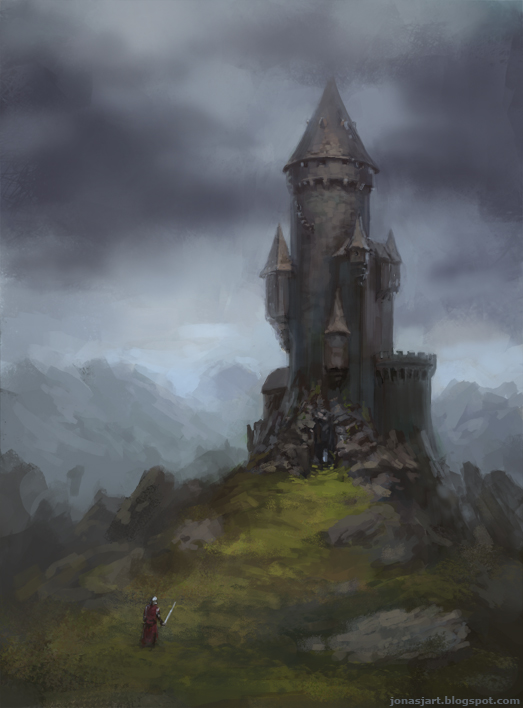
If there is, in fantasy fiction, a wizard living somewhere, you can count on him to live in a tower. Often these towers have smaller towers attatched to them, usually about halfway up the main tower. Did this type of tower exist in history? In case it did, what was the purpose of these smaller towers?
3 Answers 2014-09-29
After reading the comment section on a [post (NSFW)*] (http://www.pajiba.com/tv_reviews/dear-outlander-please-stop-with-all-the-raping-nsfw.php) about the TV show Outlanders, it seemed like there was a lot of assumptions going on about the frequency of rape/threatened rape during the 18th century. (The "that's just what it was like for women back then" type). I looked through the FAQ, and hadn't seen the question addressed. So I'm curious what information there is out there about sexual violence in Europe/Scotland during that time period.
*EDIT: Link is also NSFW
1 Answers 2014-09-29
What are the events that adventually lead to the fall of the Roman Empire? Any internal politic/home affairs (sorry I am not english, this is possibly not the correct term to use here), attacks coming from barbarian folks ? Also, what are those things that Europe & the rest of the world "inherited" from the Roman Empire?
Also, if anyone would care to mention literature, podcasts, or essays discussing the topic, it would be appriciated.
1 Answers 2014-09-29
Just wondering.
1 Answers 2014-09-29
The title is the queston. Fresno is always at or near the bottom of "best cities for ...." lists, if not the top of "worst cities for ..." lists. Fresno seems to excel at unflattering statistics, but why did it become that way?
1 Answers 2014-09-29
I hope this question falls within the rules - it is about the practice of history!
I'm a trustee of an education charity that has just finished cataloguing its archive, so we've now got this brilliant resource that we'd like academics to study.
I'm not a historian, so I was wondering if anyone here has any advice on the best ways to reach an academic audience and let them know that we've got this great resource they can look at!
(This is our archive if you're interested.)
1 Answers 2014-09-29
Many common used textbooks in the United States seem to portray the occupation of Germany by the allies after WW2 and it's ensuing restructure as something of a neat and tidy affair. Given what we have seen in other occupations it seems like this would be somewhat unlikely. I'm wondering if there were any kind of resistance movements to occupation of German under foreign powers, armed or otherwise. That goes for the soviety occupation as well, though i'm more curious about the allies.
2 Answers 2014-09-29
Whenever I go camping, I naturally go to bed not too long after sunset and wake up early. In Franklin's time, without electricity, I imagine people weren't staying up until 2am. What were normal sleep cycles in the 18th century, and what might Franklin have recommended people adopt?
Relatedly, for people who had to get up before sunrise (e.g., bakers), how did they manage it before alarm clocks were commonplace?
5 Answers 2014-09-29