My grandmother recently cleared out her lifelong home after raising three children. My grandfather (who passed several years ago) worked on a supply ship in the South Pacific during WWII. He didn't share many details about his experiences so when we came across an artillery shell in the basement we were a little shocked.
We believe the shell is a practice round as there is nothing inside of it and no indications it has ever been fired. What we are most curious about is what the only markings on the case mean. Please see the links below for the image of both the entire shell and the markings on the bottom of the case. You'll have to zoom in on the markings as they are very small.
http://tinypic.com/r/zlq3k1/8 http://tinypic.com/r/2h4lv9e/8
1 Answers 2014-09-07
I am about to take a history course in the upcoming quarter, but I am having trouble finding a documentary (since I learn best alongside visuals to keep me alert as I am retaining information) that properly and adequately informs the audience with the history of Russia and the Soviet Union from its birth (early 1900s) to its death (1991). All suggestions are welcomed and appreciated!
1 Answers 2014-09-07
3 Answers 2014-09-07
There is a general pattern that writing first appears as pictograms, and steadily transitions into logograms. The early major three were Sumeric cuneiform (no known modern descedants), Egyptian hieroglyphs (ancestor of all Western alphabet systems via the Phoenician and Greek alphabets), and the Chinese characters (supplemented by syllabaries and alphabets in Japan and Korea).
Why did the East Asian cultures, and in particular China, continue using a logographic system into the modern age, while Western Asia relatively very early on switched to alphabets? What is it that happened in Phoenicia and Greece to make it so? Why not in the East?
1 Answers 2014-09-07
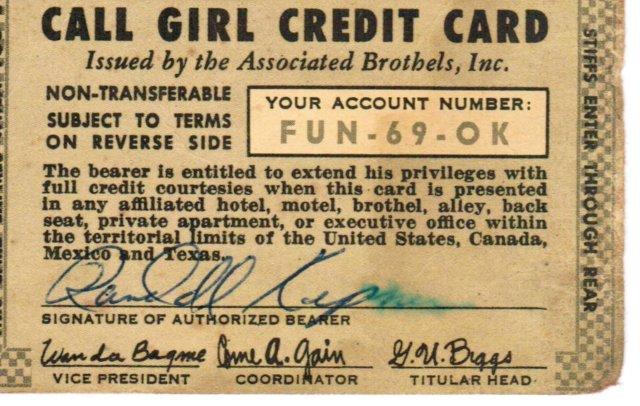
I came across a "Call Girl Credit Card" at an estate sale of a former U.S. Air Force serviceman who served during WWII, The Korean War, and The Vietnam War. The card is similar to these that I found online:
https://www.flickr.com/photos/pat36a/5961293724/in/photostream/
http://mikefishbaugh.homestead.com/Call_Girl_Credit_Card.jpg
I searched for a while online and couldn't really find anything about them. Were these legitimate and actually used? If so, how did it work? Thank you- I couldn't really land on which subreddit would be best for this question so I apologize if I'm wasting time, but I'm most interested in the history, use, and background of these; even if they're fake.
1 Answers 2014-09-06
1 Answers 2014-09-06
4 Answers 2014-09-06
1 Answers 2014-09-06
Considering the price of parchment in the middle ages, how would a monk get the go ahead/aford the materials to compose his own written work, rather than copy another work?
I know that it varies by time and place, but any answer would be lovely.
Last year I asked this question, but didn't get the kind of response I was looking for.
1 Answers 2014-09-06
Perhaps that title should read "How much is fact, and how much is fiction" - but that's not very snappy, and I was hoping to grab someone's attention with the title alone.
I'm aware this is quite possibly a question for anthropologists or archaeologists, but I have been reading up on prehistory and the discussions around PIE caught my eye.
There are claims of a distinct PIE culture, including worship of a sky father, patriarchal tripartite-aspected societies, and so on. How much of this is verifiably true?
1 Answers 2014-09-06
If this is the wrong sub I'm sorry, you can delete this and direct me to the correct sub, but I am currently a junior History/secondary education major (I know, it'll be impossible to find a job after I graduate). I was just kind of wondering what jobs or internships there are for me while I'm still in school that relate to history? I have worked with "gifted" 4 and 5 year olds for two years now but I am kind of looking for a change of pace. Any help would be great, thanks!
1 Answers 2014-09-06
Trying to settle a bet, so any help would be much appreciated.
1 Answers 2014-09-06
Edit: I'd also like to say that if this is the wrong subreddit to ask all of this in, please let me know and I'll remove this thread and repost in the correct one. I found this subreddit through another commentor within another subreddit.
First off I'd like to say that my grandfather passed some years ago and never really told me much about his service in his teen years. What little I did learn was about his boat rides from California to the Pacific islands and Japan. He never told me what he did there, how long he was there, or any other details. It wasn't until we cleaned out his bedroom and dresser that I found a box with hundreds of photographs inside. The ones that I will post here are ones that I had questions about.
Before I go any further I'd also like to apologize for the possible poor quality of these photos as they were maybe the size of a baseball card (or smaller) and I scanned them into my PC. So without any more yammering here are my questions ::
QUESTIONS
What sort of camera would take photos during WW2 era that would develop into photographs no larger than a baseball card (or smaller)?
What sort of boat is this and what would it have been used for
What is being shown here and can anyone tell me what the Japanese carved into the wood may say
Soldiers poised on a statue. Where would a statue like this be generally located within a city?
Another long-shot I'm sure. But any idea where this street may have been within Japan?
Building in the same city. What sort of building is this, and what can you tell me about it
Those are really the only photos I have that I had questions about. I have a ton of other photos but they are mainly just of friends of his within his company/squad/camp and the rest are photos of just life around the camps. I will leave a few bonus photos here that are of my grandfather both in uniform and in civilian clothes (more for my own remembrance of him and less for "askhistorians") and one of his brother in Navy garb with his wife. Grandfather and his brother in uniform and civilian clothing
I appreciate any insight into any of this that you all are able to provide and if you have any questions for me or want me to specify on anything that seems vague just ask. I just wanted to try and get an idea of what he was doing and where he was since he didn't really talk to me about his service ever. Thanks again all.
1 Answers 2014-09-06
Sorry if that was poorly worded.
1 Answers 2014-09-06
2 Answers 2014-09-06
1 Answers 2014-09-06
I was watching a mini documentary on natural disasters and one segment focused on the Spanish Flu and the worldwide destruction it caused. The narrator said the majority of deaths-outside of war- were among young and healthy people (between the ages of 15-35). I understand how young children/babies and old people are higher at risk, but I dont understand how this demographic could suffer the most. If any historian could answer this question that'd be great!
1 Answers 2014-09-06
If I am correct, it would seem to be a very unsanitary setup. This movie came out in 1957. Can someone comment on the setup inside of public restrooms back then?
Here is a link to the scene: http://www.youtube.com/watch?v=mzPll63y2b0&t=36m24s
Here is a link to the full film: https://www.youtube.com/watch?v=mzPll63y2b0
1 Answers 2014-09-06
I'm working on a fiction novel and need to know everything.
What do you recommend? :)
2 Answers 2014-09-06
Earlier, someone asked about Las Islas Malvinas, and it made me wonder about how the USSR viewed the conflict in Northern Ireland, and perhaps the early Soviet view on Irish independence.
1 Answers 2014-09-06
Are there also any explicit markers that indicate a book is a viable academic text over just any book?
I checked the AskHistorians wiki, and I am aware of the recommended booklist, however this is more of a general question so that amateur historians may be able to sort through the over-saturated history book market.
2 Answers 2014-09-06
1 Answers 2014-09-06
As in, which of these cultures remained closest to "Roman" culture? I'm wondering as my German teacher has told me that the Spanish were some of the last hold outs for Roman culture, but then that gets me thinking about the French and Italian cultures seeing as how they had taken over previously Roman provinces.
1 Answers 2014-09-06