I've asked questions on here about history education in various guises to no answer, so I'm going to try this in as vague a way as possible so that perhaps it could act as a springboard to further resources.
Do you guys have any go to resources, as in books or even better online discussion places like this, that cover the debates as to how history should be in taught in school?
I could ask a more specific question as I have done before on topics such as early years history or the relationship between history education and nationalism (if you have anything to say on those please do post), but I'm really looking for somewhere to begin to immerse myself in arguments to do with how we should approach history with children. Any advice would be appreciated.
2 Answers 2014-08-10
Why did slavery persist in Western civilizations whereas in China it disappeared fairly early on in its history?
1 Answers 2014-08-10
The principle makes sense but I've never heard a credible application of them. Are there any?
2 Answers 2014-08-10
Were there any malfunctions/miscalculations that happened along the way?
3 Answers 2014-08-10
It had existed for two centuries, and its constituent states for even longer, yet it was divided between neighbouring powers and disappeared entirely from Europe in just over two decades. How did it manage to exist for so long, then disappear so suddenly?
1 Answers 2014-08-10
Like did people in India watch it live on TV etc..
1 Answers 2014-08-10
Did the Incas/Mayans/Aztecs (for instance) have maps of the whole of the American continent, with names for the areas that we now call Canada, USA, Mexico, Central America, Brazil, Chile, Peru, Argentina, Venezuela, etc.?
Surely these places had names before 500 years ago?
2 Answers 2014-08-10
I read somewhere that the North American Aboriginal people would be coming out of the bronze age if they were left to themselves. How is it that the eastern half of the world developed so much quicker?
1 Answers 2014-08-10
Basically what it says. Was it easier to drop the bomb on non-whites as opposed to white Berlin? Was there discussion at the time regarding this?
2 Answers 2014-08-10
I know that early Modern English, being a Germanic language, meant that the first letter of nouns were capitalized; this can be seen in documents such as Paradise Lost (1667) by John Milton and the Declaration of Independence of the United States (1776); however, it is not seen (from what I can tell) in Johnathan Swift's A Modest Proposal (1729); by the time Edgar Allan Poe wrote The Fall of the House of Usher (1839) the practice seems to have completely fallen out of favor with most authors and poets of the time.
When exactly did people stop writing like this? Was Swift one of the first, or is that simply a modernization of his writings so as to not make it too strange in appearance to the average reader of today?
1 Answers 2014-08-10
2 Answers 2014-08-09
I'm reading the last book by Robert Caro on the history of LBJ and he mentions that Robert Kennedy was the one who convinced JFK to forego a sneak attack on Cuba during the Missile Crisis, saying that the US is not the kind of country to do sneak attacks.
A few chapters later, Robert Kennedy is basically shouting at the CIA head to murder Fidel Castro.
And I was suddenly thinking that no way in hell would there ever be a written, signed order by a sitting US president to murder the head of another country. Am I wrong? Because from what I've read, even Obama today signs off on drone strikes. So I'm assuming that there are lists of names of foreign people condemned to death with Obama's signatures on them.
Do we have any executive order to kill Castro? Do we have any signed order by any US president to murder anyone?
1 Answers 2014-08-09
I understand that the Vietnamese didn't like them much, but what about other countries like China, North Korea, The USSR, and others? Were they in favor of the Khmer Rouge or was there opposition?
1 Answers 2014-08-09
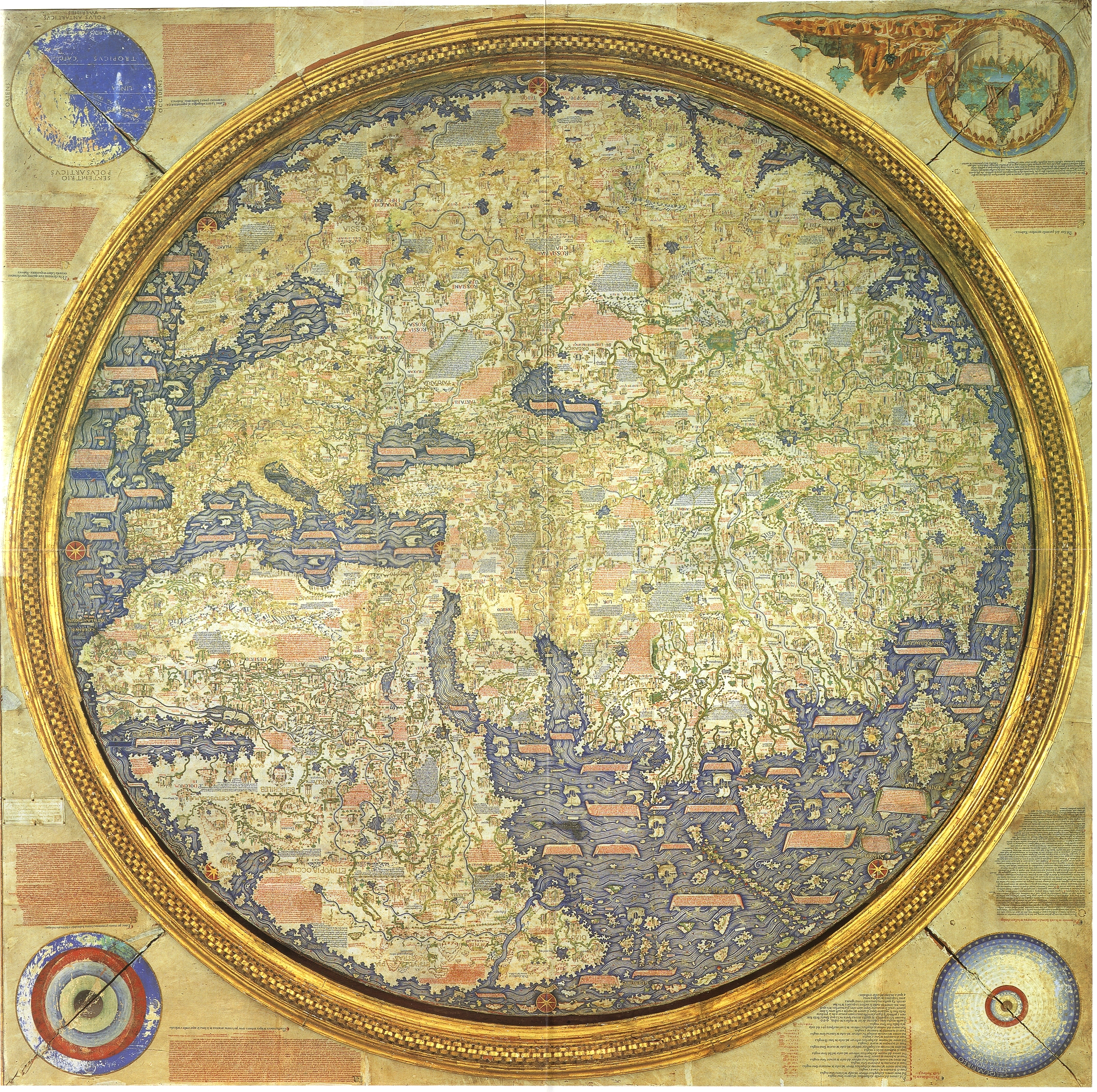
Renaissance maps such as the Fra Mauro map
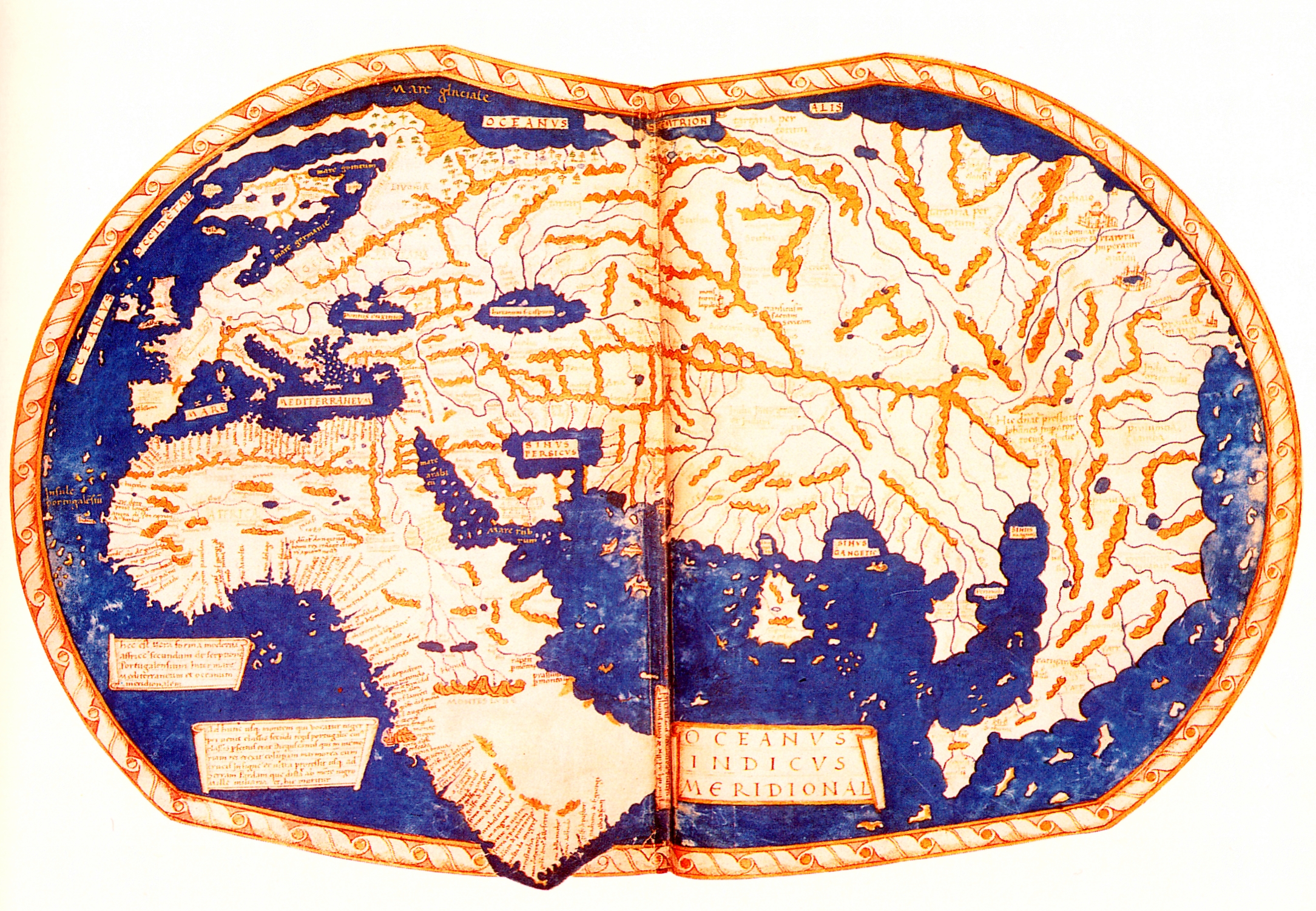
or the [Martellus world map] (http://upload.wikimedia.org/wikipedia/commons/4/4d/Martellus_world_map.jpg)
as well as some others from that time show India as an Island. What's the origin of this because surely Europeans and Merchants must have visited these areas before by that time and seen that India isn't an Island. On another Map-related note, Why are they also so bad at drawing Scandinavia?
2 Answers 2014-08-09
As a Brazilian, I heard the opposite in school, that Britain was always on the Triple Alliance side. But recently, a history teacher that I know told me this was a subject of revisionism, and he claimed Britain had more interests in Paraguay than in the Triple Alliance (but more so in peace).
I'd like to know if there is a consensus among historians on this, and if not, what are the arguments on both sides.
1 Answers 2014-08-09
I have been studying the role of Imperial Japan in World War II and currently I am researching the relations between the Axis Powers. I have thus far read that especially Germany showed interest in Japan's proposal to jointly attack the Soviet Union. This plan was in the end never fully carried out, due to the fact that Germany delayed it's plans for invading the Soviet Union and Japan showing more interests in conquering parts of Southeast-Asia and the Pacific. But I was wondering if, aside of the joint attack on the Soviet Union and various cultural exchanges, there would be any other cooperation between especiially germany and Japan but perhaops also Italy and Japan?
1 Answers 2014-08-09
The most popular scripts in Europe are Roman, Cyrillic and Greek. I find it surprising that a continent with such a huge linguistic diversity would use only a few scripts. This is striking in comparison to the Indian sub-continent which has a diverse set of Abugida scripts. Were there any scripts which died out during the course of history?
3 Answers 2014-08-09
I have heard a lot in my country about the Canadians heading the 100 days offensive of the First World War in 1918, but i'm not sure about the opinion from other nations. Can anybody give me a historical insight on how useful 4 full strength divisions would be in 1918?
1 Answers 2014-08-09
My grandfather recently passed away and looking in his office I found this knife/shank. My grandmother said that my grandfather's uncle gave it to him when he got back from WW2. I know it might be a long shot but does anyone have any idea where this could have come from? She says that it was taken from an enemy soldier.
2 Answers 2014-08-09
1 Answers 2014-08-09
2 Answers 2014-08-09
I've been enjoying The Complete Grimm's Fairy Tales and am looking to learn more about their process collecting the stories and their varients. While looking into 'The Seven Ravens' I noticed(according to Wikipedia) that "In the original oral version, there were three, not seven ravens; one study of German folk tales found that of 31 variants collected after the publication of Grimms' Fairy Tales, only two followed the Grimms in having seven ravens."
I'm very interested in reading about the differences between the 31 variants as well as being able to research some of the other stories that stick out to me but all I've been able to find is the Greek version mentioned on the wiki page. I've been to my local library as well as done some research online and can't find any information and was wondering if anyone on AskHistorians could point me in the right direction? Also, is there a specific biography on the brothers that a professional would recommend to a layperson? Thanks in advance!
1 Answers 2014-08-09
So, I'm watching Robert Bartlett's excellent series on the Normans. He is talking about the Crusades, and you get a creepy, christian right-wing vibe from the Normans. There doesn't seem to be a lot of introspection about if they are doing what Jesus taught, just that they are doing it in his name, no matter how horrific the act.
All of a sudden comes along Tancred, who mentioned warfare may not be in line with the teaching of turn the other cheek:
https://www.youtube.com/watch?v=IvycEqq2PW4#t=933
Tancred turns out to be a somewhat brutal guy as well, but if someone of this temperament questions the legitimacy of the crusades, there had to be some truly devout people who openly questioned if the Crusades were righteous.
Do we have any records of these people? Or the moment they expressed concern were their voices silenced?
Edit: I think the link isn't going to right part in video (should be going to 15:39 mark). https://www.youtube.com/watch?v=IvycEqq2PW4#t=939
4 Answers 2014-08-09