2 Answers 2014-06-02
1 Answers 2014-06-02
Was it a smooth transition? Did different countries use different year systems?
1 Answers 2014-06-01
I was watching the documentary "We Stand Alone Together". I was wondering, how significant would the losses have been if paratroopers hadn't have landed?
1 Answers 2014-06-01
As I was doing some research about the Swiss Mercenaries that was employed after the Hundred Years War, it turned into a general delving into "Pike & Shot" warfare. Apparently, the Swiss were superseded by the Landsknechte, then so by the Tercio. Admittedly I got this information from Wikipedia (and then by reading sources), but what specifically led this rapid cascade of superseding units?
Were the Swiss mercenaries still relevant when the Landsknechte became popularized, ergo with Landsknechte when the Tercios became popularized?
Or did none of them really "supersede" the other?
1 Answers 2014-06-01
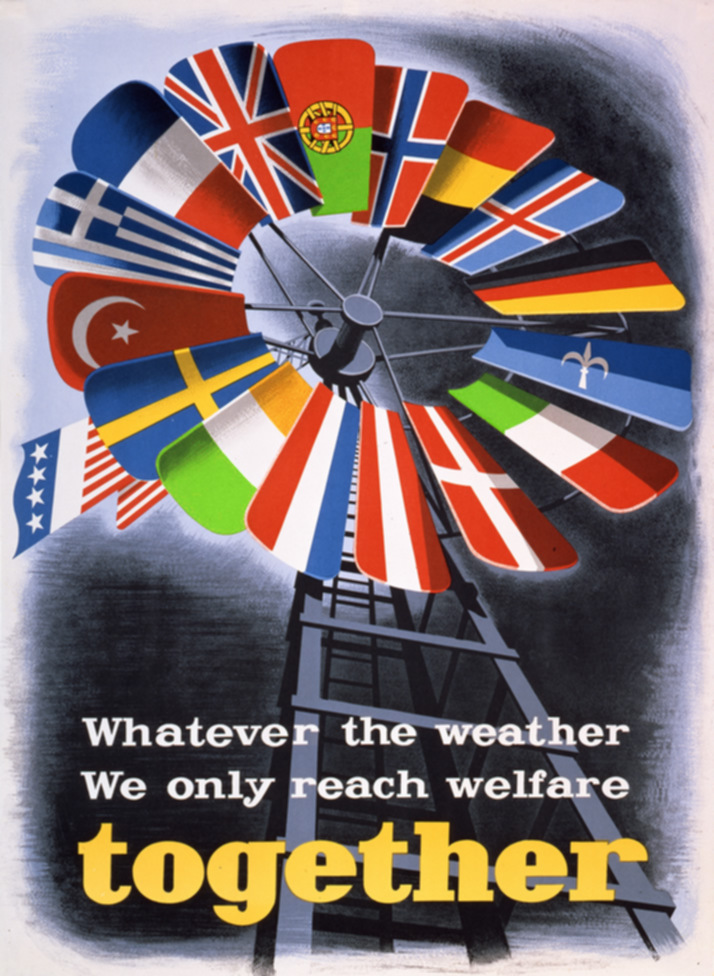
I know this may be better suited for a place like /r/whatisthisthing, but I figured the historical specialists here might have a better base of knowledge, since this isn't about a "thing" necessarily, but a representation of a historical artifact.
The specific poster I'm talking about is here: http://upload.wikimedia.org/wikipedia/commons/b/b3/Marshall_Plan_poster.JPG
I've done a fair bit of digging into the flag, and can't seem to turn up its identity. This is mostly just curiosity on my part, since all the rest of these flags are essentially the same today as they are represented on this poster. Thanks for your help!
1 Answers 2014-06-01
1 Answers 2014-06-01
I cannot remember the name mentioned but as the title says is there any truth to VDH's claim?
1 Answers 2014-06-01
3 Answers 2014-06-01
I apologize if this comes across as ignorant, but I don't know how to pose this question without it seeming a tad racist. Basically, the Spanish Empire and British Empire colonized the majority of countries in South America, Africa, and south and east Asia at some point or the other since 1492.
Just around the 1890's China was a falling world power and many European countries were carving out chunks of it. Then later China was conquered during World War II by Japan. Yet today somehow China has risen to the top.
This is similar with India in that they have managed to find a way to boom after only two generations of non-British India.
Korea and Japan were also very poor, struggling countries even as late as the 20th century, yet they have somehow risen to the top as well.
My question is why have countries in Africa and Latin America continued to struggle? I realize this comes from a Euro and somewhat Asiacentric education growing up in the US and all. And if there are many thriving countries in Africa and South America that I failed to make note of, please enlighten me.
14 Answers 2014-06-01
2 Answers 2014-06-01
Been getting a little into WWI recently, and Austria-Hungary is pretty interesting to me. I know they the empire de facto collapsed prior to the end of the war, but what caused this?
As a follow up, why did the country break up after the war? Was this forced as part of reparations, or did national identities within the state become too strong to be governed?
Thanks!
2 Answers 2014-06-01
1 Answers 2014-06-01
I ask as a layperson because of the German-Argentine connection and also the de facto fall of the British Empire after WW2. Was this just an isolated geopolitical conflict?
4 Answers 2014-06-01
I have recently begun looking into the history of magic in pre Constantine Rome. I am curious about examples of armies or individual leaders using a ritual to empower themselves. Specifically looking for examples when this type of invocation was used without it directly relating to a religious practice. Edit for specific era
2 Answers 2014-06-01
Looking at things like NATO vs the Warsaw Pact, or the US vs China/the Soviets/the Japanese, there seems to be a trend to favor "blue" for Western forces and red for the Eastern forces.
This trend is continued in video games where blue represents some arbitrary "good guys" and red is the enemy.
How did this come about? Do other cultures use a similar coloring scheme, or do Mongolians think of Americans as purple and the Japanese as orange, for example?
3 Answers 2014-06-01
I've read and been told before about soldiers digging tunnels towards other trenches in WW1 in order to listen or plant explosives. How frequently was this done? And was it actually effective?
1 Answers 2014-06-01
1 Answers 2014-06-01
How closely related are Dravidians (people of south India) to other races?
1 Answers 2014-06-01
Is that a historical realtionship between the two nations that I am not aware of?
2 Answers 2014-06-01
1 Answers 2014-06-01
E.g. If it or distinct remnants made into Ancient Persia, Hellenistic, Rome, or Byzantine? I'm not counting the resurgance it's had in the late 20th or 21st centuries.
1 Answers 2014-06-01