1 Answers 2014-05-28
This morning I heard the story about the new World Trade Center buildings and the Port Authority of New York/New Jersey factored in heavily in the decisions.
I have always lived in landlocked states so "Port Authority" means Wildlife, Fish, & Game to me. What events caused the governing body of ports to have so much influence in building construction far from the ports?
2 Answers 2014-05-28
1 Answers 2014-05-28
I apologise if this question is a bit morbid, but having seen this film for the first time recently that whole scene really hit me hard. People say how awful it must have been for those fighting on the front lines but I think this really put it into perspective for me.
So my question is how close to reality is that scene? Was it as bad as this, or worse?
Also, I realise that this is a difficult question to answer, so any replies are appreciated.
The scene for those who haven't seen it:
https://www.youtube.com/watch?v=pCLJhxfj608 (Part 1, Skip to 3:10)
https://www.youtube.com/watch?v=H6TTGlYV9Q8 (Part 2)
Edit: Oh yeah, one more thing; would they really have sent flamethrowers onto the the beachhead? Seems a bit impractical to me given their range and that they explode when hit.
2 Answers 2014-05-28
I'm just curious how a day would go by, what they would do, how they ate and slept, etc.
1 Answers 2014-05-28
I see that they were in Zagreb at one point so wouldn't it have been much easier to desert from there back to Bosnia? Or were they too well known as savage and brutal to leave that close to their active fighting?
1 Answers 2014-05-28
I've seen this argued about in various places before, but couldn't find anything comprehensive on AskHistorians.
I've done a bit of light reading, and it seems to me that James could have put up much more of a fight, and if a pitched battle or two had been fought it would be seen as much more of a conquest.
1 Answers 2014-05-28
The British had colonies in Canada as well. Why did they not become part of the new United States? What agreement made this so?
2 Answers 2014-05-28
I recently read about some Bohemo-German kingdom was the downfall of the Premslys (spelling?). Does someone care to explain me what happened and the Bohemian hegemony was wpied out? And by whom: The Emperor or several leaders?
1 Answers 2014-05-28
1 Answers 2014-05-28
I feel like this is going to be a loaded question because it's obvious to all of us that human resurrection is a physical impossibility but I'm interested in how we deal with the scholarly evidence available.
If we are going to accept the gospels as historical documents worthy of critical study and evidence of Jesus' existence then how do we deal with the bits post-resurrection?
How do we critique claims of multiple witnesses seeing an empty tomb or an apparent vision of a risen Jesus?
In cases like this do we just have to appeal to common sense over scholarly evidence?
Does the argument that early Christians were 'willing to die' for their belief in the resurrection as fact hold any weight in assessing its truth?
3 Answers 2014-05-28
Some cursory reading doesn't really cover what, if any, preparations British land forces were doing while the Navy was engaged with the Armada.
1 Answers 2014-05-28
3 Answers 2014-05-28
I remember watching a documentary where they brought this up, and the inscriptions were incredibly similar, but I cannot for the life of me remember what the USSR equivalent was, beyond also mentioning the merits of work, or labor.
1 Answers 2014-05-28
I've read several times that while attacking American Indians, Jackson and his troops had fed on potatoes that had "fried" in human fat. I am unable to find an original source for this, though it shows up on a few websites.
Is there any evidence that this happened?
1 Answers 2014-05-28
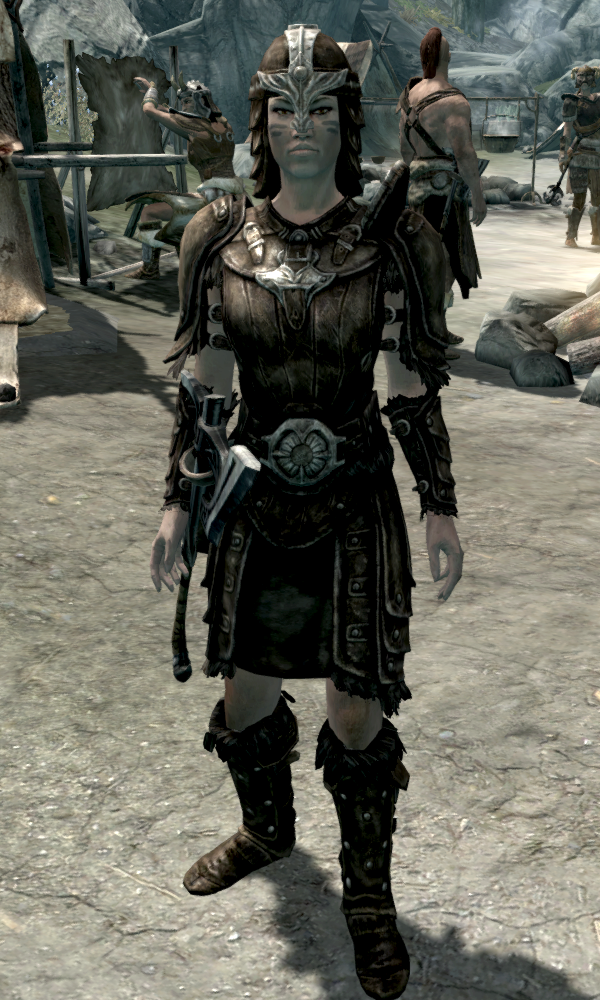
The videogame Skyrim depicts many characters in molded leather armor, and is hardly the first work of fiction to do so. Peter Jackson's adaptation of The Lord of the Rings depicts certain characters (mostly light cavalry or "rangers") in the same sort of armor, and George R. R. Martin's novels frequently mention "boiled leather". Did such armor really exist?
I'm not referring to a coat of plates, in which small pieces of metal would be sewn within leather, but an actual molded, relatively stiff leather or hide garment.
3 Answers 2014-05-28
I am under the impression that what is now known as "classical music" (i.e. Baroque, Classical, Romance, etc.) was the most popular form of music through the 18th, 19th and early 20th centuries. For example, the popularity of turn of the century composers, such as Holst and Dvorak, come to mind. But by the time that artists like Elvis Presley and the Beatles come around, Western popular music and art music seem to have diverged significantly. What caused this change? In other words, how did today's Western popular music come into existence -- and become so much more popular than modern art music?
1 Answers 2014-05-28
2 Answers 2014-05-28
1 Answers 2014-05-28
I know talking about the Nazis can be a very touchy thing, and I feel like it is hard to word this question properly. I don't want to sound like I'm trying to validate anything the Nazis did, I simply ask this out of curiosity. What I'm curious about is this: What positive impacts--if any--did the Nazis have on our knowledge of biology, technology and science in general, given their supposed extensive research on human subjects, weapons of mass destruction and aeronautics?
1 Answers 2014-05-28
I'm researching the changes of social organization following Islam, and I'm trying to find material on the change of leadership.
I understand Mohammad installed a new Muslim government based off the philosophy of the Ummah, but I don't quite know how officials were selected, and where they were installed.
1 Answers 2014-05-28
1 Answers 2014-05-28
I feel that I have a decent understating of WW2, but I see almost no mention of Spain and Portugal in texts about WW2. What was the situation in the Iberian countries? Why weren't they involved ? Wasn't Spain afraid of an invasion?
1 Answers 2014-05-28