Came across a comment elsewhere in the redditsphere where they claimed that "Actually, in my African Americans in the U.S. economy class, we learned that slave families stayed together a surprisingly high percentage of the time, 2/3rds of African American children were in two parent house holds, which is actually twice as high as today. I mean, that's not say slavery wasn't horrible and it's effects aren't seen today (nobody teaches an African American studies class and then sugarcoats the issue of slavery), but the family unit was a part of slave life. Of course, the whole raping slaves and selling children from the parents was very common."
I disagree, but have little to no sourcing. I know that black families were routinely broken up by selling but I also have this notion that it was in the particular interest of slaveowners to actually break up the families. I know the migration westward in the early 1800's sent a ton of the younger black males away from their families but I admit I really don't know much of how the chattel slavery system treated families.
4 Answers 2014-04-25
Actual people whom we know for sure existed who brought about the dominance of Christianity after the death of Jesus Christ.
1 Answers 2014-04-25
1 Answers 2014-04-25
I understand why someone wouldn't be willing to admit to engaging in a genocide but the evidence is irrefutable and overwhelming. What are there arguments against it being a genocide? It's as if you're telling someone the sky is blue and they just refuse to acknowledge it as being blue. Thanks all!
3 Answers 2014-04-25
The notion that Allied bombing was just as bad as the Holocaust and Japanese war atrocities was originally reserved to revisionist historians, but now it has become increasingly mainstream. What's a good way to refute this argument?
5 Answers 2014-04-25
Although Foucault is pretty much required reading for anyone in the humanities or social sciences, he is often noted as having an idiosyncratic reading of history. So, Askhistorians, I request your opinions on the matter. Where does Foucault stray from the historical truth and to what extent he can be considered reliable?
2 Answers 2014-04-25
Suits (jacket and trousers) are universal. I've seen gatherings/rallies in North Korea where all the men are in suits, and not traditional clothing. When and why did they become widespread? I would assume they have a western origin, but I don't know when either...
1 Answers 2014-04-25
I love the total war games (I only really get down with Rome and Medieval 2) but even as an amateur/ignorant nerd there is some stuff that really rubs me the wrong way ("warbands," cavalry charges!!!).
What gets to you?
3 Answers 2014-04-25
As a kid, I read the story about the thirty years war. In it, a man is sentenced to die by hanging for crimes upon the civil populace. However, the rope breaks and an old tradition of that the crime is considered forgiven and served if the rope or branch that the rope is hung upon breaks (or three times in a row drunken executioner).
I also recall a reference to that those who had stolen from the church was hung with a chain to avoid them getting a pardon that way.
Are there any truth to this tradition?
1 Answers 2014-04-25
It's ANZAC Day today here in Australia, and I keep hearing about the struggles of the diggers and the horrible conditions. However, basic school history doesn't tell me how it went so wrong. Why weren't they extracted sooner, or landed against those defensive positions?
5 Answers 2014-04-25
I understand that seventeenth century artists signed their paintings, but it baffles me that so many paintings went unsigned. It's a bit of professional frustration because were sometimes asked to place and identify these.
I first thought this might have to do with a painter's studio/atelier being responsible and so couldn't have the 'master's hand' on it. But a lot of 'smaller' painters have missing signatures on sometimes very well done pieces - meaning it isn't a case of quality either.
Then there is the sudden shift where everyone is signing everything and the signature itself becomes more important than the painting itself.
I was also wondering, as an optional question, about the use of red paint to mark the signature, whether or not there is another rule of use here?
Thank you in advance.
1 Answers 2014-04-25
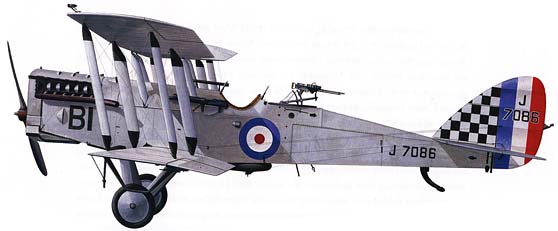
here is a DH2 Bomber
http://www.fiddlersgreen.net/aircraft/Airco-DH4/IMAGES/DH-2-Bomber-British.jpg
A symbol I can understand, its needed to identify friend from foe. But why such a gaudy one, its so visible that I hypothesized that it was a taunt to enemy airmen.
3 Answers 2014-04-25
Hey Historians.
So, my Dutch grandfather was given an old Dutch picture bible by some friends in New Jersey. It's a bit ragged but beautiful. He was flipping through it recently and found inside a piece of parchment with the resignation of an Antonio Perez, the secretary to Philip II, King of Spain, in mid to late 16th century. The resignation is written in English and looks authentic. I'll post pictures of both the items ASAP.
After reading quickly on wikipedia about Antonio Perez it seems that the resignation is in relation to the murder of Juan de Escobedo, secretary of Don Juan of Austria. The story goes: Perez was friends with Escobedo, convinced King Philip that Escobedo should become secretary to Don Juan of Austria, Escobedo would then act as a spy for Perez so Perez could use royal secrets to his advantage but Escobedo ends up becoming friends with Don Juan so Perez has him killed. From there, Philip II gets pissed, wants Perez to pay (because Perez was basically manipulating the King for some time) and Perez somehow manages to escape multiple imprisonments and death and lives the rest of his life in France and England.
What's interesting is how the resignation letter got in the bible, what it means, whose bible it was, and how it got to New Jersey and then in the hands of my Dutch Grandfather who lives in Florida.
My guess is that the bible belonged to Philip II as he was quite religious and, for a time, was also King of Netherlands (and England and Ireland).
Nevertheless, I'm not sure if Perez ever officially resigned as secretary. Perhaps the letter was a plan to resign before everything got messy? Anyway, this Perez guy seemed to be a badass with a silver tongue who could manipulate lots of people, from royalty to the public (which is how he managed to often escape imprisonment).
I'm interested to know if you all could provide any more information on this topic, concerning the history as well as the items themselves as my grandfather seems to think they're worth something.
Thanks!
2 Answers 2014-04-25
I know solders died at their post and people were found in their family homes, but we're any found that archaeologists can definitely say: "this body is the body of 'Joe bloggs'". I assume most of the documents were burnt up and destroyed but surly some mosaics might have given us a few clues?
1 Answers 2014-04-25
I accidentally posted this in r/AskHistory; I'm reposting it here.
I'm reading The Three Musketeers, and twice now, d'Artagnan has ordered a bottle of wine for himself to drink by himself in one sitting. Either the bottle is small, the wine is incredibly weak, or there's some artistic license going on for what purpose I know not. Which do you think most befitting the case?
The information I did find almost unanimously claimed, though without sources, that weak alcoholic drinks were preferred during this time because water was unclean. But this article says that this is merely a common misconception, and gives primary and secondary sources of people drinking water at many points in history without mentioning it being unclean. Besides, although I don't know anything about wine making, I suspect that it can't be made with less than about 10% alcohol, except by diluting it, or such wines would be available. Since we have cheeses that have been made the same way for centuries, wouldn't we have "small wine" today if it ever existed?
I know Rousseau mostly drank wine and milk (he thought water hard on the stomach) and claimed never to have been drunk. So that lends credence to the possibility that wine was weaker then. But how can we know what the alcohol content was? Did they measure it, as now?
4 Answers 2014-04-25
1 Answers 2014-04-25
Bonus question, how/when did booing become a customary form of dislike?
1 Answers 2014-04-25
This is something I've wondered about for a while. Obviously, now that there have been six King Georges of the United Kingdom/the Commonwealth, we refer to the first one as George I. But would his subjects at the time every styled him King George I, or would he simply have been King George? We seem to often refer to the current Queen as Queen Elizabeth II, but I was wandering Wikipedia today and noticed that Queen Anne of Great Britain isn't styled as Anne I there, which sparked my asking the question here!
And an additional question: if the answer is yes, they were referred to as [Name] I, would this also have happened for the likes of Mary and Elizabeth Tudor, given that female monarchs were seen as absolute last resorts in that time period (and therefore they may not have anticipated there ever being another Queen Mary/Queen Elizabeth)?
1 Answers 2014-04-25
I don't know if this is the right place to ask, but I would like to know if the introduction of credit and the eventual introduction of debit cards had an impact on the amount of paper money in circulation. Did the U.S. government have to recall, for lack of a better word, vast amounts of paper money or did the banks take control of it? Please and thank you.
1 Answers 2014-04-25
To put it simply, the Amgaeng-eosa was a type of official in the Joseon Dynasty whose job was to travel across the country and secretly inspect local magistrates to see if they were abusing the public.
They traveled incognito as it was feared if their identity was public, they would be a target for bribes. Going in disguise provided a way to approach the case with a fresh eye and no way for the target to influence his judge.
I guess the romantic image this creates is something like a cross between James Bond and Batman in ancient times. This position was pretty popular amongst the regular citizens and has resulted in a lot of folk stories, the most famous being Chunhyangjeon (춘향전) a love story in which an intelligent man falls in love with the beautiful daughter of a courtesan before he's forced to move away and follow his father.
The girl, Chunhyang, is made to tolerate the affections of a greedy lord in the meanwhile before being jailed after refusing him.
In the meanwhile, the boy (Mongyong) becomes a secret inspector, moves back to where Chunhyang is, punishes the lord, and lives happily ever after.
Not very original, but it's popular.
Did other nations have any similar systems in place? How effective were they? The time frame I had in mind really starts from anywhere up to the 1800's or so.
1 Answers 2014-04-25