Now, I'm aware that the Phoenicians engaged in occasional human sacrifice, along with the Carthaginians, the Romans, Scandinavians. There are still around 50 odd human sacrifices to the Goddess Kali that happen every year in India.
But, I'm wondering if the early cro-magnons, or the neanderthals had widespread human sacrifice, similar to the Aztecs. What about neolithic culture? Was it ever as endemic in the old world at that given time? Is there any archeological evidence?
2 Answers 2014-03-29
1 Answers 2014-03-29
2 Answers 2014-03-29
I found the song Let's Go Get Stoned, sung by Ray Charles, from 1966, and was shocked that he would record a song in the mid 60s that was so explicitly about marijuana. Then I realized that by "stoned" he meant "drunk". I know that this sense of the word stuck around for a while, like Billy Joel's Piano Man from 1973. ("The businessmen slowly get stoned")
But it seems (from my experience with pop culture) that sometime in the 80s "stoned" began to mean high on pot. e.g. this Andy Kauffman sketch from 1981. ("I can't play stoned") So, what's the deal? How'd this term get switched from booze to pot? And why not another term for "drunk"? Also, is this the right subreddit for posting this? I figured it's an American cultural history question, or would it be better in r/Asklinguists?
4 Answers 2014-03-29
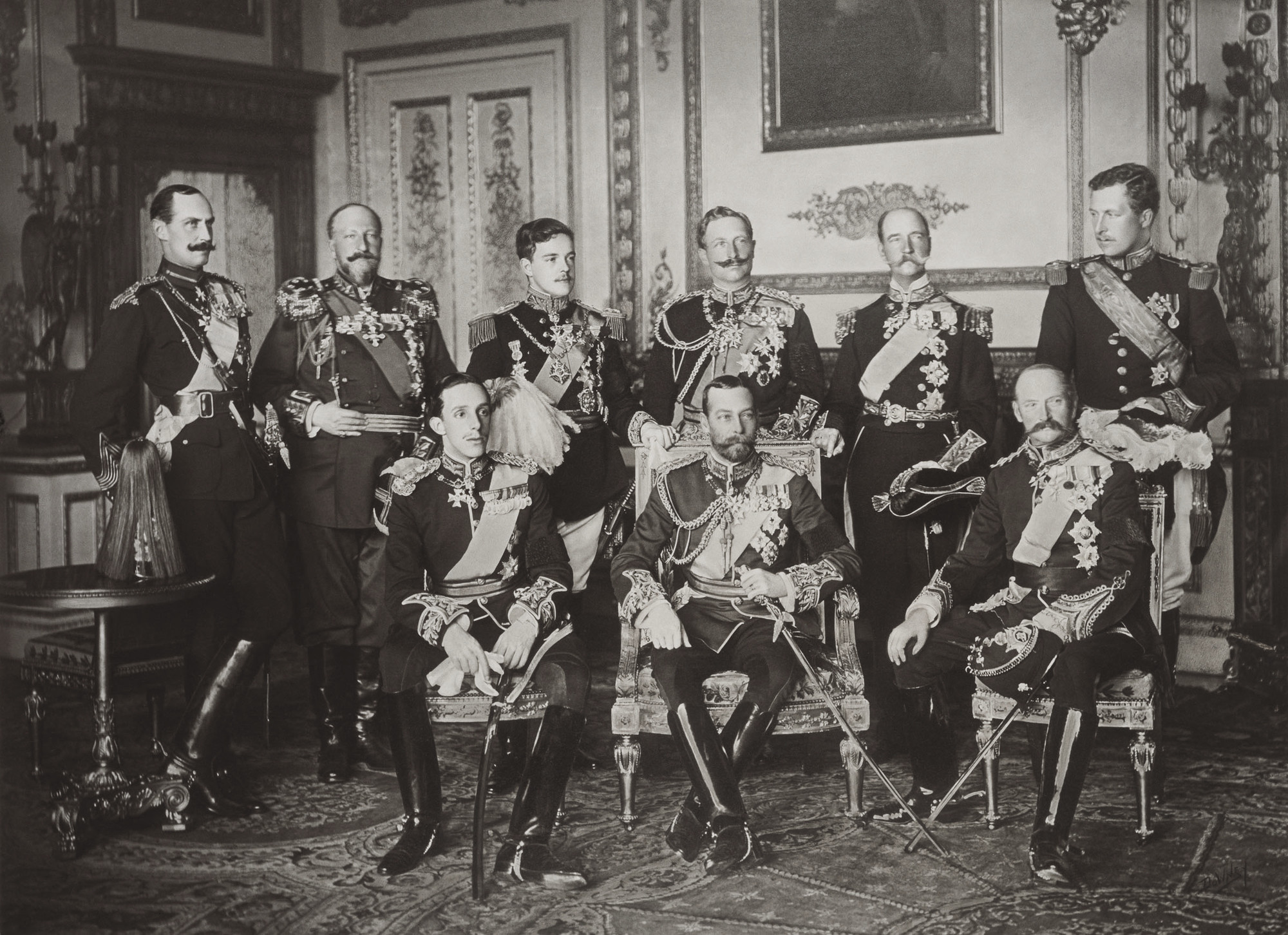
Very minor and dumb question which might not even be appropriate, but it made me wonder if there is something going on with the photography here.
1 Answers 2014-03-29
Nihilism has always been an interest of mine, but I never knew there was a period in which so many had organized in a revolutionary manor.
1 Answers 2014-03-28
It's a shame that nothing of this sort has happened lately.
When was the last time they marched like this, and why'd they discontinue this practice?
1 Answers 2014-03-28
Follis, Solidus, or something else?
1 Answers 2014-03-28
The past few times this was asked I didn't really find an answer I was satisfied with. Almost every region of the world has some sort of large, lizard-like, often fire-breathing creature in its lore. How did these beasts come to transcend cultural and geographic bounds? Did they originate in one culture, and spread out along with it? Or did several cultures develop their own notion of a dragon independent of one another?
2 Answers 2014-03-28
Missionaries have been in India for centuries but Hinduism is still the dominant religion, in China its still comparatively small, Native Americans fought against it for centuries. But in a countries like Malawi or Zambia, which were only discovered late on, Christianity became the dominant religion relatively quickly.
1 Answers 2014-03-28
1 Answers 2014-03-28
Was there resistance from the beginning or were there rebellions before that?
2 Answers 2014-03-28
I know it spread up to India but it was never became widespread.
2 Answers 2014-03-28
If so was it ever documented or taken note upon? If so how did it effect the army, if at all?
1 Answers 2014-03-28
What happened to the ~300,000 working class members of the National Guard? After the extensive shelling was there a formation of ghettos? How did Paris manage to transform from a shelled city to the beauty of the Belle Epoque? Are there any photo resources documenting this period of time (specifically 1871-79)? Many thanks Historians!
1 Answers 2014-03-28
I had no idea phalanx tactics involved breaking ranks to charge the enemy and kill them with swords in slow motion, for example.
1 Answers 2014-03-28
1 Answers 2014-03-28
I cannot seem to find this on the FAQ. If it is on there, I would appreciate the link.
I am mainly interested by the European powers and their reaction. Such as Prussia, Austria, and Russia.
1 Answers 2014-03-28
Anyone care to share their knowledge?
1 Answers 2014-03-28
How were religious groups who used alcohol in their ceremonies affected by prohibition in America? Where they allowed to use it? How did they obtain said alcohol? If so was it at all regulated?
1 Answers 2014-03-28