1 Answers 2014-03-27
Im currently reading about hitlers rise to power, the german economic crisis the second world war. However I rarely see anything about the role of the Nazi ideology in hitlers rise to power.
Was it just Hitler's antisemistic view or was there a purpose behind the ideology?
1 Answers 2014-03-27
1 Answers 2014-03-27
Thank you for your knowledge and time.
1 Answers 2014-03-27
Hi /r/AskHistorians. I'm working on trying to further my understanding of material culture during the American Revolutionary War, especially amongst the Loyalists. I'm trying to find something a bit more accessible than pure archival records, something along the lines of Jim Mullins' Of Sorts for Provincials which is a treatment of a similar topic during the French and Indian War.
Any leads /r/AskHistorians?
1 Answers 2014-03-27
It has often been cited that NATO promised to not take advantage of Russia's post Cold War weakness. So when NATO proceeded to do just the opposite with countries like Latvia, how Russia might have felt sleighted - hence Crimea - or something like that.
But of course, as indicated in the title, there are people who are arguing that this simply was not the case. I honestly find the counter-claim quite astounding, but the man that says it speaks from a position of authority.
source (circa 19:30)
1 Answers 2014-03-27
3 Answers 2014-03-27
1 Answers 2014-03-27
I often wondered why the Axis were so focused of North Africa that they decided to land there instead of going via Turkey/Mid-East to the Arabian Oilfields so i ask it here.
Additionally were there really major mistakes on side of the Allies aswell? How important was the North African Theatre compared to the European/Pacific?
1 Answers 2014-03-27
Have countries replaced civilizations ?
1 Answers 2014-03-27
I was re-reading Charles C. Mann's 1491 the other day, and the question of how maize was developed from teosinte has stuck with me.
In the book, Mann references the fact that no one was quite sure how Indians developed the various species of corn that were widespread in the Americas, given that the ancestor of corn plants (teosinte) has a hard covering over its kernels and produces only a few seeds per plant. Mann's book was most recently updated in 2006, so I'm wondering if there has been any new scholarship on the subject in recent years.
Thanks in advance for any help!
1 Answers 2014-03-27
I always had thought that he was one of many operatives directly trained by the US government to raise an army to fight the Soviet invaders, but recently I've heard that this was not the case?
I've heard that his main motivation for 9/11 was because non-Muslim soldiers were stationed in Mecca. Is this true?
Apologies if this breaks the 20 year rule! I'm mostly wondering about 1994 and earlier, though.
1 Answers 2014-03-27
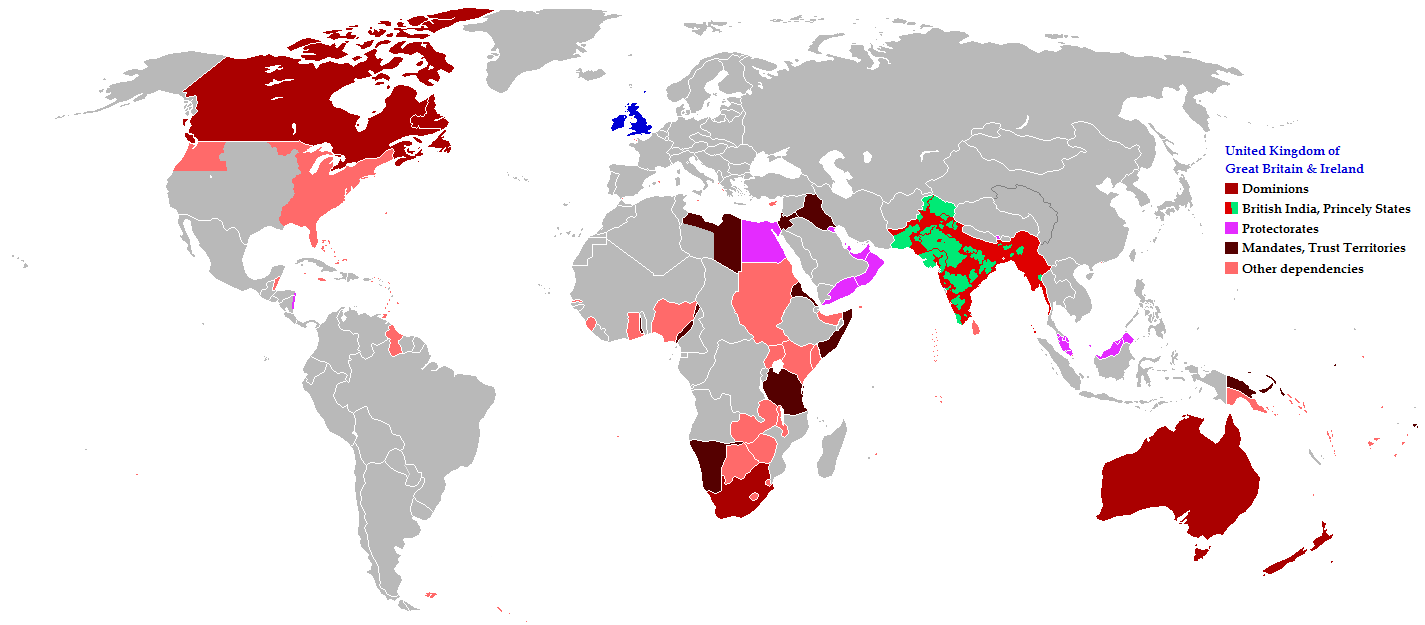
I have read that Liberia was the only independent country of Africa (after Italy's conquest of Abyssinia).
How would the relationship between the US and Liberia differ from ex. any of the dependencies of the British Empire and Britain?
2 Answers 2014-03-27
1 Answers 2014-03-27
edit: Add to the title, "during the age of exploration" , sometime between the 15th and 17th centuries.
Henry Hudson comes to mind when I think of this situation, but I know there have been other mutinies as well.
1 Answers 2014-03-27
I know that there isn't always a set time period for Disney movies, but even a rough approximation for this would be great. Thanks! I've been curious about this for a while.
2 Answers 2014-03-27
The design of many early century sloops from Asia seemed so different from the ships common through out the rest of the world. I've always found the hull designs beautiful works of art, but it seems the sails have a common feature of being stacked square shapes, colorful, and for lack of a better term "window-blind" like. I have a great appreciation of all tall ships, but I've always wondered why Western ships didn't seem to influence the ship designs of early Asian countries like China, Japan, and Korea.
5 Answers 2014-03-27
I'm focussing on England. It's just a quick question in passing.
1 Answers 2014-03-27
5 Answers 2014-03-27
What would a citizen during the principate period think about the Republic? Did this change during the dominate? From what I understand, Augustus did a good job of veiling the erosion of the Republic, but did imperial propaganda last after his death?
1 Answers 2014-03-27
Inspired by what I think might be a gap in the answers to this question, I wanted to know from those who study early christianity exactly how the devil became the devil. Why is the Christian scripture satan so different from him of the Jewish tradition?
My guess from what I have learned (in cursory fashion over the years) is that eschatology had much to do with the shifting Satan. Apocalpytic anxiety and fear lends itself to questions of judgment and hells. We see this in Chinese Buddhist and Daoist movements of the same period (1st-5th centuries CE) as christian movements. So, did eschatology help define the new Satan and hell that emerged with Christianity?
1 Answers 2014-03-27
1 Answers 2014-03-27