The easiest one to point to is the Mona Lisa. She doesn’t look like a real person to me, looks like it’s a result of stylistic choice and not supposed to be photo realistic. You can sit in Central Park for a week straight and nobody would look like the Mona Lisa. You see the puffy face and odd proportions a lot in old paintings.
Dutch Golden Age art is usually way better about this, and they tend to look like real, normal proportioned people. But then you can look at one like “Lady playing a viola” by Joost Van Geel and there’s NO way that lady looked exactly like that. Look at Johannes Vermeer work, people claim he used early camera technology to make the paintings, and Girl With a Pearl Earring looks pretty real, while Study Of a Young Woman does not look like a real human being... And I’m supposed to believe a camera helped make that.
What I’m saying is I know back then there was a lot of products of incest and maybe the gene pool wasn’t as strong, or maybe the painters just didn’t do justice to what people actually looked like, what is it?
1 Answers 2019-09-17
What was the reaction of the public or the scientific community when the first dinosaur fossils were discovered? Were people shocked? Or was the discovery more gradual by find bits and pieces first before a larger fossil was found? Was it theorized that large creatures once existed before the first fossils were discovered or did the discovery come out of nowhere?
Very curious as to how people felt. Even today it seems almost fantastical that dinosaurs once roamed the earth.
1 Answers 2019-09-17
2 Answers 2019-09-17
The sources I've found that claim this come off as rather dubious. Can you verify this one way or another please?
2 Answers 2019-09-17
Was WW1 a way to divert attention from the revolutions of the time? A way for the nations involved to go to war instead of risking civil war and losing control to communist/socialist revolutionaries?
1 Answers 2019-09-17
why didn't the nazis just invade britain through somewhere other than the english channel? like from norway?
1 Answers 2019-09-17
(I tried looking at the book list, but something seems to have gone wrong with the pirates portion of it and all I'm seeing is a bunch of website code)
I like to occasionally make posts about pirate history on Twitter. I stopped for a while, because I'm no historian and I don't know how to detect what's questionable and what's not, and I don't want to spread misinformation. An acquaintence on Twitter recommended me this subreddit and your book list.
I've read a lot of stuff by David Cordingly, and I'm interested in just about anything pirate history related, not just the GAoP. Also - and I'm not sure if this counts as history related - I'd love if there's any recommendations for books on pirate related myths and legends.
1 Answers 2019-09-17
I am looking for literature or documentaries that focus on the British view on the American Revolution. How did they justify the war and what did common people think about it in Europe?
1 Answers 2019-09-17
1 Answers 2019-09-17
Im looking for primary and secondary sources for Saladin anything would be appreciated.
1 Answers 2019-09-17
The catastrophic disease transmission of smallpox and other diseases seems very one-sided from the information generally presented. Was this due to superior personal hygiene among native tribes, a simple coincidence of there not being such dangerous endemic disease, or are the cases just not reported on?
1 Answers 2019-09-17
While Mussolini and Hitler were bound in the Axis alliance to help each other militarily against the Allies, but there is clear indication that the two didn't exactly trust each other. Mussolini opposed the Anschluss before Hitler's reassurances and was in talks with the United Kingdom and France well into the 1930's, so Mussolini at least had some trepidations about a powerful Germany, and Mussolini's foreign policy goals revolved around recreating the Roman Empire in some fashion, and while Mussolini mostly had ambitions towards areas that Hitler didn't immediately covet (i.e. the Balkans and North Africa), both had eyes on areas in France and the Danube. So did Mussolini ever have anxieties about relations with a post-war Germany strengthened with territories in France and Eastern Europe? Did Mussolini trust Hitler as an ally to not betray him, or was Mussolini willing to bow to Hitler's authority, or did Mussolini have some plans or ideas for accumulating enough strength to deter or even defeat Hitler?
1 Answers 2019-09-17
Bands like the Beatles, Modern Talking and many others were incredibly popular in the Eastern Block states, however you don't think of the Soviet Union in the same way as a major exporter of their culture to the west.
Did some bands reach popularity in the west in a similar way? If no, why not? And if yes, which come to mind?
1 Answers 2019-09-17
I'm thinking of Gruyere and Emmental, specifically. I know I have seen depictions of these big cheeses being carried on special wooden backpacks across early Swiss borders, before. Also, Parmigiano Reggiano. They are HUGE! What were the factors of life, food, agriculture, or politics, that made these iconic cheeses so large?
1 Answers 2019-09-17
1 Answers 2019-09-17
In the middle of the 20th century, there were multiple encyclopedias of World War 2 made, including from Churchill, Time Magazine, Purnell, and other authors. There were also many encyclopedias made by various governments, but these seem to mostly just focus only on their own involvement in the war. I was wondering if there were any newer encylopedias or multi-volume works that comprehensively cover WW2 in all aspects, especially in ways that might not have been covered in the mid 20th century, when stuff like battle-centric and great man history would have been very popular, along with popular tropes of the time like the Waffen SS and Rommel. Im thinking of stuff like grand strategy, industry, natural resources, society, operational art, etc. In addition, using multiple types of media like pictures, maps, tables, appendices, etc. in addition to word would be very good.
Im also interested in multi-volume video documentaries as well.
1 Answers 2019-09-17
An upside down cross has always been the cross of st Peter, but when (or how) did it become a satanic symbol?
1 Answers 2019-09-17
Hi all! I was listening to a university professor on a french podcast on the nature of the french monarchy post 16th century. He stated that calling the monarchy "absolutist" was really done in 19th century and that we should really talk about the rise of the administrative aspect as the king couldn't do everything he wanted. Could anyone dwell on that? I would be also interested by the royal administration in general. Cheers !
1 Answers 2019-09-17
1 Answers 2019-09-16
The fact that the plague decimated Europe’s population is always brought up, but I’ve never heard of any kind of illness of equivalent magnitude hitting civilizations in Asia or Africa. Were any of those cultures also severely affected by plague, or another disease, to the same scale as Europe? If not, why not?
1 Answers 2019-09-16
Hello dear historians,
So I was visiting Liège and there inside the St. Denis church I saw a wooden art work that displayed the passion of the christ. And in there I was very much puzzled about the way the Roman Soldiers were designed and shown.
Wide and close up shot: http://imgur.com/a/JGnLtU9
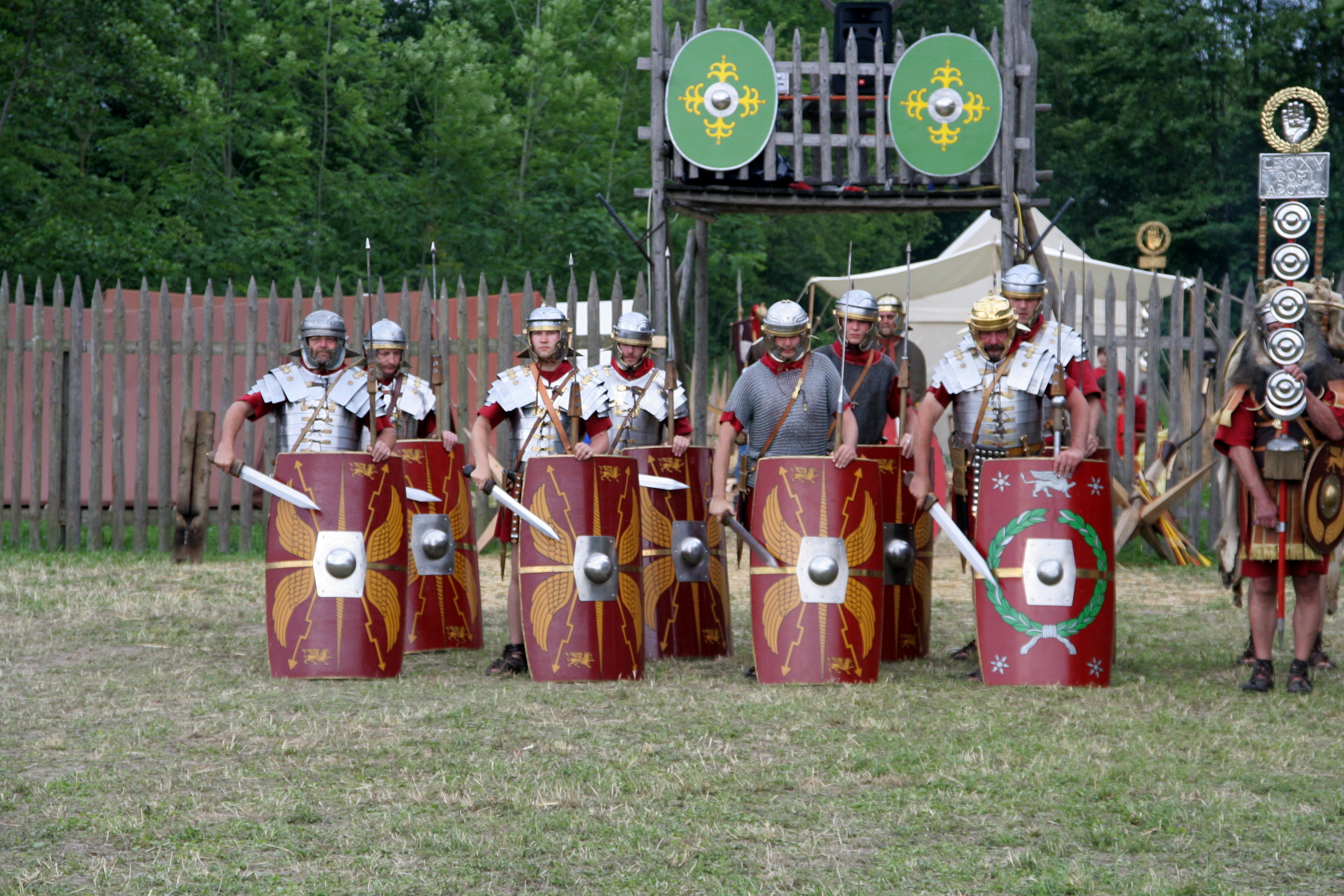
I guess when I think about the common Roman Legionary I had this in mind: the typical plate armour and rectangular shield https://upload.wikimedia.org/wikipedia/commons/4/4c/Roman_soldier_70_aC.jpg
My question is I guess: How do we know the uniform of a Roman Legionaries "really" looked like? Is the image I have in mind a common misconception? And do you know of an explanation on why the armour in this display is so "odd"?
Thanks ahead for your input!
1 Answers 2019-09-16
I'm been a fan of history as long as I can remember but recently I found these topics interesting but I just can't tell the difference it just blur the lines. (Sorry for my English it is not my first language)
1 Answers 2019-09-16
I know that a prerequisite for invasion was to defeat the RAF, but did the admiralty (or others) intend to talk Hitler out of the operation in any case? What was their official analysis at the time on the plausibility of success?
[I am very much trying to avoid being hypothetical]
1 Answers 2019-09-16