I've searched Google and this subreddit but didn't seem to find what I was looking for. I've been learning a bit more about the Holocaust recently and I came across a site that claims Josef Mengele's actions were greatly exaggerated in the more recent decades. It claimed that we only really have eyewitness testimony and that this testimony about him was vastly different in 1946 than it was in the 1980's. For example, the stories of his experiments on trying to change eye colours or stitching twins together to conjoin them. The article claimed that we never found any physical evidence of this and that survivors were never tested to confirm these things happened.
Now I know that there are Holocaust deniers and the likes out there, so I'm not buying into it without question, but I'm wondering what evidence there is other than eyewitness testimony that, while unlikely to, could have been exaggerated or misremembered?
1 Answers 2019-06-27
Hello Reddit Community Historians. My name is Joshua. I am seeking aid in the main concerns of Farmers at the end of the 19th Century America post Civil War. What were their main concerns? Were interest charges and storage costs a huge problem then? What about Freight Rates and Commodity Prices?
Thank you in advance. This is to help me with my Social Studies Exams.
1 Answers 2019-06-27
Would traders moving between Europe and Asia be aware that sun seemed to rise earlier as they traveled east and later as they returned west?
1 Answers 2019-06-27
The video also shows how the colony was very diverse and mixed. It made it very difficult to divide the colony because every district was diverse.
But why were they divided at all? It doesn't seem like the division, or the partition did much good..a lot of people died and chaos ensued.
I do not know much about this topic at all so please forgive me if I said anything that I shouldn't have or if I said it in a wrong way. It would not be intentional.
1 Answers 2019-06-27
I am interested to know how old primary and secondary sources survive and can be read (via reproduction, copy, translation) today. Examples such as Polybius’ Histories, how do these ancient texts content appear thousand of years later with minimal alteration
Bonus question: Are there any primary sources lost to us but mentioned in other sources that would be invaluable to modern historians. Eg another contemporary source mentioned in Polybius as an example?
1 Answers 2019-06-27
I'm curious if there could be. The point that was raised, were favorable ocean currents and wind patterns.
1 Answers 2019-06-27
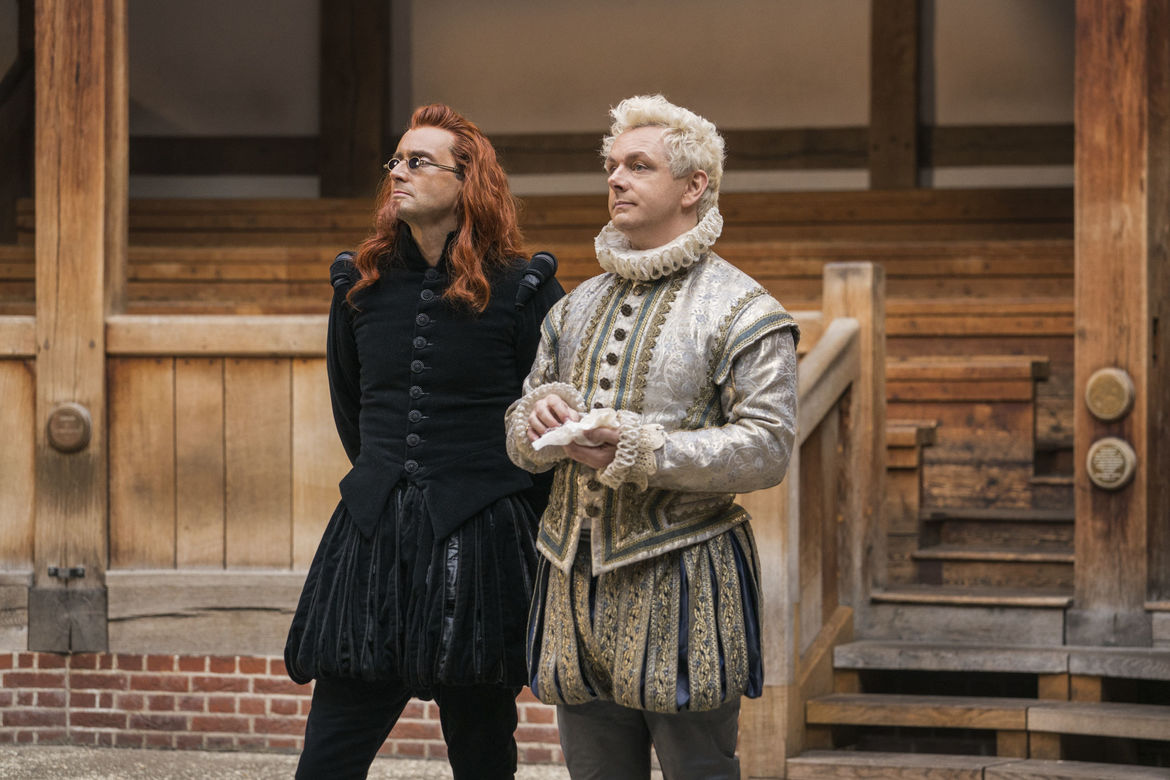
For reference,
Crowley in Elizabethan England
Crowley in revolution-era France
Did people commonly wear sunglasses in these times and places, and if so did they look like this? Or is this just how Crowley rolls?
(Also, is his Elizabethan era hairstyle- and beard-style- period accurate? Because that would be the only possible excuse.)
2 Answers 2019-06-27
https://en.wikipedia.org/wiki/Luftwaffe_Field_Divisions
According to the wiki, these "divisions were raised from 200,000–250,000 Luftwaffe ground, support, and other excess personnel."
200,000-250,000 seems like a massive excess of spare personnel to me. Were these airmen only freed up as the Allies destroyed more Luftwaffe aircraft and facilities, thus destroying their original air duties? Or was the Wehrmacht just horrible at people management? It seemed like it would've been more efficient and effectively to have originally just sent these men to the Heer when they were first recruited.
1 Answers 2019-06-27
1 Answers 2019-06-27
My grandfather told a few stories about the war, mostly funny stories, a few sad stories, but almost nothing about actual combat or details about where he was or what he was doing.
He was drafted and was in Korea for 10 months before being pulled out of the war and sent to Nagasaki. I know he was fighting against Chinese soldiers at the time. I believe he was a BAR gunner.
What would he have likely experienced, which parts of Korea would he have been stationed in (besides Busan/Pusan)?
1 Answers 2019-06-27
Hitler is commonly used as an insulting comparison for people being too authoritative or asshole-ish. Saying “don’t be a Hitler” or “calm down Hitler” are common enough to where he is regarded as one of if the not the worst person in history. Who took this mantle before him? Are there any historical examples of a separate person being used before Hitler took their place?
1 Answers 2019-06-27
A somewhat unusual question, I know! I'm not sure if this kind of question is permitted here, but I am looking for advice.
I am an undergraduate student about to enter my senior year, and I am currently debating whether or not I want to pursue my PhD in History or my Masters in Teaching. If anyone here completed their PhD, what was your concentration, and do you have any regrets?
4 Answers 2019-06-27
I'm working on an Art project about King Arthur but I'm going more on a historical approach rather than a fantasy one. Now I read that Arthur is from today's Wales area and some sources says that Celts lived there. Now I'm not sure how true is that and would like some clarification on that matter. Next I'm interested in religion and lettering system at that time. Were they Christian or were they Pagan? And what kind of lettering did they used?
I'm sorry if this doesn't belong here
1 Answers 2019-06-27
This question was sparked by the great question on the purchase of Alaska and I was wondering if there might have been anything different due to it being about 60 years prior. Thanks!
1 Answers 2019-06-27
(sorry for not tagging nsfw; I should have known better)
1 Answers 2019-06-27
I heard about this some time ago, saying that it is hard to believe but it would be more terrible than the nuclear bombs, but I can't seem to find anything abour it anymore.
3 Answers 2019-06-27
This is the document I'm curious about. Only the Tsar's ratification is written in Russian. https://upload.wikimedia.org/wikipedia/commons/2/29/Czar%27s_Ratification_of_the_Alaska_Purchase_Treaty_-NARA-_299810.pdf
1 Answers 2019-06-27
1 Answers 2019-06-27
Context: The modern day Brigade Combat Team is a modular structure comprised of "plug-and-play" Battalions. The US Army moved to this force structure post 9/11 as a solution for fighting counter insurgency conflicts. If you keep an eye on the news you will see that the US military is trying to refocus on conventional symmetric warfare vs the asymmetric wars we have been fighting in the Middle East.
I am in the Army and was brought up in the doctrine of the BCT and I am wondering what a conventional force structure looks like. What did it look like in Desert Storm? Vietnam? Korea? Where can I find further reading on this?
1 Answers 2019-06-27
Thursday Reading and Recommendations is intended as bookish free-for-all, for the discussion and recommendation of all books historical, or tangentially so. Suggested topics include, but are by no means limited to:
Asking for book recommendations on specific topics or periods of history
Newly published books and articles you're dying to read
Recent book releases, old book reviews, reading recommendations, or just talking about what you're reading now
Historiographical discussions, debates, and disputes
...And so on!
Regular participants in the Thursday threads should just keep doing what they've been doing; newcomers should take notice that this thread is meant for open discussion of history and books, not just anything you like -- we'll have a thread on Friday for that, as usual.
9 Answers 2019-06-27
I'm almost finished reading The English Republic 1649-1660 by Toby Barnard, and it struck me that a few of the attempts to build a working government seemed to be somewhat similar to the balance of powers seen in the American constitution.
Of course, it wasn't truly balanced, since Cromwell always had most of the power. But it seemed interesting to me that what I know of the later Constitution almost seemed like an edited version of the Instrument of Government, in the sense that powers were shared between the Lord Protector, Parliament, and the Council of State.
1 Answers 2019-06-27
I'm curious if there could be undiscovered ruins buried beneath the sands.
2 Answers 2019-06-27
I've seen images of IRA soldiers during the troubles sporting rifles, and given how uncommon they are and how difficult I'd assume they'd be to get hold of, it left me wondering how they managed to get so many and where they came from.
....asking for a friend /s
1 Answers 2019-06-27