It seems to me that if ANYONE in Europe could save Nicholas and the Romanovs, it would have been their English cousins, George V. So why didn't he? Why wasn't Nicholas given political asylum in Britain following the Russian Revolution?
2 Answers 2018-12-27
I understand that the Chinese and Japanese called Europeans barbarians from at least the 16th century. But when did that stop, and how? Was it the result of technological advancements and industrialization, or was something else at play?
1 Answers 2018-12-27
Watching the Spielberg documentary on HBO which features the Normandy beach scenes from “Saving Private Ryan” and zeppelins afloat across the boats and on the beach. I’ve seen them in other TV/movie/documentary footage too. Seems like anything involving London in WW1/2 times always shows zeppelins flying all over the city.
Why? What is their purpose? Wouldn’t they risk giving away positions to the enemy because so visible?
Do the have a long-standing history of use by militaries across the years? Are they still used today? In the same way or has their usage changed?
Just curious so any historical information or commentary is appreciated. Thanks!
1 Answers 2018-12-27
Hello historians!
My history teacher recently told a story regarding a highly ranked Soviet leader who was captured by the Nazis in an anti-communist raid in the 1930's (the nazis were oblivious to this fact), whom they were unable of convicting due to his fiery speeches in the courtroom. I was wondering of any of you perhaps recognise this story and could provide me with some external sources to read since I'm quite interested in knowing more about this occasion.
I eagerly await your responses!
1 Answers 2018-12-27
Got into a debate over Christmas about how much world knowledge people had in the middle ages. Specifically it was if people studying in an university in somewhere like England would know what a volcano is even though there aren't any in that country. To me it seems obvious that they would have to read history, especially by Greek and Romans that would reference such things. It was argued that while such books would be in a university library, "they wouldn't have read ALL the books in the library!" Basically no one sided with me and they all looked at me like I was an idiot. Finally I got through that volcanos were mentioned in the Bible and was countered by, "no they say mountains shooting fire," and they probably thought it was something apocalyptic that would only happen in end times. I agree the average person might not have been literate and possibly never heard of a volcano, but someone educated? What do you think? Am I way off or just need smarter friends?
1 Answers 2018-12-27
1 Answers 2018-12-27
Was there something attractive about Africa? Discouraging about other options?
1 Answers 2018-12-27
Most people only know about Gandhi when it comes to the Indian revolution, but they don't know about the freedom fighters such as Bhagat Singh, Udham Singh, etc.
1 Answers 2018-12-27
I read online somewhere that the HMO Act caused health care costs to explode in the United States, but I also saw this claim debunked by the fact that HMOs existed before. Nevertheless, the timing is right.
Can someone unpack this and explain what exactly about the health care industry changed in the 1970s to make costs grow so dramatically over the next few decades?
1 Answers 2018-12-27
2 Answers 2018-12-27
I'm trying to find something short and clear about Islamic art in the centuries.
2 Answers 2018-12-27
1 Answers 2018-12-27
2 Answers 2018-12-27
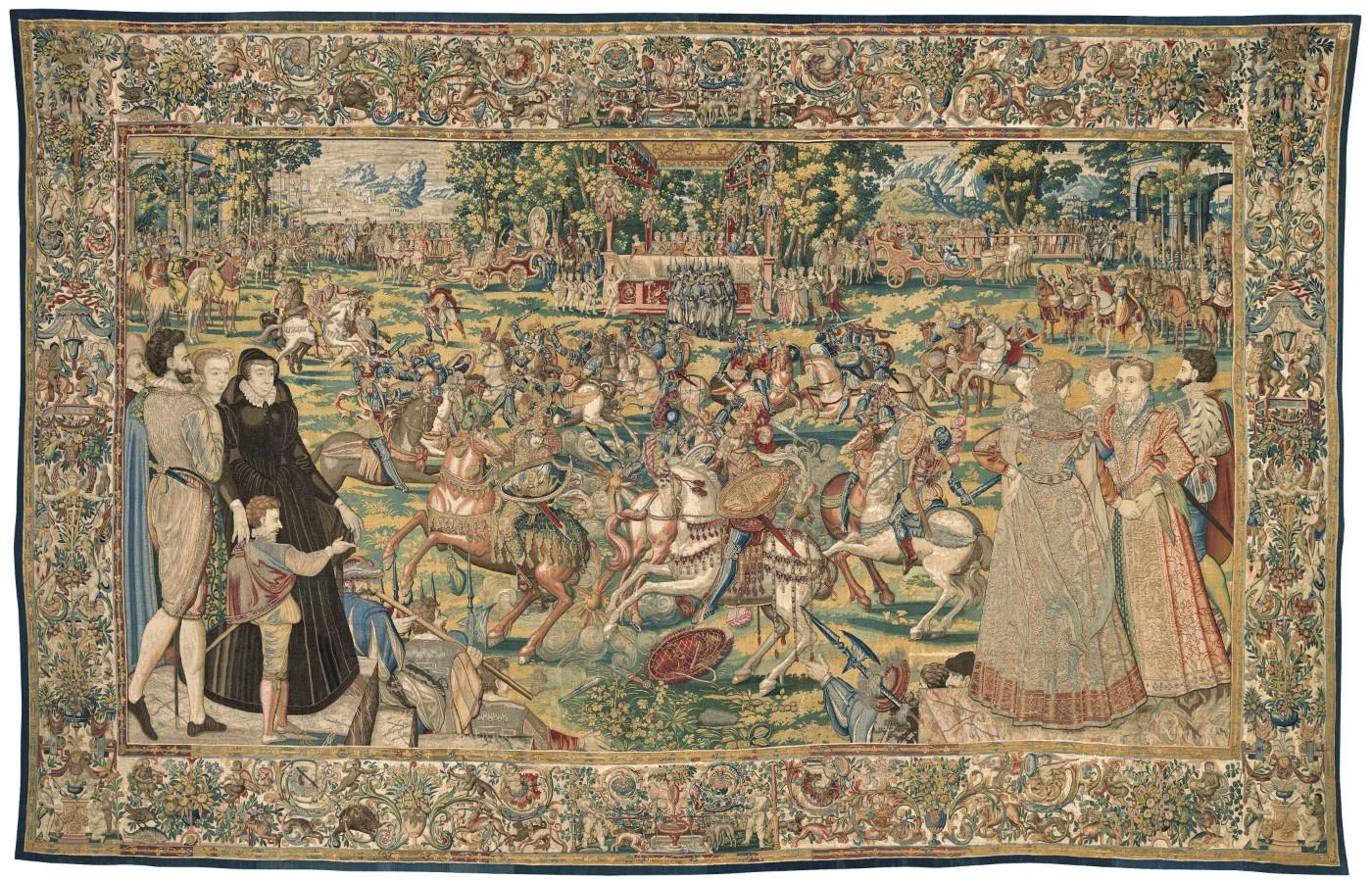
In the Valois tapestries (1576) which I saw last week, there are some kind of flaming spheres emitting smoke or something, presumably incendiary devices, that are being depicted in a tournament scene and a mock battle scene.
Here you can see one in front of the hooves of the white horse in the foreground: https://www.artandobject.com/sites/default/files/styles/gallery_item/public/tournament.jpg?itok=OYduh8-B
Context: https://www.artandobject.com/news/cleveland-museum-art-debuts-newly-restored-valois-tapestries
Some of the captions at the museum said they were "fireworks and golden orbs" but didn't elaborate further.
What are these and what are they for? Are they just decorative fireworks? Are they training devices to get horses and riders used to smoke and bangs? Are they real weapons of some kind? Are they dangerous? Or is it just the artist (who supposedly witnessed the event depicted) filling up some blank space?
1 Answers 2018-12-27
Thursday Reading and Recommendations is intended as bookish free-for-all, for the discussion and recommendation of all books historical, or tangentially so. Suggested topics include, but are by no means limited to:
Asking for book recommendations on specific topics or periods of history
Newly published books and articles you're dying to read
Recent book releases, old book reviews, reading recommendations, or just talking about what you're reading now
Historiographical discussions, debates, and disputes
...And so on!
Regular participants in the Thursday threads should just keep doing what they've been doing; newcomers should take notice that this thread is meant for open discussion of history and books, not just anything you like -- we'll have a thread on Friday for that, as usual.
7 Answers 2018-12-27
1 Answers 2018-12-27
1 Answers 2018-12-27
I've studied the history of the Jews both anciently and in the 20th century but know very little about how/why the Jewish diaspora sent most of them to Europe. Can you guys help summarize what happened during this era and maybe what early Jewish settlements in Europe were like?
First time posting here so thank you!
2 Answers 2018-12-27
If not, what did the combatants in the Second World War refer to each other as
1 Answers 2018-12-27
[deleted]
1 Answers 2018-12-27
I'm aware that the Reconquista was a very religiously motivated period of time which is why I'm curious how it affected the religious policies concerning minorities in Christian lands: would Muslims and Jews be expelled completely, forced to convert, live under extra restrictions, something like that?
1 Answers 2018-12-27
1 Answers 2018-12-27
2 Answers 2018-12-27
I traveled in Eastern Europe in college and heard a story that, due to the religious cleansing practices of the Jewish population, some areas were far less affected by the plague. I think specifically Poland was supposed to have been less effected because they welcomed a large number of jews. Is there any historical documentation or evidence for this story?
1 Answers 2018-12-27