1 Answers 2018-04-23
I recently read a comment that speculated that Romans, had they not adopted Christianity, would have still eventually become monotheistic. The basis for this was that they saw Sol Invictus as the one main god, with all other gods in the pantheon being manifestations of Sol Invictus.
Is there any truth to this?
1 Answers 2018-04-23
Bonus: Around what time was the BC/AD system adopted by, let's say, Europe?
1 Answers 2018-04-23
In all fairness I've only seen the musical, so the book might have some nuance I'm missing, but it seemed to have a very pro-Christian message, with the only positive figures of authority being priests and nuns and a very central theme of repentance, forgivance and atonement. Was the Church so pro-Monarchy back then?
1 Answers 2018-04-22
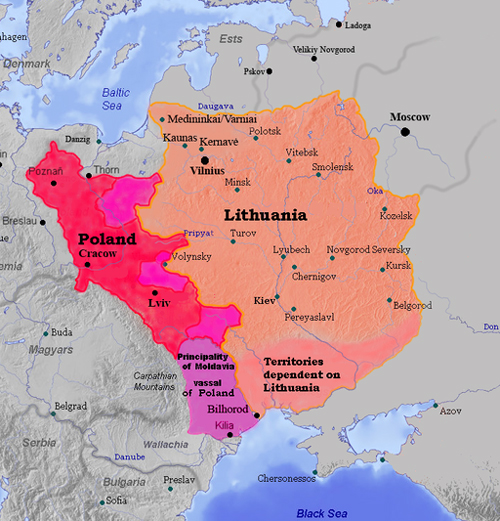
It seems that at the time of the Union most of it was Lithuania. Today it's mostly Belarus and the Ukraine. Would I be safe in chosing to speak Latin?
1 Answers 2018-04-22
3 Answers 2018-04-22
2 Answers 2018-04-22
This seems like a crime against the Church, since the Pope is the highest of God's ambassadors. How was such a Catholic nation willing to invade the center of their religion?
1 Answers 2018-04-22
1 Answers 2018-04-22
1 Answers 2018-04-22
1 Answers 2018-04-22
After something like a tornado, flood or earthquake wrecked their homes did they try and rebuild? Did they move to somewhere else?
1 Answers 2018-04-22
1 Answers 2018-04-22
1 Answers 2018-04-22
Learning that Denali means “the Tall One,” and that Huang He translates to “Yellow River” makes it seem like non-Westerners were traditionally much more literal in their naming of things. Is this true? Also, where did the tradition of naming landmarks after people come from?
3 Answers 2018-04-22
[deleted]
1 Answers 2018-04-22
1 Answers 2018-04-22
I know that pretty much all record of people like the Vikings were recorded long after by Christians so I'm wondering if there's any exceptions.
1 Answers 2018-04-22
1 Answers 2018-04-22
2 Answers 2018-04-22
From what I understand duels were illegal during the Revolutionary Period so the participants took great lengths at protecting witnesses from any potential legal action. But how does turning your back on the duel make you any less innocent of not being a witness? Since a doctor was paid for in advance, couldn’t the prosecution argue that they took some part in the duel?
1 Answers 2018-04-22
Sorry if this is a dumb question. As I understand, different Hispanic groups are mixes of Spanish, Native American, and black ethnic groups. From my experience, many retain cultural ties to all three of these (ie. Taíno or Aztec symbology, words, and mythology or art and music from West Africa mixing with their cultures. And Catholicism and Spanish language of course).
Why does it seem like there is so few of that in former English or French colonies? Is there a French or English version of “Hispanic” that I haven’t heard about?
1 Answers 2018-04-22