How have humans of history played with gender norms--and what norms were they playing with, and what genders were in play?
Next week: Historians After Dark
4 Answers 2017-03-22
It's my understanding that there were groups like the German Society for Racial Hygiene that promoted eugenics measures. I would assume that groups like this would use social Darwinism as a support for their theories. Can anyone recommend books on social Darwinism that a German eugenicist of the 1930s might have read, or any memorable quotes from social Darwinists that was used to support eugenics measures?
(I am a writer. I don't believe in any of these ideologies; I just want to be better informed)
1 Answers 2017-03-22
Would people from Athens be able to understand people from Argos? Or Sparta from Corinth?
1 Answers 2017-03-22
The source for that claim is here. I'm not so interested in the issue of trains specifically, but rather the general claims that people had such poor understanding of female anatomy that they believed everyday activities would cause permanent damage. Were such things widely believed, or were they the "birth control makes women shrill and unattractive" of their day?
1 Answers 2017-03-22
I only have one picture of my great great grandfather: http://imgur.com/QW7x6nd
In it, he is wearing a pin on his lapel. I'm not sure if it has any significance or if it was just a fashion thing. We have little to no information about him because he died in a barn fire when he was 30. Thank you in advance for all your help!!
3 Answers 2017-03-22
I was looking at Google maps and noticed that a lot of the borders between countries in Africa are straight lines on the map, as opposed to the jaggedy borders found almost anywhere else. Why is that?
3 Answers 2017-03-22
I was watching Deustchland 83 and East German officials easily move between the wall. Is there any fact behind this? Were they able to do so? How was one allowed to go from West to East and vice versa, and was there any consequences?
1 Answers 2017-03-22
1 Answers 2017-03-22
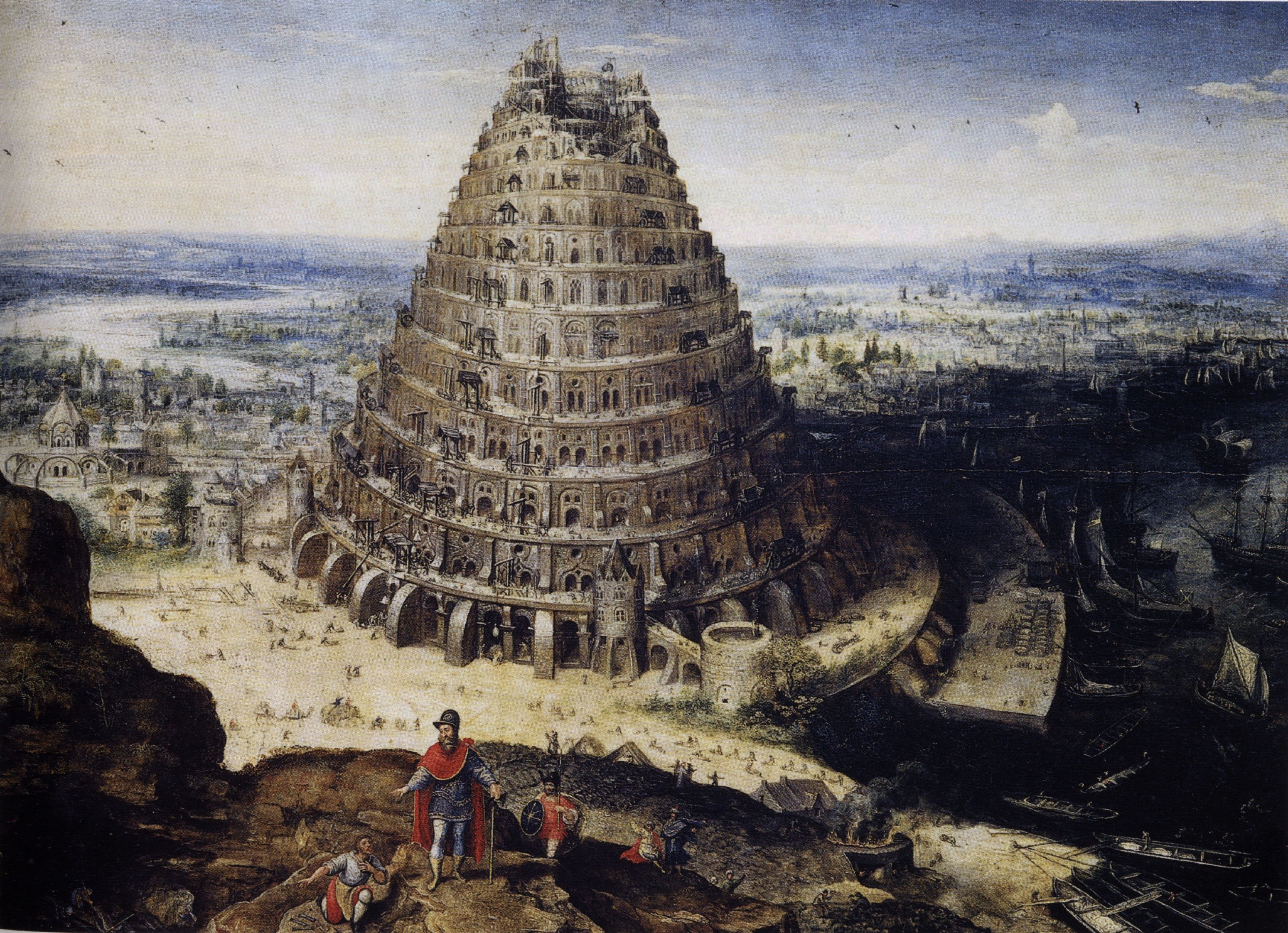
While playing Prince of Persia: The Two Thrones earlier today, I realized that the Tower of Babel is in the background in one of the levels. This is an image of the tower in-game. Serious Sam: The Second Encounter is another game which has a level named "The Tower of Babel", and it looks like this. I then did a search on the Tower and there are several different paintings of it, such as this or this
If the Tower is a myth, what was the inspiration for the Tower that led the artists to paint such different renditions of the same structure?
EDIT: my question is along the lines of whether we know about a 'real' tower of Babel, and whether there is/was there a real life building that the myth is based on.
1 Answers 2017-03-22
1 Answers 2017-03-22
1 Answers 2017-03-22
Additional question, did American Natives have some connection to Pacific Islanders?
1 Answers 2017-03-22
The Habsburgs seem to have a well developed musical sensibility. Did any of them play or compose music?
1 Answers 2017-03-22
[deleted]
1 Answers 2017-03-22
Pomerania was held and inhabited by Germans since the High Middle Ages. East Prussia was German since the Teutons, and the Germans remained there after Polish annexation to eventually become Prussia. Silesia had been Prussian territory ever since it was taken from Bohemia in 1742. So why did the Soviets annex East Prussia into Russia and give Silesia and Pomerania to Poland, when Germans had lived and ruled there for centuries? Furthermore- why did Stalin expel the ethnic Germans and replace them with Poles, when he had just avenged Lenin's defeat by the Poles in the Polish-Soviet war?
1 Answers 2017-03-22
I love John Keegan's work. particularly A History of Warfare. And, obviously The Face of Battle. His concept that man is, at his core, a violent creature makes sense to me.
But that's not what I'm asking here. I'd like to know if his writing is purely for commercial reasons. I've always loved it, but then I found this subreddit. I'd like to know other's opinions. His idea that war is something that humanity just does makes sense.
Is Keegan just writing for commercial reasons, or do his opinions and evaluations of warfare stand in an academic sense?
1 Answers 2017-03-22
Akechi Mitsuhide attacked Honnô-ji temple with around 12,000 men, although something I don't understand is how he convinced his men to do so.
He had been ordered by Oda Nobunaga to lead his troops down in the south. Instead he turned around and attacked the temple Nobunaga was residing at.
As far as I know, Mitsuhide and his men were all under the command of one man; Oda Nobunaga. Mitsuhide's men would have had to have known they were attacking Oda Nobunaga at Honnô-ji, and I really cannot think of a really good reason how he could convince 12,000 men to do something like this.
Plus, even afterwards what did Mitsuhide and his men think was going to happen after they killed Nobunaga? That Hideyoshi wouldn't just find and kill them all?
This is a question that's been bothering me for a while now, and I would like if I could get an answer for it.
1 Answers 2017-03-22
2 Answers 2017-03-22
And if so, is it exaggerated? I've read quite a lot of books about the Ottoman Empire and none of them mentions it. The only book that describe it as a genocide/massacre is "The Fall of The Ottomans" by Eugene Rogan, and In "The Encyclopedia of Ottoman Empire" it's said that they were indeed attacked, but most of them survived and later fled Turkey (So it's not a massacre or genocide)
1 Answers 2017-03-22
Tried a little research on this but couldn't find anything really. Anybody got some nice sources for this? Thanks.
1 Answers 2017-03-22
Ive been reading about the breakdown of different medieval countries, and it's a bit confusing when it comes to duchies, counties, earldoms or marches or baronies (which I know least about)
It seems that duchies were a lot lik e small kingdoms, so would a duchy sometimes be composed of counties? Could a count or earl be subject to the duke? I haven't found many historical examples, only superficial articles. So I'm hoping someone can provide me some examples.
I've seen examples of the reverse, where a duke might win over an independent county and therefore be titled duke of this and count of that...but doesn't the duke have some sort of administrating vassal under him?
It seems a baron is lower on the rung, but they too seemed have a lot of power. Who were they immediately subject to? I'm sure in some cases and in some points of history, they were subject to the king, but were there some who would be subject to a duke, following some sort of flow like this: baron <duke <king....could there be cases like: baron <count <duke <King...any examples?
Ok last question, what is the breakdown of duties in these titles? I've read that earls and sheriffs had administrative roles. I've also read of actual exampkes where they had military roles...did it just depend on the situation and location of land?
Thank you.
1 Answers 2017-03-22