I know "historical revisionism" might carry some negative connotation with it (at least in the general public), but this question is only based on a neutral historiographical standpoint. I'm merely considered with current historical research, and I'm sure revisionism plays a large role in that.
Ignoring any sensational or irrational revisions (unless they are noteworthy to discuss), what are some topics in your field that are currently being interpreted differently than what the general public is used to?
7 Answers 2016-03-31
Ben Kingsley's character rails against them in one scene (that I can't find on Youtube.) If there's any accuracy to this movie, this would seem to suggest that the 50's were a transitional time in the treatment of mentally ill patients. Is this the case?
What were some of the major obstacles in advancing the treatment of the mentally ill?
7 Answers 2016-03-31
Here's a link to the section of the intro.
The way it's depicted in this seems a bit unrealistic; I would assume that people were smart enough to realize that the movie was just on the screen, but were there any occasions where this was not the case?
1 Answers 2016-03-31
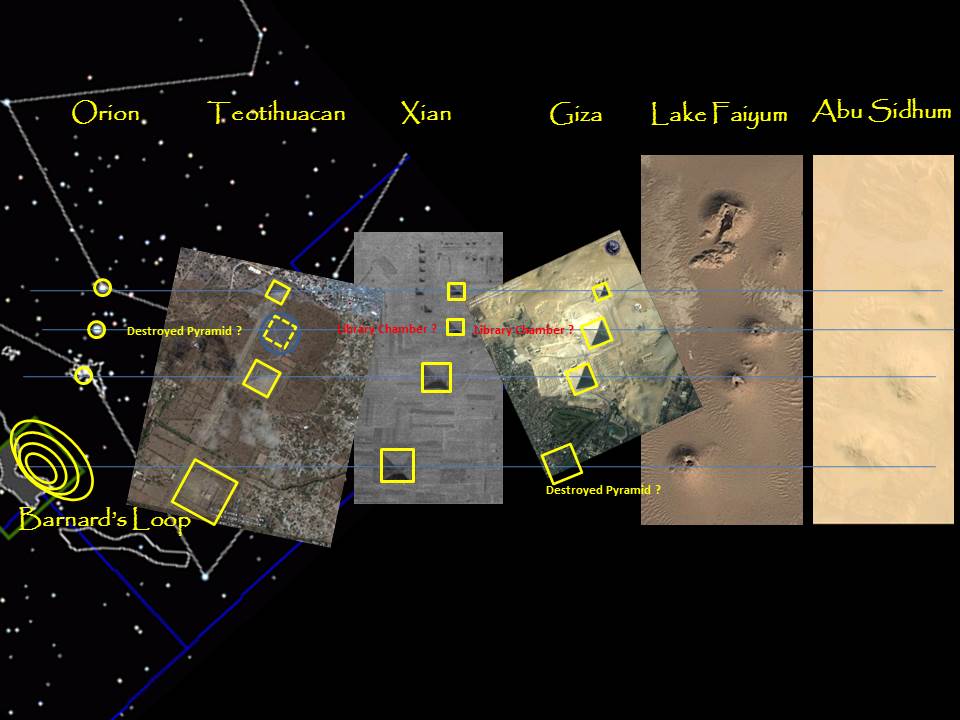
This bothers me so much. What are the chances that the pyramids were used for wireless electricity, similar to what Tesla theorized? Could the Atlantians have actually been an incredibly forward thinking civilization that, when their land began to be lost to the ocean, spread out across the world? That would explain the pyramids all having a similar shape across the world and the boat underneath the sphinx in Egypt
Listen, I know this may sound crackpot. I'm well aware. HOWEVER, if stories of a Biblical flood are true, (which every culture seems to have one, it seems plausible) then histories and culture could have been washed away. Things like the Antikythera Mechanism could also be explained easier this way.
Please, if you have any info on anything related to this, I'd love to read it. And also, if you could, upvote this post. Obviously I won't get any karma from it and it would increase my chances of hearing differing opinions on this. thank you
TL;DR Could ancient civilizations have had technologies that we don't know about? Was Atlantis perhaps a real place? or am i a crazy boy
2 Answers 2016-03-31
2 Answers 2016-03-31
2 Answers 2016-03-30
I am wondering not necessarily why he was murdered, but what were his policies that led to his demise.
As far as I understand he somehow threatened the Senate and was very popular among the commoners, but what exactly was he trying to do?
1 Answers 2016-03-30
I'm reading the book "German Aces Speak", and one of the pilots mentions that often times Soviet pilots would attempt to ram their planes into other aircraft when they ran out of ammo. Was this a common or encouraged tactic? Did anyone else use this tactic? Was it assessed to be effective i.e. Soviets could build and replace their aircraft faster than the Germans? Did anyone survive to try this multiple times?
2 Answers 2016-03-30
I hear this quite a bit, and especially from Conservatives for obvious reasons; that Ronald Reagan/Reagan's policies were directly responsible for the fall of the Berlin Wall, the breakup of the Soviet Union etc. That said I've heard from Russian friends it was inevitable anyway and yet another theory is that the Pope's policies helped contribute to it.
Any truth to any of this?
1 Answers 2016-03-30
How do historians determine fact from hypothesis besides artifacts and the likes. If history books are often times written based on geographical distribution and the winners wrote history, where do historians obtain valid information regarding historical events, and how do they know what they know is the truth? If this makes sense..
1 Answers 2016-03-30
1 Answers 2016-03-30
I'm from Malta and the word Ottoman is never used. We (including historians) say "In 1565 Malta was attacked by the Turks". Shouldn't the word Ottoman be used instead?
3 Answers 2016-03-30
1 Answers 2016-03-30
For example, did the Romans have "museums" or take any care at all to preserve the ancient artifacts they found during their time?
1 Answers 2016-03-30
I am aksing this question because of my grandfather, who was captured by the Russians on this date. He initially was in the "Wachbattaillon" in Vienna (which as far as I know was never deployed to the front), but was transferred after about one year to the eastern front, where he allegedly was a sniper. I don't have any more info unfortunatly, apart from an foto from his first unit. (I'm not sure if am allowed to post that...) My grandfather mentions this date a few times in letters sent from captivity and in his c.v., so I am pretty sure the date is accurate. Apart from that I haven't got anything. He never really talked about this time to anyone and didn't leave any fotos or other documents. Unfortunatly I have not been successfull in finding any information via google and other forums. No site mentions any big defeats or ocurrences at or around this date on the eastern front. I have asked for papers from the WASt, but have not heard from them yet.
So guess this splits up in a few questions:
I really hope somebody knows more than I am capable of finding and that I didn't overlook some obvious sites or clues. Thank you very much for your help.
Bonus Question: Does anyone have more detailed info about the Wachbataillon in Vienna? (apart from the first few pages of Google...)
edit: Two letters from Captivity: removed because oft rules
3 Answers 2016-03-30
Hi, thanks for reading this. I'm a degree student in French and Spanish and have been tasked with writing on the impacts the SCW had on World War 2. To be frank, I'm struggling to think of new ideas and reasons that they are as closely linked as I'd originally thought. The key points I had thought of including in my essay are as follows:
-The bombardment of Guerníca and attacks against civilian populations paved the way for events such as the Blitz/Bombing of Berlin and Tokyo. They were organised by a General called van Richthofen who devised tactics for the same type of attacks in World War 2 against the allies.
-The Spanish Civil War concealed the German re-mobilisation, or at least took the League of Nations' prying eyes away from it. Germany was already occupying territories within the interwar period and it's likely that this could have been avoided were the League of Nations not so pre-occupied by the events happening in Spain.
Tank and Aircraft tactics developed during the Spanish Civil War were replicated in the Second World War - and also the rudimentary tanks in the SCW showed weaknesses and gave the Russians/Germans who had sent tanks there scope to improve their tanks and they did so with the introduction of the T-34/Panzer 3/4 tanks (Not sure on the credibility of this, it seems likely but I've not got that far in my essay yet).
Franco had agreed that as a result of the German aid during the Spanish Civil War, he'd provide the Germans with munitions, food etc. during World War 2. He also allowed 'volunteers' to fight for Germany against the Russians during Operation Barbarossa.
Unfortunately, I can't escape the feeling that I'm missing some glaring key points here. If anyone is able to elaborate on my previous points, I'd be glad to converse with them further about it. Similarly, should anyone know any other reasons in which the Spanish Civil War impacted World War 2, that would be absolutely brilliant.
Thanks.
5 Answers 2016-03-30
Why did this occur? I've always have been fascinated with the stagnation of China, but never knew why. All i've ever read was that China (yuuuuuuge country with many many people) was technologically ahead but for some reason, despite having millions of people and lots of land, wasn't able to dominate like countries like France or Great Britain, or the domination they did do was downplayed? How does this work, where the world's largest and most populous country wasn't able to beat the west, who were divided, constantly at war, and had lower population overall. Just how does this technological advancement stuff works anyways? Bonus points if you answer the second question
1 Answers 2016-03-30
Also I'd like to know how Greek writing became homogenized or even if it was before the unification under Alexander the Great.
1 Answers 2016-03-30
Mostly referring to the Great War here. I know more about the Second World War than the First to the point that I don't consider Soviet military tactics to have been "human wave" as such - they were, after all, desperately trying to push the Nazis out - but I know considerably less about their previous wars during their truly Imperial timeframe. When you read about battles such as Tannenberg and the Masurian Lakes in 1914 for instance, you hear a lot about how their units were poorly equipped and supplied and about how all the other major powers, particularly the Germans, considered them to be pushovers and scarcely worthy of great power status. Were the Russians truly pushovers? What contributed to the supposed low quality of their military? How could they have rectified these issues to produce higher quality soldiery?
1 Answers 2016-03-30
Essentially my teacher said that when John Adams was succeeded by Thomas Jefferson it was the first time executive power was peacefully transferred between two groups of differing ideologies. I am assuming she was lumping George Washington in as a Federalist for the purposes of this statement although he wasn't officially a member of the party.
I understand this is a little vague and I'm also a decade late on asking this so there's a good chance I'm forgetting a qualifier but are there reasonable interpretations where this statement is true?
2 Answers 2016-03-30
I read through the Meta Rules Roundtable #8: The /r/AskHistorians Homework Policy post and wanted to learn more about one of the examples.
I'm writing an essay on the development of the bolt-action rifle, and the effect it had on warfare in the latter-half of the 19th century. I've mainly been focusing on the Austro-Prussian War, and the clear dominance that the Dreyse showed over Lorenz Rifle, and the Franco-Prussian War, where the Chassepot in turn showed itself to be superior to the Dreyse. What I'm tripping up on however is why, after its strong showing (even if the French lost) the Chassepot so quickly was regarded as obsolete. If someone could help me out here, or point me in the right direction, that would be great!
First of all this is all new to me. While I've read the Wikipedia pages for each of these weapons, they don't come close to answering the question above. Also, some additional questions below.
3 Answers 2016-03-30