1 Answers 2016-03-04
And it's always the same type of curly hair. I noticed that they usually braided their hair when they went to sleep - is that how they kept it curly? Or is some aesthetic Hollywood choice?
3 Answers 2016-03-04
I'm looking for information on actual, verified engagements between American-manned M-4 Sherman tanks in the European Campaign (as opposed to N. Africa and Mediterranean/Italy). I heard about a researcher who claims that there were only five engagements of Tigers in the campaign (four by Shermans, one by a Pershing), and it seems a little low, especially when the Brits and Canadians had so many fights with Tigers during Goodwood. I also want to find out more about these particular engagements.
2 Answers 2016-03-04
Or were the Phoenicians just a subset of the Israelite culture? I've read both ideas.
2 Answers 2016-03-04
Especially toward the end of the Western Empire, 'barbarians' or those with 'barbarian' descent such as Stilicho often played important roles in the administration, if not outright holding power themselves, and I've seen estimates as high as 60% of the late antiquity Roman army being composed of non-citizens.
When these people were brought into the fold, did they take on Romanized names, or did they continue using their Germanic/Celtic/Gallic/Thracian/whatever naming conventions and languages?
2 Answers 2016-03-04
Did their surrender to Germany mean that they were still at war with Japan? Did they make any significant contributions to the war?
Thank you!
2 Answers 2016-03-04
1 Answers 2016-03-04
1 Answers 2016-03-04
Looking at the map, it seems to me that one strategy to consider is hold in the south and then attack in the north with a Battle of Inchon-type invasion rather than get bogged down in the south. Was this considered?
1 Answers 2016-03-04
My g-g-g-uncle was a member of the Illinois infantry, and died in Tennessee in the early years of the war of "brain fever". His family were poor farmers. Is it likely he was buried near the camp, or would his remains have been sent home?
1 Answers 2016-03-04
1 Answers 2016-03-04
During the Cold War (specifically the later half), to what extent were East Germans less well off than West Germans? Specifically, were there differences in diets and nutrition? If so to what extent?
If the East Germans did have inferior nurishment, was this due to lack of agricultural productivity of East Germany or else a movement of resources from East Germany to other Soviet states or Soviet satellite states?
1 Answers 2016-03-04
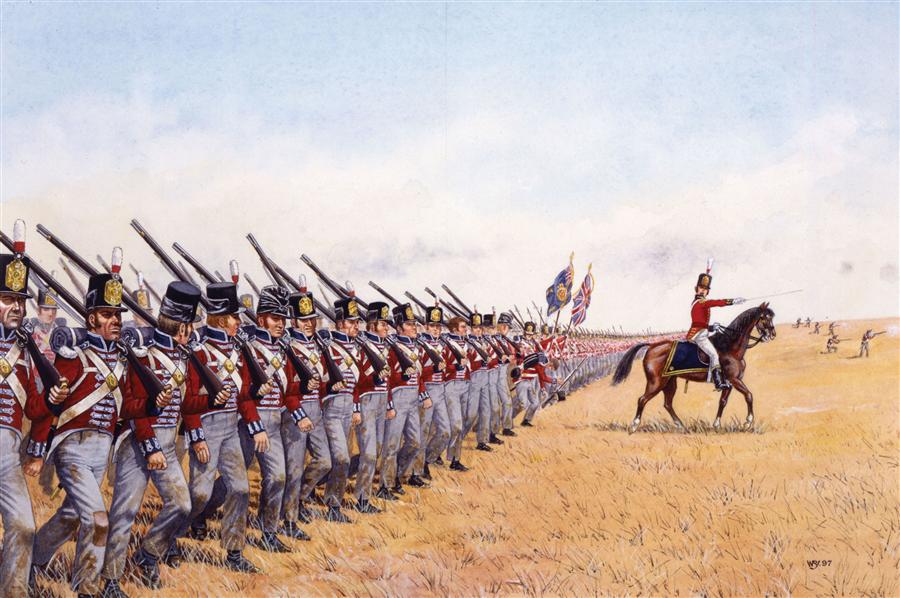
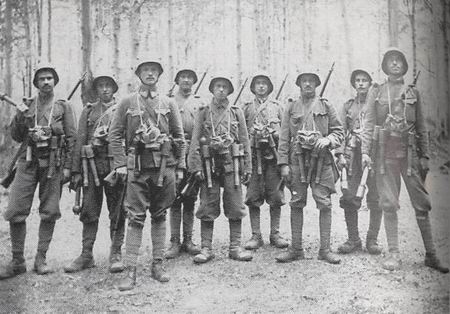
I realize my question may be phrased confusingly, so I'll try to narrow it down: what are some of the factors that drove the transition from line-based infantry battles (like here) to squad-based battles (like here) like in WWI? Please feel free to clarify any misunderstandings on my part. Thank you!
4 Answers 2016-03-04
This question came up whilst discussing the finer points of Zeffirelli's Hamlet and, not being a Shakespearean scholar of any sort, I was curious: was the Oedipal Hamlet a construct that came about in the 20th century, or was it fairly explicit in the text and interpretations prior to Freud?
2 Answers 2016-03-04
Is this looking through the frame work of a Christian God in early translation efforts (in the same way 'thou' and 'canst' slip in), is it Bertrands interpretation of ambiguous terminology, or is it part and parcel of theological philosophy of the time where God as truth (rather than personal) was held in equal likelihood or value as polytheistic personal gods or monotheistic animal gods.
Edit: figures in the pre-socratic era such as Parmenidies, Anaxagoras, Protagoras, and even Socrates himself.
2 Answers 2016-03-04
The United States are practically the only democracy where (unless I'm wrong) two parties have a practical monopoly on the political landscape. Even in countries where only two parties have a decent shot at controlling the government, you expect some other parties to make up a significant fraction of the legislative body, compete in all the elections, and probably hold local executive offices. By contrast, according to Wikipedia, there are currently 2 independent US Senators (1 if you don't count Sanders), 1 independent governor, and 0 independent members of the House. Is there any particular reason the political landscape in the US developed very differently from other democracies? Is there any de facto cooperation between the Republican and Democratic parties in preventing the emergence of a third party?
2 Answers 2016-03-04
I am doing some reading and the Annales School came up. I don't know if this helps, but I will add the books below. Thanks!
Cohen, Lizabeth. Making a New Deal: Industrial Workers in Chicago, 1919-1939 . Cambridge; New York: Cambridge University Press, 2008. Gerstle, Gary. Working-Class Americanism: The Politics of Labor in a Textile City, 1914-1960 . Princeton, N.J.: Princeton University Press, 2002.
1 Answers 2016-03-04
1 Answers 2016-03-04
If so, did the Jacobites ever come close to achieving the goal, or was it a fantasy that it was even possible?
3 Answers 2016-03-04
I was reading War for All the Oceans by Lesley and Roy Adkins and it said that he didn't (unless I read it incorrectly) but according the Wikipedia article he did. Interestingly enough, Wikipedia cited the same book.
1 Answers 2016-03-04
My mothers family came over in 1961 and I have recently begun a journey to try and locate information. I was hoping to locate something similar to what Ellis Island has but it seems that does not exist. I have requests in with the Miami Tribune and the Miami Dade College but haven't had much luck with them. Any help would be greatly appreciated. Apologies if this is not the right subreddit.. If I should be asking somewhere else please let me know. Thank you!
1 Answers 2016-03-04
I was discussing the far-reaching effects of WW2 the other day, and my friend said something about how differently Germany and Japan were treated by the victorious Allies at the end of the War. I immediately assumed they meant the building up of Japan's economy, and replied "Well, they needed Japan strong to fight Communism." My friend replied that Japan was actually treated far worse!
Is this true? I was under the impression that, as I said, Japan was built up as a puppet for use against Communism in SE Asia. Of course West Germany was built up for a similar purpose in Europe. But Germany's entire system of government was dismantled and rebuilt from the ground up. I realise it's a superficial measure, but Japan got to keep their Emperor.
Who had it worse?
2 Answers 2016-03-04
trying to compile a list
of all the sieges
that Alexander the Great did.
these are the ones i found so far:
anybody know any others?
many thanks!
2 Answers 2016-03-04