It appears to me that Britain's real contribution in WWII was the quality of troops, rather than the quantity - yet she still had a large "commonwealth" (as an American - this idea is a bit foreign, although it obviously shouldn't be) -- why wasn't the UK/Britain able to mobilize more substantial a fighting force in WWII, especially considering American support?
3 Answers 2016-02-21
1 Answers 2016-02-21
Or in other words, how free was the freedom of movement in the British Empire?
1 Answers 2016-02-21
I recently was assigned to write a report on the causes of the First World War and was wondering what effect did Sir Edward Grey have? and if there are any books that also go into detail about what effect he may have had?
1 Answers 2016-02-21
I am currently doing some research on the decline of the Ottoman empire and the title of young seems somewhat recurring, i.e.'the young turks' or 'the young arab society' does 'young' mean something different in this context?
1 Answers 2016-02-21
At least in modern blacksmithing there is a lot of mockery for anvils that are not steel which makes me wonder. What did people use before steel? Did they just use iron? Stone? Brass?
In say Octavian/Agustus's time? The 12th-13th centuries?
1 Answers 2016-02-21
The Germanic tribes had nearly identical cultures and language but they seemed to remain tribes and never formed any sort of kingdom until after Rome fell and they land grabbed.
Why did they never confederate into one massive tribe?
Why did no one tribe ever manage to conquer and absorb the rest and build a kingdom/empire in Germania?
The Germanic tribes seemed to have lived the same type of life style for hundreds or even thousands of years before Rome fell.
After Rome fell and the Germanic tribes land grabbed, why did they then decide to settle and build up rather than remain tribes like they had always been?
1 Answers 2016-02-21
1 Answers 2016-02-20
Or were they limited to words like light blue, light green, dark pink etc? I'm wondering since it's not like you often hear someone named Mr. Magenta, or Mrs. Cerulean, but more commonly hear Mr. Brown, Mrs. White, etc.
*edit: I should specify - in English.
1 Answers 2016-02-20
[deleted]
1 Answers 2016-02-20
I'm currently working on making a series of novels of mostly 18th-century historical fiction stories involving how North America was colonized so much over the majority of the 1700's.
My first story starts in the final years of the Queen Anne's War (1711-13) where conflicts between Pirates, the British, Spanish and French arise, they all plan to seek control and influence in the islands of The Bahamas, Cuba, Jamaica, and Saint Domingue.
Now here's the part I need help with
I know that the European part of this war was called the Spanish War of Succession. I know that England, Spain, France, Portugal and The Netherlands had their navies battling each other in Europe.
The Big Question, with the answer I really need
If Britain, Spain, and France were able to colonize the Carribean, establish settlements, AND send ships from their navies there, were the Portuguese and the Dutch able to do the same thing? (around the 1710's period and the specific islands, I mentioned above?)
I've done tons of research on my own, before asking this, and I wasn't able to find anything, so I'm asking here for a chance for a definitive answer.
This is a crucial part of my story, with or without the Portuguese and Dutch involvement, it will alter the entire plot, so I must really be certain about their whereabouts during this historical time period.
I thank anyone so much who is able to answer this. You are helping a future author/novelist with big dreams.
1 Answers 2016-02-20
1 Answers 2016-02-20
From what I can tell from reading the saga texts (e.g., Njal's Sags, Egil's Saga, Laxdaela Saga), it wasn't a very good place to settle. The journey was dangerous, long, and expensive. The land wasn't hospitable. And there was plenty of free land to be had by force all over Northern and Western Europe.
The only thing that I can see as a draw is the prospect of just starting over in a new place where people have essentially never lived before, bar a few wayward Irish monks. I was wondering if anyone had any insight on why people actually made the voyage and decided to settle in such a hostile place.
1 Answers 2016-02-20
In video games and movies spies and soldiers often "meet up with the Resistance" to collect information or be guided to a target. Was there some kind of central command structure coordinating such activities or was everything done on more of a case by case basis with whatever disgruntled French civilians happened to live in the are of operations?
I'm also interested in general information about France and the resisrancd during this time period. Did the resistance have internal politics and ideological power struggles analogous to the various IRA schisms?
3 Answers 2016-02-20
1 Answers 2016-02-20
I have some questions and I was wondering if anyone could answer them for me.
What sort of dishes did the commoners eat?
What sort of the dishes did the nobles/royalties eat?
Was the food mostly bland or did they have a variety of spices to use?
What were some of the techniques used to cook their food?
Are there any books that I can find which talks about making medieval food?
Thanks in advance!
2 Answers 2016-02-20
So, my history teacher (9th grade) briefly mentioned that some historians and professors he met suggested that Adolf Hitler had an inappropriate, sexual, relationship with his mother. Is this true? Were they really that close, and if so, sexually?
1 Answers 2016-02-20
I've read recently of the three name system (ie. Lucius Cornelius Sulla), and that the Praenomen declined in the Imperial years, to the point where by the mid fourth century it was no longer recorded in public records. Please correct me if I'm wrong, I'm guessing someone like our dear friend Lucius Cornelius would be called "Lucius" by his close friends, and Gaius Julius Caesar would be called "Gaius". But what happened when Praenomen's became so common they were no longer used? What would, say a Roman of the fourth or fifth centuries call their family members if they were no longer using Praenomen's? They certainly wouldn't use the nomen, the family name, because EVERYONE at the family gathering had it, and they couldn't use the cognomen either because that had by this time become pretty much hereditary.
I'm stumped. Without resorting to the anglicized names modern historians like to use (ie. Constantine the Great for Flavius Valerius Aurelius Constantinus Augustus, or the description of the "house of Constantine" when "Constantinus" was really his cognomen, I suppose), what would intimate family members call each-other? I'm not familiar with Latin, so I'm not sure how all this evolved, or even what the names mean in general, but I've noticed that the three name structure seems to disintegrate by the later Empire (the period I'm most interested in). Maybe it's just the books I'm reading at the tendency to call historical figures by their cognomen, but names appear an absolute mess. Take Flavius Stilicho, for instance-- history just calls him "Stilicho", but it looks like he has the same praenomen as the Emperor Flavius Honorius, but a very Vandal-sounding cognomen. I'm not sure what his nomen is...
So in other words...
With the disintegration of the Praenomen, what would you call people in an intimate setting?
How would Barbarian immigrants Latinize their name? Take Stilicho, for instance... what elements of Latin did he incorporate to make himself seem more Roman? And what's the deal with this "Flavius" business anyway? I get it that the Flavians were a big dynasty earlier on, but that all ended in A.D. 96 when Trajan came along... so why are were beset by "Flavius Constantius", "Flavius Honorius", "Flavius Ricimer", "Flavius Theodosius," etc.? Was the Praenomen (or the nomen... dammit I'm getting confused) really that common?
Apologies for the above really being multiple questions, but finally... what would be the Roman way of saying "Mister" or "Misses"? I get "Domina" or "Domine" (Ie. "Domine Patri et"), but if you're approaching somebody from a non-servile position... how would you go about indicating respect? I've imagined the curile class being addressed in some form of "your honor," "the honorable" or "your excellency", but if you were, say, conducting business with Gaius Julius Caesar the Elder, and you'd gotten past honoring his Senatorial status, would you simply call him "Gaius Julius?" (Not, hopefully, "Caesar", "the curly-haired one", because that would be monumentally awkward). How would this change in the Later Roman era?
I appreciate any help you may provide...
Tu Vincas, Reddit!
-- Severian the Torturer
2 Answers 2016-02-20
I've been reading Halm's quite positive account in one of his books and was wondering if there's any other secondary works that anyone could recommend.
My university library is pretty poorly stocked on this period, so if anyone knows of any journal articles or PhD theses which cover the topic, I'd be very grateful.
1 Answers 2016-02-20
Hello everyone,
I tried to search a few sites and posts in here to find some kind of explanation of how combat using warhammer worked. Aside from some information like this: "The major advantage is the ability to transfer energy through armor, as well as to cause disabling dents", there isn't much about the combat itself.
I wanted to know a few technics using the warhammer as the main weapon of combat. There is any where that I can find? Or any information that you can provide me with?
Thank you so much for your attention and I am glad for any type of help you can provide me.
2 Answers 2016-02-20
So I know this is a but of a silly one and possibly a no-brainer but did their tall tower structures have stairs? I mean with the way the eves are teired they seem like very short levels, but this could possibly just be my eyes fooling me. Some also look very very skinny so perhaps a ladder? I know it may but a tough question because I know many traditional Japanese structures were destroyed in the 1920's earthquake as well as collateral damage from WWII. I'm just curious.
1 Answers 2016-02-20
So I've been upvoting a lot of very interesting questions lately and checked back on them within a few days after, but they never got any decent answers. (My personal rule is if my question hasn't been answered after 6 days, I delete it and re-post it a few days after)
The subreddit even has a day called "Sunday Digest" for all the overlooked and unanswered questions.
Apologies since this question has nothing to do with history itself, but it would be better if AskHistorians can be a reliable source for all questions posted. (it's still very reliable, it's just some posted are overlooked)
How can we improve on being able to answer everybody's questions?
5 Answers 2016-02-20
I am looking at the MA program offered at UMass. In addition to their classes offered in Boston they have online courses you can take if you live out of state. I haven't seen too many MA degrees in history offered online before. Has anyone completed a history degree online? What did you think? I am a high school teacher to me it would offer flexibility. Also, is UMass a respected college? Much appreciated.
2 Answers 2016-02-20
When we look at old world maps from the age of discovery and the colonial era, they are approximations with a lot of the landmasses distorted/incorrect-looking
For example, this 1798 map: https://commons.wikimedia.org/wiki/File:1798_Payne_Map_of_the_World_%28pre_1800_American_Map%29_-Geographicus-_World-payne-1798.jpg
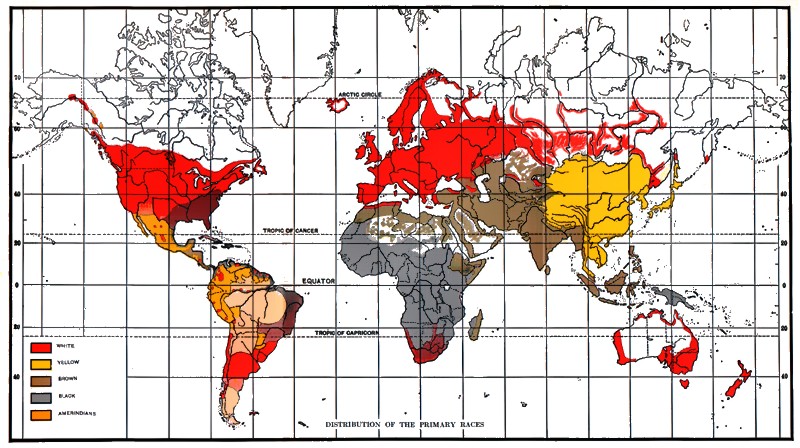
And this 1920 map: https://upload.wikimedia.org/wikipedia/commons/2/21/Stoddard_race_map_1920.jpg
Very different, 1920s map looks indistinguishable from a modern map. So I am guessing that such indistinguishable maps came around in the 19th century. Does anyone know pecisely when?
2 Answers 2016-02-20