In other words, if you bought something, did you get change back, or did coins bestow to you some kind of "clout" that allowed you access to goods and services?
4 Answers 2016-01-19
The history of the western slave trade seems to be throughly documented, but most publications I find about non-western slave trade are either deemed controversial or are written by people who are labelled as such. And if my presumption is incorrect, could you direct me towards trustworthy publications about the recent (say, the 1500 - 1950 period) non-western slave trade?
5 Answers 2016-01-19
In L.Deighton's book: Blitzkrieg, he says that: "If there was one factor above all others that was to lead to Hitler's downfall, it was his absurd obsessive hatred of Jews. In the field of science alone, the persecution of the Jews deprived Hitler of military technology he would desperately need. A Nazi regime without anti-Semitism would have probably have had some form of atomic warhead and V-2 rockets to deliver them by the late 1930s. Thus I am of the opinion that but for his anti-Semitism Hitler night have conquered the world" How far would anyone agree with this? What was the drain on research and the economy by the anti-Semitism on the Nazi Reich?
1 Answers 2016-01-19
Going by Wikipedia, the chopsticks were invented in the Shang Dynasty in Northeastern China. How did the chopstick then spreadthroughout so many different Asian nations? Didn't they have different utensils for cooking and eating? Replacing these tools must have been a huge cultural change and I am interested how this came to be.
1 Answers 2016-01-19
Were there, for example, Greek speaking people in the Ottoman Empire who considered themselves Romans rather than Greeks?
If there were, when did their cultural identity shift to "Greek" rather than "Roman"?
2 Answers 2016-01-19
I'm aware that that some in Argentina and the US did not think that Britain would be able to retake the islands from Argentina. Does this mean that Britain got lucky and won against the odds? Or was it more an evaluation of Britain's willingness to fight than its military capability?
Follow up question: was there any single "key moment" in the war which went Britain's way, without which Argentina would have won?
3 Answers 2016-01-19
To expand, when the Roman Republic/Empire deified a human, what did they think they were doing? Did they think they could make someone a god, were they revealing something that had always been true, was it an ancestor worship thing or was it something else I haven't thought of?
1 Answers 2016-01-19
I was recently in Israel, and talked with an jewish man, with an ethiopian background, about the Law Of Return that allows everybody with a proven jewish background to live in Israel and become Israeli citizens. He talked about the problems with ethiopian jews, and that they where invited in the 1980's and early 1990's, but had experienced many problems with being integrated into isreali society. I have had problems finding quality information on this problem, maybe somebody here can help me get a better understanding of this issue?
2 Answers 2016-01-19
This is primarily a question about demographics. The mainlanders, known as "waishengren (外省人),that arrived following the handover of Taiwan to the Republic of China from Japan after the end of the second World War, dominated Taiwanese politics until the 1990s. I'm told that "many" came over and the massive influx of people helped fuel the tensions that led to the 228 incident, but it's not clear just how many came, and where specifically they came from (and what dialects did they speak). Previous to this, "most" of the Han Chinese in Taiwan were Hoklo and Hakka people from Fujian province.
A side question is whether or not many of the new waishengren arrivals were not themselves native speakers of Mandarin, but of other dialects of Chinese, and if so, which ones? The KMT government imposed Mandarin on the locals, trying to stamp out usage of Hokkien and Hakka, but did they have to do the same to the incoming waishengren as well?
1 Answers 2016-01-19
Alternatively, how many people did it carry from east to west?
How was it all decided? Were there competing bids from different companies? Did the government get priority because of deals with the railroad companies?
1 Answers 2016-01-19
Prime Minister David Cameron has condemned Trump's remarks about Muslims as "divisive, stupid and wrong," but he and other senior officials have said they do not think Trump should be banned.
And it made me curious if this is a first, or if this is historically a thing. I've never noticed it before.
2 Answers 2016-01-19
I'm from Australia and my father recently passed away. This was in his box of collectibles, my mum assumed it was from my grandfather as he fought in WWII. I'm pretty sure this is of the Vietnam War era though? My grandfather did have a habit of trading things down at the local pub...Any insight would be great :) http://imgur.com/a/OgNjo
1 Answers 2016-01-19
This question is really just about animal rights in the USSR and the US.
1 Answers 2016-01-19
[deleted]
1 Answers 2016-01-19
I ask this specially because in a lot of cases the sources contradict each other. For example, in the case of Polynesian contact the wikipedia article quotes a nature article that says it was likely while quoting a science article that says it's unlikely.
edit: this is the article
1 Answers 2016-01-19
forgive me if i'm an idiot
2 Answers 2016-01-19
I haven't seen much discussion on this, and as a Hispanic American whose hispanic side (I'm half Caucasian and half Panamanian) was not living in America during these periods, I'm very curious about this matter.
1 Answers 2016-01-19
I once read that Oliver Cromwell modelled his style of calvary warfare on Gustavus Adolphus in the Thirty Years War, and was intrigued to know whether this was true and what the other major develops in cavalry warfare were.
4 Answers 2016-01-19
[deleted]
1 Answers 2016-01-19
(Spoilers to a book from 100+ years ago I guess) Obviously the book is fiction written in the late 19th century, but the beginning of the book when Hank Morgan is transported back to the six century he experiences the extreme punishment for petty crimes and very stringent class divides with an oppressive system of church and kings rights ( along with slavery).
How accurate was this? How did Mark Twain research on this?
1 Answers 2016-01-19
Right now in Syria armor add-ons are very common, You can see them here http://imgur.com/a/sQQ4Y
How common and what kind would we see during WW2?
4 Answers 2016-01-19
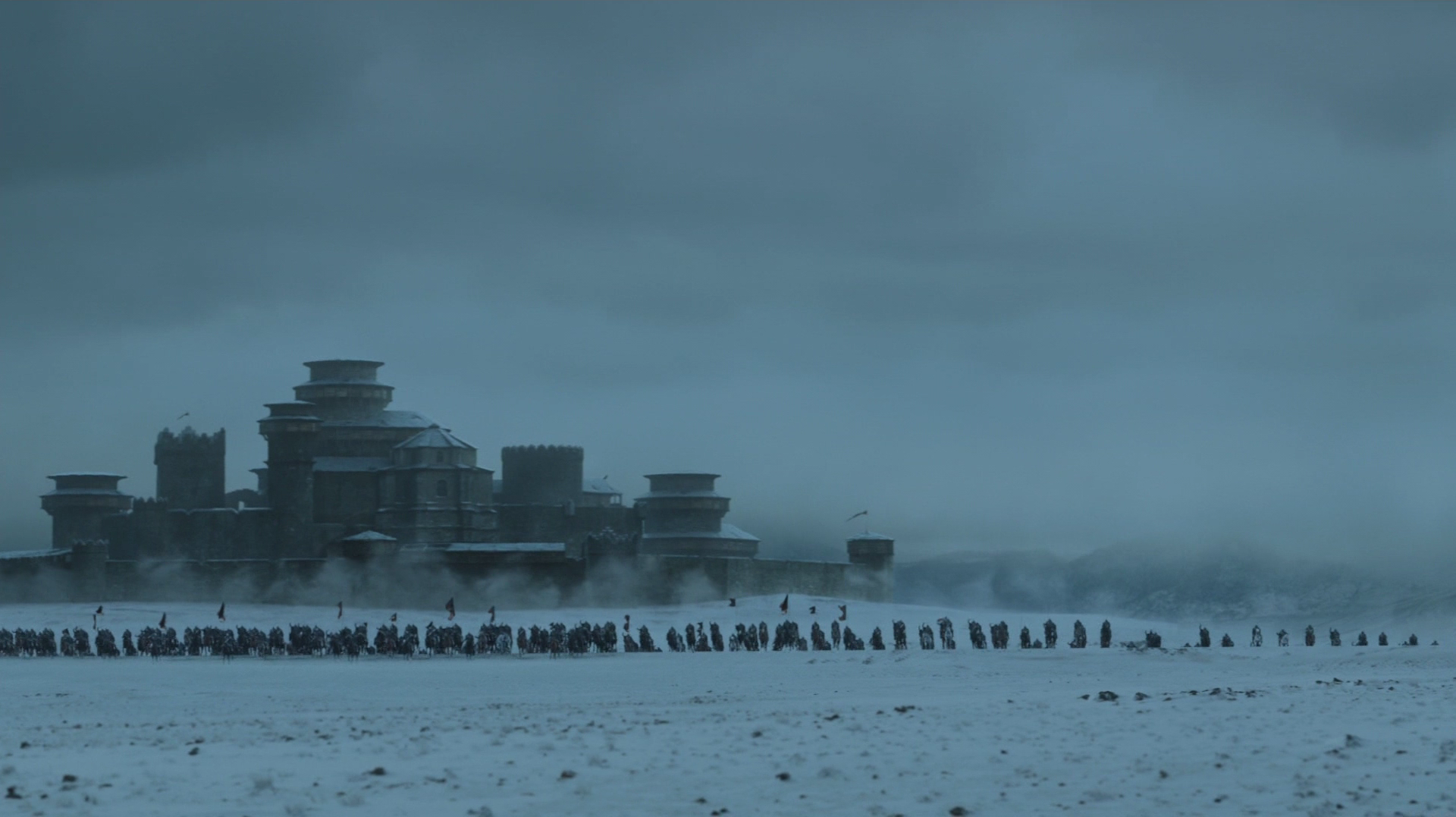
I've been watching game of thrones and I noticed in season 5 episode 10 a castle called Winterfell http://vignette4.wikia.nocookie.net/gameofthrones/images/3/38/Battle_of_Winterfell_1.png/revision/latest?cb=20150616103054 and if that doesn't suffice it is described as being probably 12-18 acres and having 100 foot high walls and being similar to Kenilworth Castle https://en.wikipedia.org/wiki/Kenilworth_Castle That somehow contains, and feeds what I've heard estimates put it at roughly 5,000 soldiers not to mention all of the peasants that would be inside. Historically throughout the medieval ages did anyone have this many people in a single castle and if so how would they house and feed all of them? I can't imagine how a single castle could contain such massive numbers let alone living space and feeding them.
3 Answers 2016-01-19
1 Answers 2016-01-19
Israeli GDP per capita can be found here; https://en.m.wikipedia.org/wiki/List_of_countries_by_past_and_projected_GDP_(nominal)_per_capita
In 1960, it reached $1,366 according to World Bank estimates, which is at the level of Denmark (1,364), France (1,320), the UK (1,381), and significantly higher than neighbors and other developing states such as Egypt (149), Iraq (228), Syria (188), India (84), China (92), South Korea (155). Is this indicates that Israel was already a developed state since the early days? How did it managed to successfully grew their economy, when most of the developed countries are still struggling on their economic growth?
1 Answers 2016-01-19