I've watched all of CGP Grey's videos but his latest struck a funny note. Is it accurate?
He mentions near the beginning that there was a huge population of native Americans before Columbus but then later on says that they weren't living in large cities, but I distinctly remember seeing here and on /r/badhistory that Native Americans did have rather large cities. Further on he seems to imply that llamas aren't all that good as domesticated animals which strikes me as a little eurocentric.
What validity is there to this video? What is he simplifying or glossing over or just simply mistaken on?
1 Answers 2015-11-23
A family friend of mine is a quadruplet (born in the early 60's), and the doctors thought the four of them were just twins. My uncle and aunt are twins (born in the 60's), but my grandparents didn't know they were expecting twins until they were born.
As a woman who has never been pregnant, I just can't imagine not knowing I'm expecting multiples.
1 Answers 2015-11-23
1 Answers 2015-11-23
The Polish in their defense plan against Germany counted.on Western Allied support. They knew that they would never win on their own. Yet, the French never launched a large scale offensive. So far, so unfortunate for the Poles. But there is a sentence in the Wikipedia article on the Phoney War that surprised me: "General Maurice Gamelin, ordered his troops to stop [...] Poland was not notified of this decision. Instead, Gamelin informed Marshal Edward Rydz-Śmigły that 1⁄2 of his divisions were in contact with the enemy and that French advances had forced the Wehrmacht to withdraw at least six divisions from Poland.".
This sounds to me, the uninformed reader, like the Western Allies deliberately misinformed the Poles.
Is this really the case? Did they sacrifice and betray the Poles by promising military assistance and never seriously attempting it? Or am I misunderstanding it?
1 Answers 2015-11-23
(In the spirit of this popular post)
The video game street fighter features the Hadoken, a fireball-like blast that Ken and Ryu are able to produce by virtue of their skill in martial arts. There are many other examples of "magical martial arts" in those games, but the Hadoken is the most iconic. I've always been curious how that idea came about.
I'm vaguely familiar that "magical martial arts" has a long history in east Asia--e.g., the answers in this thread. But, that thread talks a lot about immortality-seeking, potions, talismans, and fortune-telling, not something as flashy as throwing fireballs^1.
Is the Hadoken just a video-game-ification of a cultural history of more subtle "magical martial arts"? Or had popular depictions of magical martial arts been trending to be increasingly flashy/external/visible for some time up to 1987? Or, am I wrong and earlier depictions of magical martial arts contain plenty of fireball-throwing?
^1 Technically, the Hadoken isn't a fireball, but it sure looks like one.
2 Answers 2015-11-23
In the mid-late middle ages, how were the logistics of a large army handled?
(Personal Research. Found sources vary greatly and don't provide quality answers.)
Basically, if you could just throw a quality book on medieval logistics at me.
Sorry if this is a bad format or place to ask these questions-or this many-I'm sure I could reformat it, or rephrase it to "Tell me about military logistics, and life in the middle ages" .
Added a couple questions, which are marked.
1 Answers 2015-11-23
So my moms grandma told my mom about a story of some soldiers coming from the mountains with cartridges of dead people nearly 100 years ago,they decided to bury their dead on the mountains(back then our village was below the mountains,so there were no houses there)my mom never told me about this and about 5 years ago when they were digging ground support for a cellphone tower they found a tunnel full of skeletons,most people thought it was those soldiers that came,some people decided to go onto the tunnel but they stopped half way through(don't know why)so I thought there might be some important historical artifacts of sorts,even if we find some weapons from 1920 its still pretty big find,right?So I came here to ask if this was the Armenian–Azerbaijani War or not and where can I contact someone to research these tunnels.My village is located in Turkey-Konya,our village is called Kusca.
1 Answers 2015-11-23
[deleted]
1 Answers 2015-11-23
1 Answers 2015-11-23
Hi i'm looking for some information on the above and also public reaction when first seeing the camps.. would it have been post war when these photos were released?
1 Answers 2015-11-23
1 Answers 2015-11-23
G'day,
First time poster. I'm in the process of creating an animated short film whose protagonist is a kamikaze pilot, ever since I read and was inspired by this. Thought some historical accuracy would help so here I am.
That's it for now. If you have any pointers to texts on this subject or a subreddit better suited for this post it'd be much appreciated.
Cheers buddies!
1 Answers 2015-11-23
I recently got interested in Roman history. While reading about different types of gladiators, I stumbled upon a certain quote (it's from wikipedia, regarding Equites) :
"In Roman times horses were no larger than today's ponies and as Romans did not use stirrups fighting on horseback was impractical."
There was no reference backing it up. There are also lots of records about Roman cavalry. Is this statement on Wikipedia incorrect, or am I missing something here?
Thank you in advance for any answers - cheers!
1 Answers 2015-11-23
[deleted]
1 Answers 2015-11-23
I'm an aspiring Martial Artist and looking for some books/material. I'm interested in the competent and talented Warrior or fighter Tribes/civilizations from any time period that implemented magical systems (runes,sigils, etc.).
1 Answers 2015-11-23
Was the change from Catholicism an immediate switch or did the common people resist the conversion campaign in the late sixteenth and seventeenth century?
1 Answers 2015-11-23
I'm mainly looking at their general fighting ability and logistics and how it broke down after a month of invasion.
1 Answers 2015-11-23
1 Answers 2015-11-23
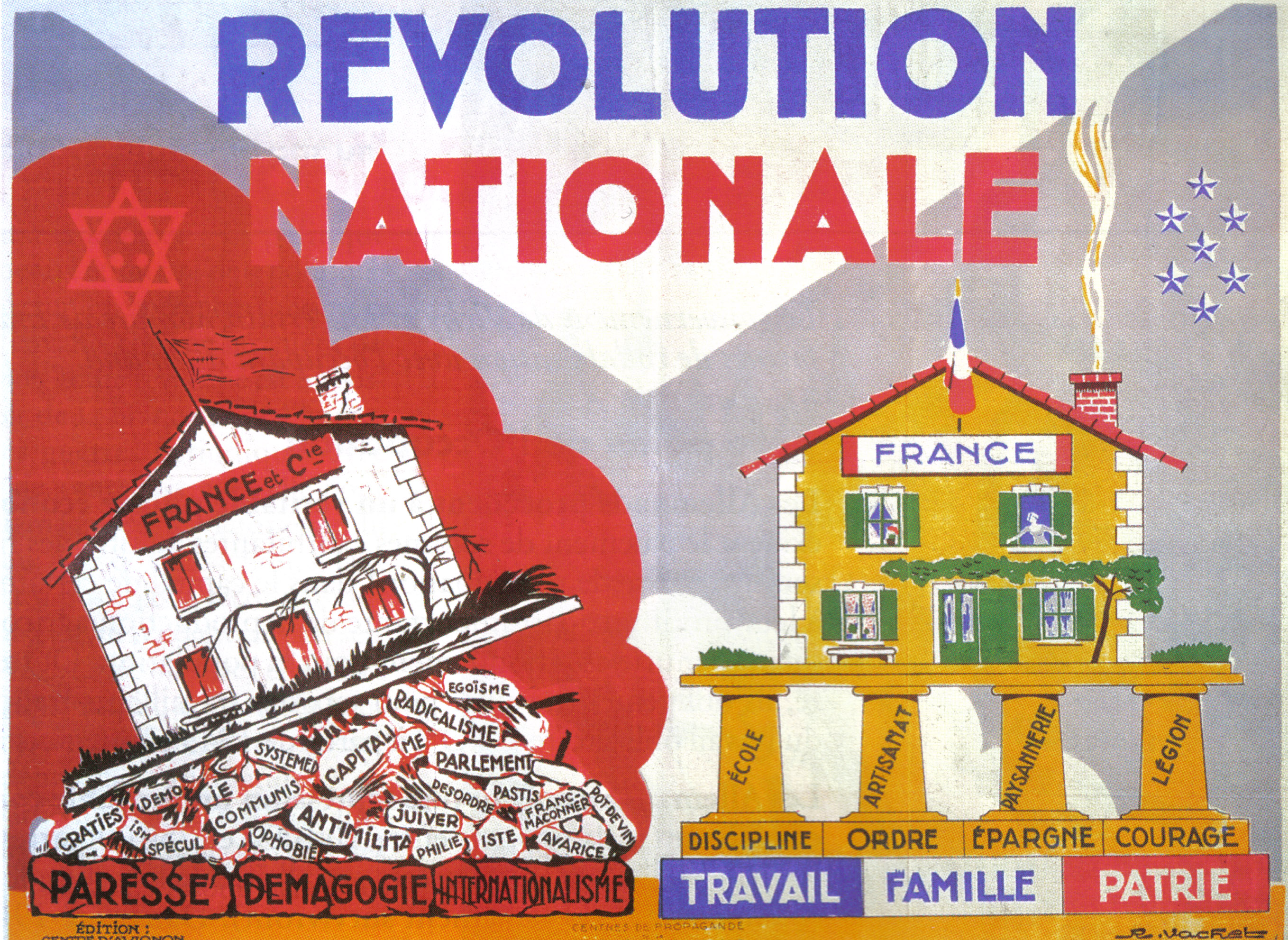
I'm writing an essay on this propaganda poster and there are three small dots on the top left hand side in the star of david. Could anyone please tell me what they represent?
Thanks!
1 Answers 2015-11-23
Hello all. Continuing our special project, we will now discuss how to put to use the secondary literature we found with last week's techniques
/u/sunagainstgold will take us through how to read an academic book.
/u/cordis_melum and /u/k_hopz will share their methods for separating the wheat from the chaff.
Finally, /u/sunagainstgold is pulling double-duty and will give an overview of how to build a secondary bibliography.
This project is geared towards teaching, so if you have specific questions please, please, please ask them!
Next Week: How to read Primary Sources critically
3 Answers 2015-11-23
You know, as in "zzz"
1 Answers 2015-11-23
3 Answers 2015-11-23
Hi there, i'm an italian historian and i'm looking for some infos about medieval preaching and the elaboration of sermons for the scholar audience in XIII and XIV centuries. Has anyone everworked on this subject? I've already read some of the International medieval sermon studies publications and i'm searching for new material to beef up my knowledge of this subject. Thank you for your knowledge! :D
2 Answers 2015-11-23
A little while ago, I finished Before France and Germany by Patrick Geary. From this book I got the impression that the church was comparatively decentralized in the time immediately following the the last Roman emperor: the Pope was "first among equals" of the Bishops, and Bishops were largely independent.
But in particular, it seemed to suggest that the monastic movements that spread into western Europe were initially independent from the bishops (and even clashed with the diocesan church structure), and that they gradually began to fall under episcopal authority through later pressure from the bishopric, and the general trend of increasing organization as the "dark ages" progressed.
However, this wikipedia page outright says that abbots were subject to episcopal jurisdiction right from the beginning, following from the Code of Justinian.
Can someone help me untangle this knot? To what extent were monasteries independent institutions? How did this change over time?
1 Answers 2015-11-23