I guess not to be confused with afterlife beliefs, unless they mean physically a body walks again. That's what I'm really wondering about.
2 Answers 2015-04-15
1 Answers 2015-04-15
I've always wondered why this era featured such "strange" music.
Was it a movement within music, or a movement within the cinema industry that drove it?
1 Answers 2015-04-15
Can you identify this person http://imgur.com/8cPoQF9.
The handwriting below is handwritten is German and the guys at r/translation have helped translate it http://imgur.com/TxhgqAy
https://www.reddit.com/r/translation/comments/32hbrz/please_translate_german_handwriting_to_english/
1 Answers 2015-04-15
1 Answers 2015-04-15
I'm completely lost with this, so any book recommendations or links would be useful, especially looking at the interactions between the different states? Anything at all really though, even historical fiction!
2 Answers 2015-04-15
I understand that the Cold War was a political struggle between the Western Bloc and the Communist Soviets/Eastern Bloc and the US and Russia directly fought, but how can it be "cold" when more than 3,000,000 people were killed in the Vietnam War alone?
The three wars I'm referring to are the Korean War (~2.5m Dead), Vietnam War (~3m+ dead), and Soviet-Afghan war (~1.5m dead).
Does it really just come down to the fact that no one dropped the bomb on the other?
1 Answers 2015-04-15
I am interested especially in medieval Germany (other parts of Europe welcome too) and classic Greek up-do's like in these images of sculptures.
I assume a simple string tie would not work for holding up a ponytail, yeah?
1 Answers 2015-04-15
We have some sort of standard dictionary like Webster now.
But when and how did the concept of having a dictionary for the 'correct spelling' happen?
Who was the first? Was he the only one?
When did some one authority let say this is how you spell the word "this".
1 Answers 2015-04-15
What are your views about the Khojaly Massacre?
1 Answers 2015-04-15
1 Answers 2015-04-15
3 Answers 2015-04-15
1 Answers 2015-04-15
HELLO HISTORIANS!
I am drafting a reading-list for my upcoming class, which focuses on the Russian Revolution and its aftermath (roughly, 1917-1930) and I desperately want some recommendations from people more familiar with this era. I plan to be reading: John Reed's Ten Days That Shook the World (1919), Orlando Figes' A People's Tragedy: The Russian Revolution: 1891–1924 (1996), Richard Pipes' series on the Russian Revolution, and Sheila Fitzpatrick's The Russian Revolution (1982). Leon Trotsky will be a central figure of study as well, but beyond this I get to decide what to study. Below is a list of (hopefully) relevant literature, recommendations and opinions about this list would be greatly appreciated.
NOTE: Films and other recommendations are very welcome.
Aleksandr Solzhenitsyn: The Gulag Archipelago (1973), One Day in the Life of Ivan Denisovich (1962)
Alexandra Kollontai: (recommendations needed, have read some previous work and found it intriguing)
Andrei Bely: Petersburg (1913)
Isaac Deutscher: The Prophet Armed (1954), The Prophet Unarmed (1959), The Prophet Outcast (1963)
Leon Trotsky: My Life (1930), History of the Russian Revolution (1930), The Revolution Betrayed: What Is the Soviet Union and Where Is It Going? (1937)
Mikhail Sholokhov: And Quiet Flows the Don (1928)
4 Answers 2015-04-15
2 Answers 2015-04-15
^*protected
1 Answers 2015-04-15
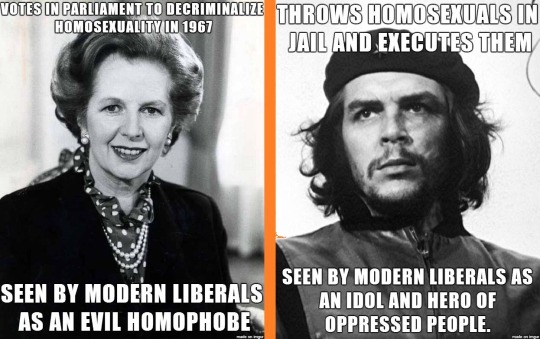
like this totally objective picture states https://40.media.tumblr.com/9ece315d2d7107bc5297abe9cd1ed93d/tumblr_nhv6uzRC9z1tywrydo1_540.jpg
I have heard this way to many times, but there is never any evidence that they can provide, to back up this claim. I know its a touchy subject since its about politics, so people like to claim and accuse each other.
2 Answers 2015-04-15
I'm aware that when baby clothing was initially designed for each gender, pink was considered the masculine color and blue the feminine color, but obviously that perception has completely reversed.
I've read articles which say the change happened around the 1940s, but I couldn't find a good reason why. I'm just curious how such a perception could be completely turned on its head.
2 Answers 2015-04-15
In terms of technology and innovations. I guess my main question is, were the indigenous people of North America shockingly anachronistic considering the era? (Not in contrast to the European explorers, just in general)
1 Answers 2015-04-15