The book Clotel is fiction. It's important for historical reasons (it's the first novel written by an African-American) but it wasn't history.
I am interested in finding out the truth about what happened to Thomas Jefferson's children. Eston Hemmings Jefferson is of particular interest to me since he became a professional musician. It seems to me that being a fiddler would've been the best possible profession for a son of Sally Hemmings and Thomas Jefferson.
What was Jefferson's relationship with his children? He had two wives; Sally Hemmings being the half sister (and slave of) his first wife.
2 Answers 2021-08-24
1 Answers 2021-08-24
What did Japans overall withdrawal process look like at the end of WWII? I often hear how the mainland garrisons just returned home or assisted the occupation forces but what about deployed units in the Pacific or Asia? Knowing the dysfunctional relationship between imperial army and navy how did they coordinate a overall withdrawal strategy post surrender when they had difficulty simply deploying and battle planning cross-branches.
1 Answers 2021-08-24
I'm reading the cambridge history of Chine Volume 7 part 1 and in page 49 it says about emperor Hongwu:
" Yet to the end of his life he spoke and wrote proudly of his humble beginnings as a poor farmer's son from the disaster-ravaged Huai region, and eventually he grew scornful, even bitterly resentful, of those who had known only the refined, comfortable life of the elite."
I can't find any writtings of emperor Hongwu on the internet, but i was wandering if there is any writing from chinese emperors that survives until today; something like the meditations of marcus aurelius or the gallic wars of julius cesar.
1 Answers 2021-08-24
1 Answers 2021-08-24
In Dominion by Tom Holland he says its most likely that the idea of Catharism as a widespread secret gnostic belief system was invented by the Church. Is this the historical consensus? What was actually going on?
1 Answers 2021-08-24
I heard various people saying the same thing: Most khanates in the east have not expanded further into the North because there was little compensation.
But then, why did Russia do it? I mean yeah, most people will say "since they could", but if that is the case, why didn't other nations that had Siberia at their doorstep?
Besides, Russia I believe had conflict with Poland and Lithuania, so why manpower going to an open field with little people to pay you?
1 Answers 2021-08-24
In Wilde’s “the picture of Dorian Gray” (1890s) and in Waugh’s “Brideshead Revisited” (1940s, set earlier though) (male) queer characters use the term of address “my dear” for other men, which arguably helps to signal their queerness to readers in the know. I’m thinking specifically of Anthony Blanche in ‘Brideshead’ who addresses Charles and perhaps others as “my dear,” and Henry in ‘Dorian Gray’ who addresses Basil and others this way.
I want to say that men using “my dear” - a term usually used by women or by men for a female romantic partner - in order to address other men historically (and even now) acts as a ‘tell’ or signal of their queerness. It’s understated but obvious at the same time. And it stands in contrast to the very British and historical “my dear [sir/ friend/man/first name/nickname]” which was widespread and used by heteronormative-identified men for their friends with sincerity, or as a way to belittle acquaintances or strangers (used with Sarcasm). But I’ve been unable to find anything by linguists or those interested in gay language or speech patterns about this. And most stuff I can find is American. I’m not so much asking about Polari (which I think is much more London/ working class based?) as about the educated gay subculture at places like Cambridge and Oxford. Do you know any authors or books or linguists that deal with historic British gay speech patterns? Also, do you think my argument is correct? If not, what am I missing? I’ve asked the r/asklinguistics sub already and lots of interesting discussion but no answer for my question regarding use of “my dear.” I know this is a linguistic question but any info on the historic gay subculture(s) in Oxford/Cambridge would be fascinating. Thanks for any help!
1 Answers 2021-08-24
I have a decent comprehension of Venetian history and it’s apparent distaste for hereditary monarchs taking hold, and from what I can tell, a lot of the changes to the structure of the government over the years were attempts at keeping a closer tab on the Doge and the power brokers, but it gets a little insane. The Major Council, the Minor Council, the Senate, the 10, the Arengo, the fluctuations in size, requirements for office, the sheer bureaucracy. How the hell did anything get done efficiently? Why were things changed so often and seemed to be in flux?
1 Answers 2021-08-24
When I was in Japan, I visited some museums in regarding to the atomic bomb and World War 2. I noticed they were calling their war not WW2, but something like the Asian-Pacific War or Pacific War (can't remember), and there was no mentioning of an alliance between Germany and Japan, similar goals / interests etc.
When I was trying to find more information: I found a website containing more information about the allies of Germany. https://encyclopedia.ushmm.org/content/en/article/axis-alliance-in-world-war-ii . And it all became rather confusing to me.
So I have the following questions:
1 Answers 2021-08-24
2 Answers 2021-08-24
From what i have read and seen, after Varus was attacked, he managed to build a night camp and reorganize his troops, and was able to hold of the germans enough to build said camp. What prevented him to instead of falling deeper into Arminius trap, fighiting the Germans uphill?
1 Answers 2021-08-24
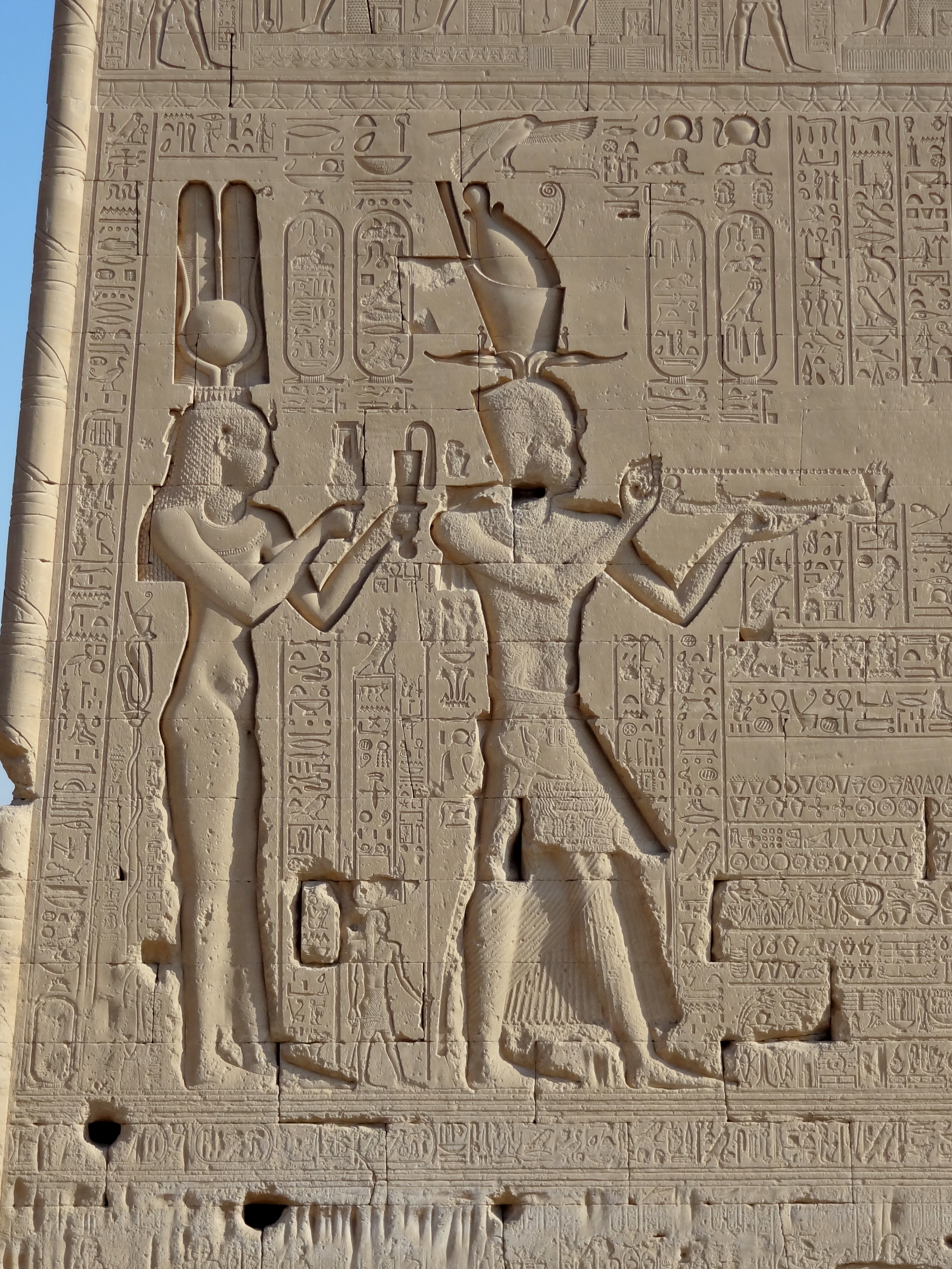
Like this piece of art from the Third Dynasty: https://www.almendron.com/artehistoria/wp-content/uploads/2014/12/egipto-cat-018-250x443.jpg
has such striking resemblance to this piece from the Ptolemaic Era: https://upload.wikimedia.org/wikipedia/commons/4/4f/Dendera_Tempel_Kleopatra_C%C3%A4sarion_04.jpg
How was it possible for them to maintain such consistency, when tons of other languages are civilizations changed so much as to not even be recognizable?
1 Answers 2021-08-24
When Somalia lacked a centralized government, what prevented Ethiopia from claiming land within its borders or even invading? What prevented other nations from expanding empires by taking advantage of no national Somalian government?
1 Answers 2021-08-24
Hey, everyone! I'm trying to shore up my knowledge of southern China. I know (or think I know!) of two narratives related to this area:
(a) South China is a starting point for immigrant and overseas Chinese people. Most famously, people from this area of China were used as cheap labor and played a significant part in developing the US's railroads on the west coast.
(b) South China contained non-Han and non-Chinese peoples that were eventually forcefully integrated into the various Chinese empires and then into the vaguely ethic group of Han people.
Does anyone know anything about these areas of history? Does anyone have suggested readings on these time periods in southern China? Thanks so much! Not a historian, so Googling only goes so far. :>
1 Answers 2021-08-24
I tried to search for information, but I got nothing, if you could suggest a book about that or an article on the internet or something like that, I will appreciate it, thank you very much.
1 Answers 2021-08-24
Any Historical paintings I've seen have the men sporting cropped haircuts, and if not actually cut fully, the hair is tied up to appear short. Whereas a majority of female paintings have them with long, flowy hair most of the time. Is there any specific reason for women having longer hair than men in so many cultures throughout the world?
1 Answers 2021-08-24
Prompted by the query earlier about comparing and contrasting the Latin American states and the Soviet Union's Eastern European sphere of influence, I'm curious about the functional difference between, say, Communist Romania and Soviet Moldavia before 1989. I'm aware that there was a Romanian embassy and no Moldovan one in London until the latter gained independence.
1 Answers 2021-08-24
I’m looking for any economic books that show the before, during, and after the nazi party’s influence in Germany
2 Answers 2021-08-24
1 Answers 2021-08-24
1 Answers 2021-08-24
I'm a Brazilian who's been listening to the Mitografias podcast. In the episode titled "Violence in Greek Mythology", in the part where they quoted the god Ares, they say that the reason he has so many defeats in mythology is because of his Thrace origins, a rival region of the Hellenic culture and a place of a warrior tribe.
So her humiliations was for "political reasons", or something like that.
How was Ares treated in the region? Did he have more of an aspect than a god of bloodshed? And if Thrace was a rival region, why did he end up at Olympus?
1 Answers 2021-08-24
1 Answers 2021-08-24